
System and method for self-filing customs entry forms
a technology of entry forms and customs, applied in the field of self-filing customs entry forms, can solve the problems of importer from assuming any responsibilities, high overhead cost for people and organizations, and permanent expenditure of associated overhead costs
- Summary
- Abstract
- Description
- Claims
- Application Information
AI Technical Summary
Benefits of technology
Problems solved by technology
Method used
Image

Examples
Embodiment Construction
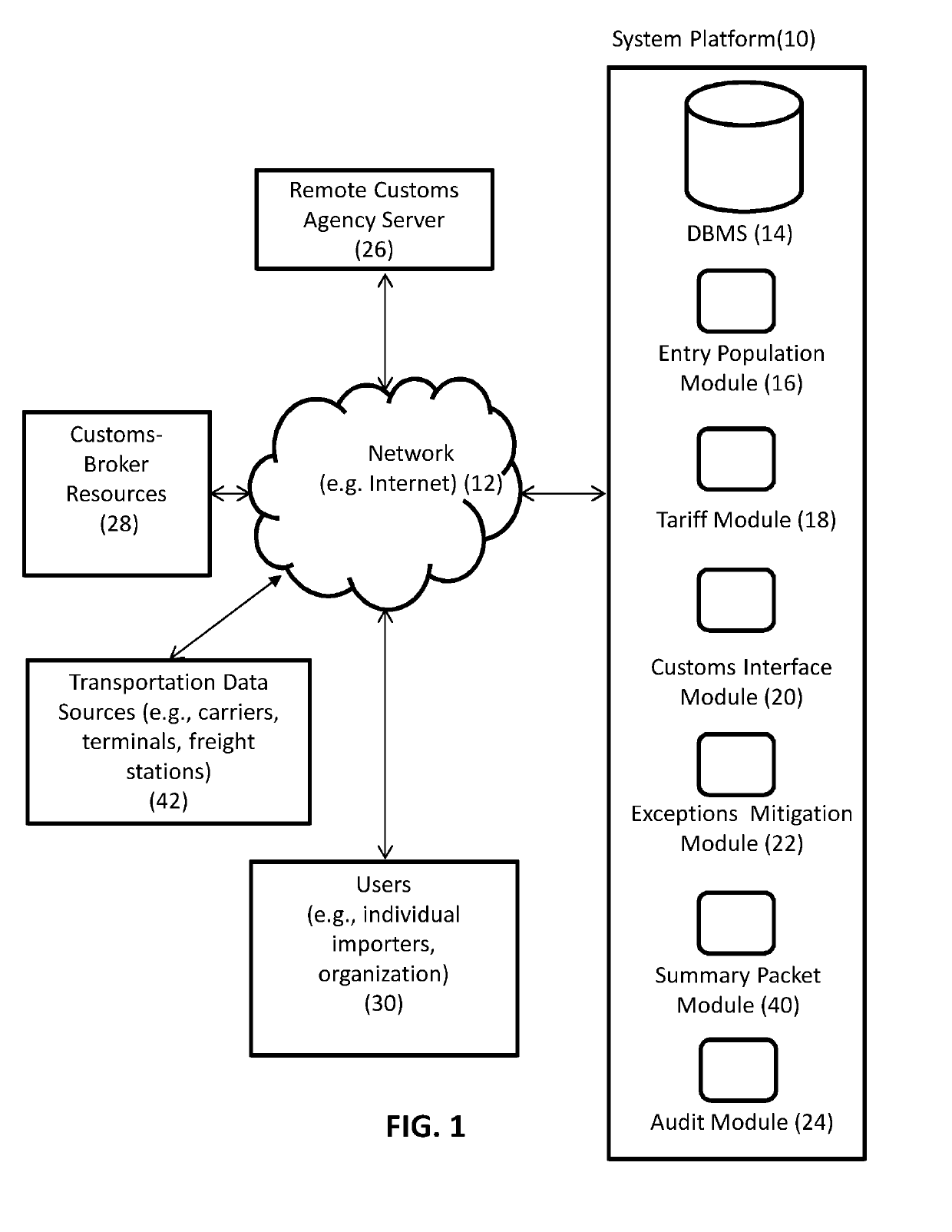
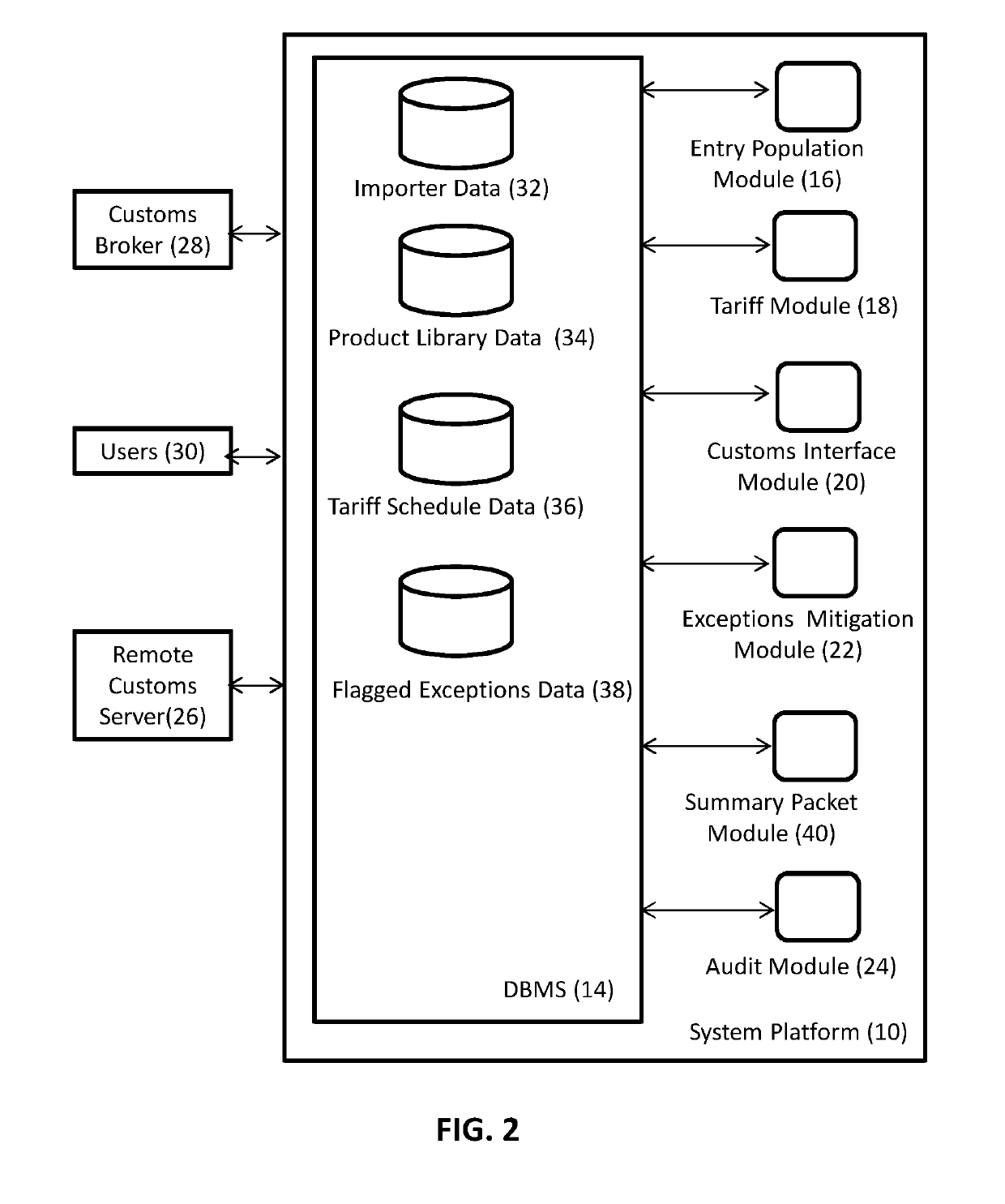
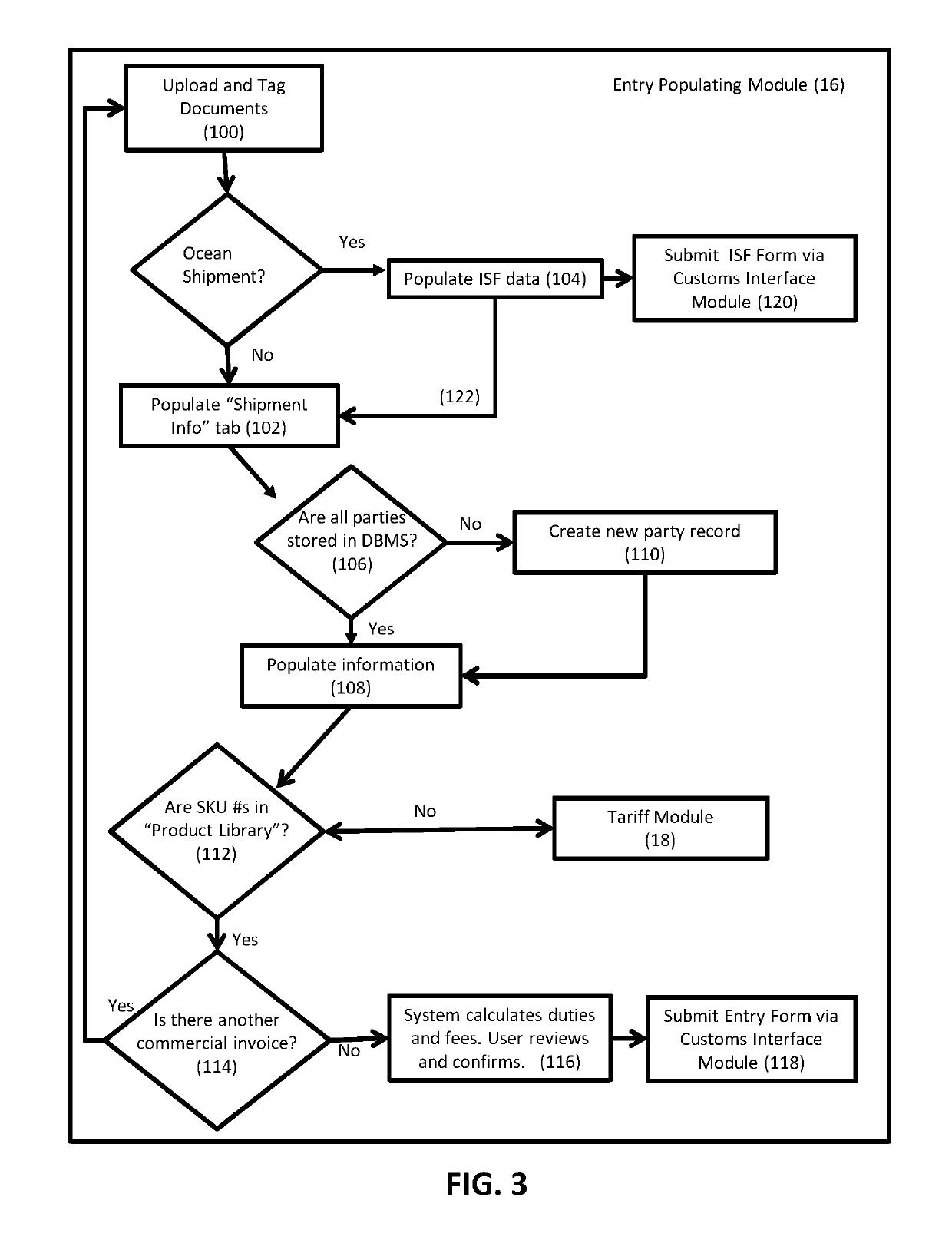
[0029]Referring now to the drawings, and particularly FIG. 1, there is shown a computerized system 10 that provides users 30 with a platform to complete and self-file customs entry forms to a respective remote customs agency server 26, wherein the system 10 is configured to address exceptions received from a customs agency either automatically or by using customs-broker resources 28 to provide a resolution. The system 10 is further configured to validate submitted and cleared entry forms by assigning a number of entry fields of an entry form to be audited by customs-broker resources 28, wherein the number of entry fields selected is based either on user 30 set preferences or on a specified minimum number of entry fields submitted with the entry form. As such, users 30 can readily complete and file the necessary customs entry forms while providing customs-broker resources access and functionality on the back-end for selective auditing and resolving complex issues with a customs agenc...
PUM
 Login to View More
 Abstract
Description
Claims
Application Information
 Login to View More