
Method, kit, and apparatus for cancer detection using urinary tumor markers
a cancer and urine technology, applied in the field of neuroblastoma detection methods, kits and apparatuses, can solve the problems of excessive examination and therapy, and the inability of examination to effectively reduce mortality, and achieve the effect of convenient and inexpensive detection of neuroblastoma, good prognosis, and simplified collection or sampling techniqu
- Summary
- Abstract
- Description
- Claims
- Application Information
AI Technical Summary
Benefits of technology
Problems solved by technology
Method used
Image

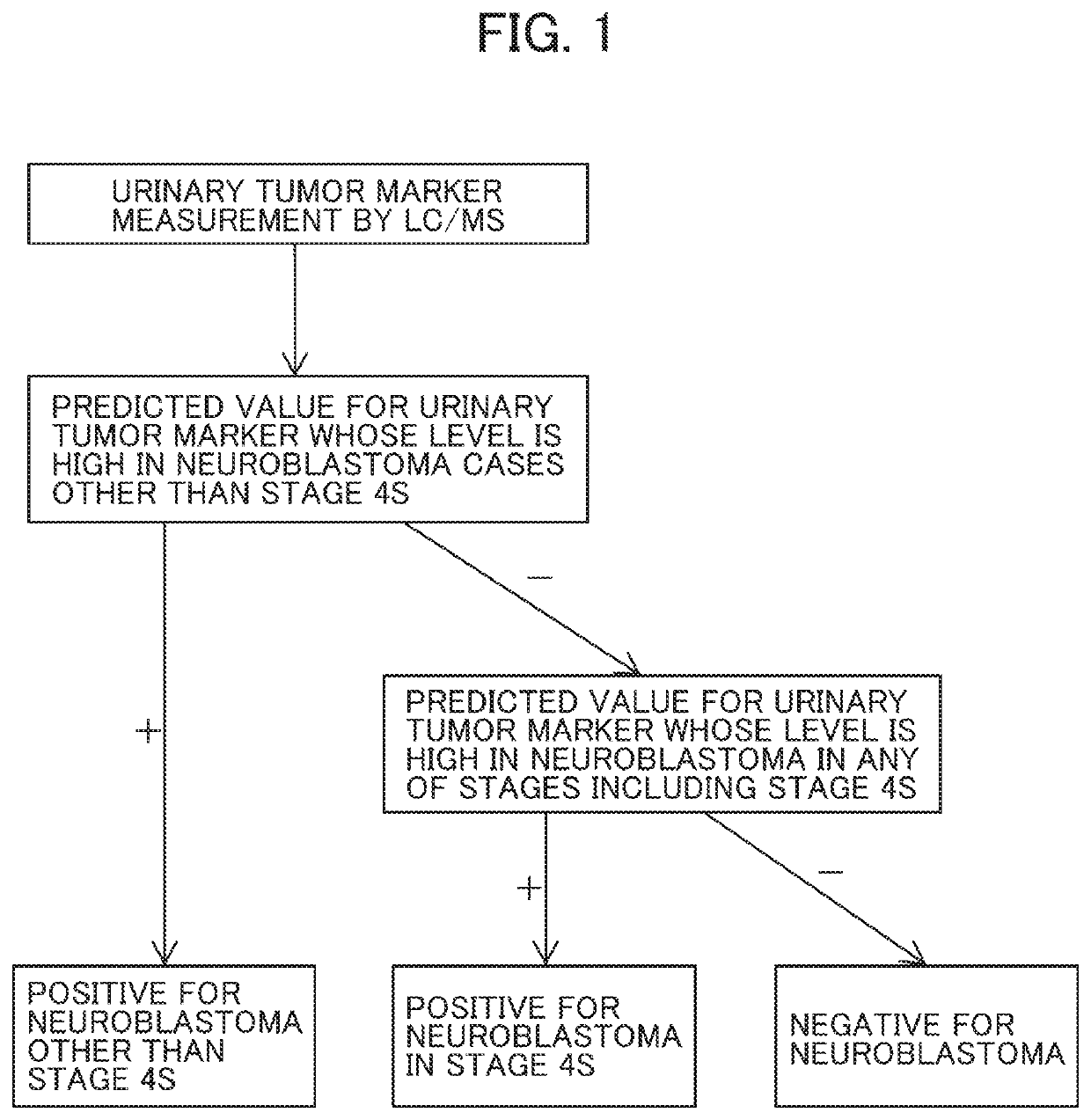
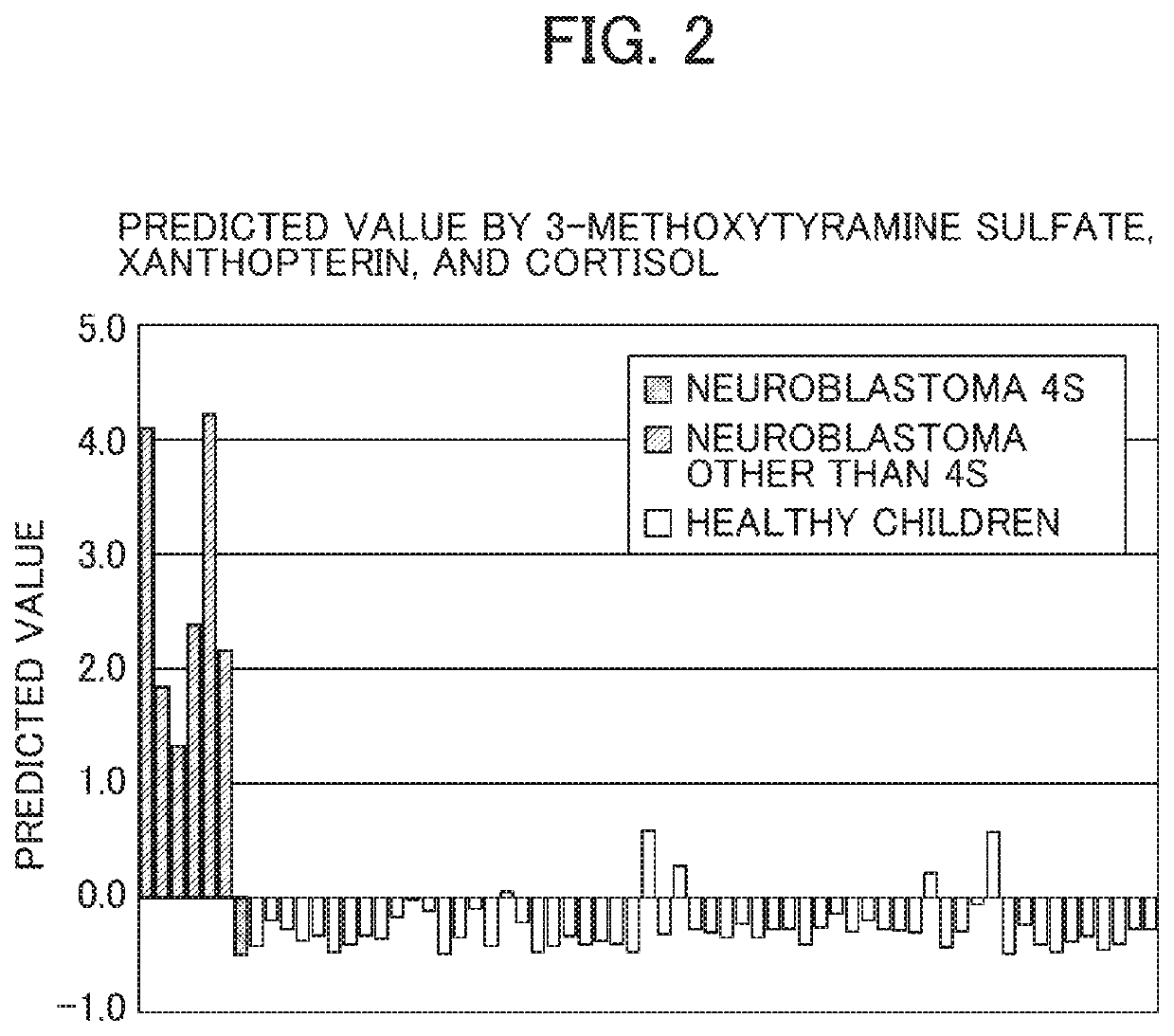
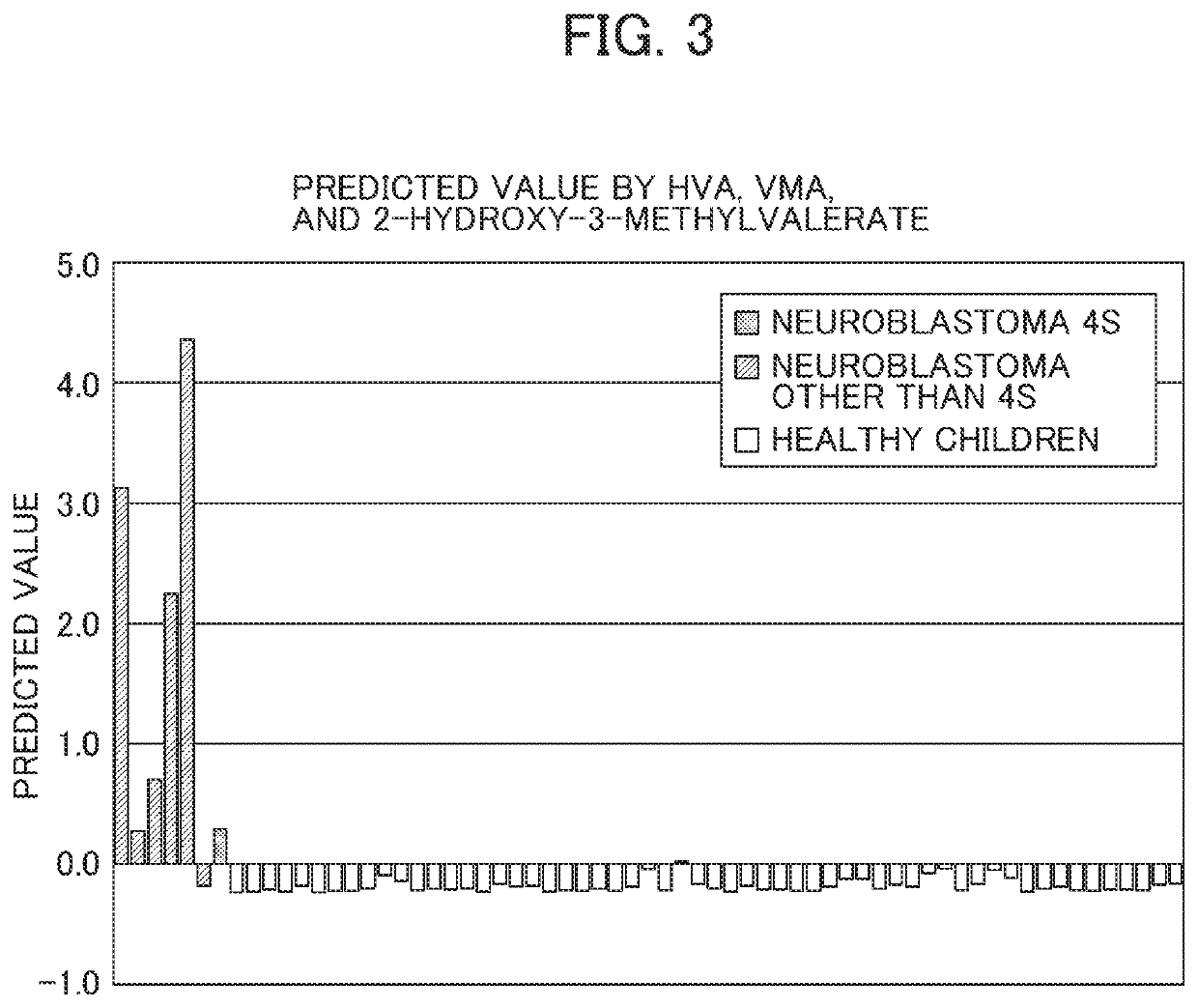
Examples
example 1
sive Analysis of Neuroblastoma-Related Urinary Metabolites
[0151]To identify urinary tumor markers specific to neuroblastoma, a global analysis of urinary metabolites was performed on 58 healthy children and 7 neuroblastoma-affected children before therapy, in Nagoya University Graduate School of Medicine, Surgery, Pediatric Surgery Laboratory.
[0152]Specifically, metabolites in urine of neuroblastoma-affected children and in urine of healthy children of the same age were comprehensively analyzed using a liquid chromatograph-mass spectrometer (LC / MS) to specify metabolites that significantly increase or decrease in the childhood cancer-affected (neuroblastoma-affected) children as compared with the healthy children, to thereby find urinary tumor markers that can distinguish between healthy children and childhood cancer-affected children by multivariate analysis. As a result, urinary tumor markers that distinguish between the two groups were found (Japanese Patent Application No. 2018-...
example 2
ion of Cancer Evaluation Model Using Group (A) Markers and Group (B) Markers
[0158]On each of the Group (A) markers and the Group (B) markers selected in Example 1, prediction models were made by OPLS-DA on all combinations, and the performance indices (in particular, predictor variables) of the models were determined. In particular, combinations of urinary metabolites involved in different metabolisms were selected as marker candidates.
[0159]Specifically, to distinguish between healthy children and neuroblastoma-affected children, cancer examination models were determined by orthogonal projections to latent structures-discriminant analysis (OPLS-DA) using indices expressed as follows:
R2Y=1-Σ(Yobs-Ycalc)2Σ(Yobs-Y_)2Q2=1-Σ(Yobs-Ypred)2Σ(Yobs-Y_)2
[0160]In the expressions, Yobs represents the measured value; Ycalc represents the value calculated by OPLS; Ypred represents the predicted value according to cross-validation; and represents the average. The “cross-validation” refers to a tec...
PUM
| Property | Measurement | Unit |
|---|---|---|
| liquid chromatography- | aaaaa | aaaaa |
| liquid chromatograph- | aaaaa | aaaaa |
| mass spectrometry | aaaaa | aaaaa |
Abstract
Description
Claims
Application Information
 Login to View More