This helps you quickly interpret patents by identifying the three key elements:
Problems solved by technology
Method used
Benefits of technology
Benefits of technology
The present invention provides an ingredient (specific cationic polygalactomannan) that can prevent or reduce degradation of fabrics and protect their colors. This ingredient can make fabric surfaces smoother, recover fibrils at surface, and prevent fading or change of colors. It can be used in compositions for treating fabrics without causing minimal degradation. This cationic polygalactomannan can act as a durable color protectant, meaning in particular that colored fabrics may resist multiple washing cycles.
Problems solved by technology
Washing of fabrics, especially machine washing of fabrics, leads to a physical and chemical degradation of the fabric fibers, and most particularly of cotton and wool fibers.
However, it is generally the combination of the chemical and mechanical actions which leads to degradation of the fibers.
This degradation of the fibers leads to the formation of fibrils at surface of the fabrics, and this may also cause colored fabrics to lose their radiance.
This degradation also induces a decrease in the strength of the fabrics which, at the extreme, may lead to tearing.
Method used
the structure of the environmentally friendly knitted fabric provided by the present invention; figure 2 Flow chart of the yarn wrapping machine for environmentally friendly knitted fabrics and storage devices; image 3 Is the parameter map of the yarn covering machine
View more
Image
Smart Image Click on the blue labels to locate them in the text.
Viewing Examples
Smart Image
Click on the blue label to locate the original text in one second.
Reading with bidirectional positioning of images and text.
Smart Image
Examples
Experimental program
Comparison scheme
Effect test
example 1
Procedures
[0152]The fabrics were rubbed with hand to induce damage. The damage was then recorded with optical microscopy with 4 to 40× magnification.
[0153]The damaged fabrics were soaked in aqueous solutions (DI water) which contains Cationic Polygalactomannan 1 at a concentration of 0 ppm, 20 ppm, 40 ppm, and 80 ppm, respectively. The soaking was for 30 min with stirring at room temperature. The fabrics were then dried in an oven at 45° C. overnight.
[0154]The treated fabrics were observed under optical microscope to evaluate the level of damage.
[0155]As evidenced by microscopy, reduction in fabric degradation is perceivable.
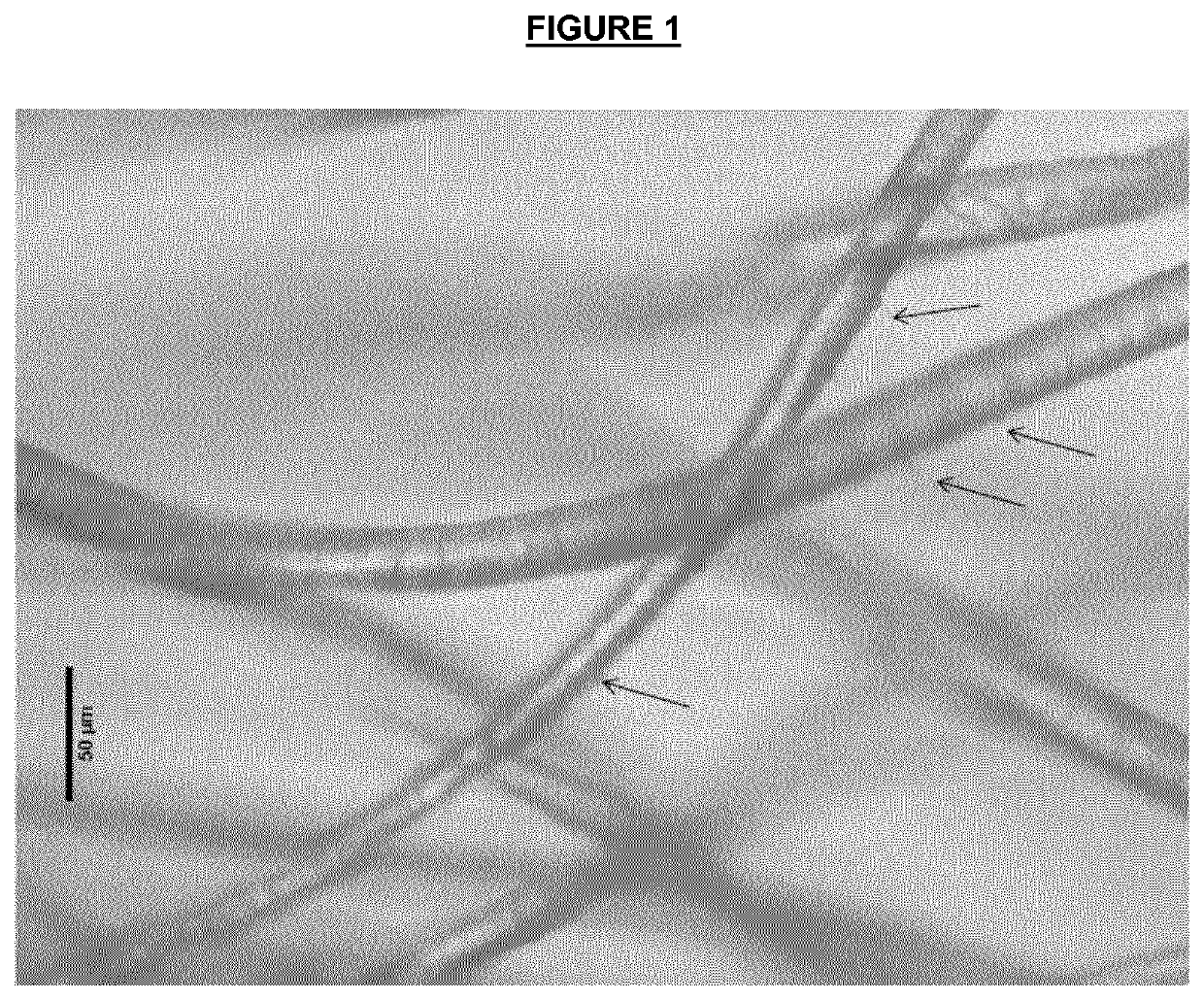
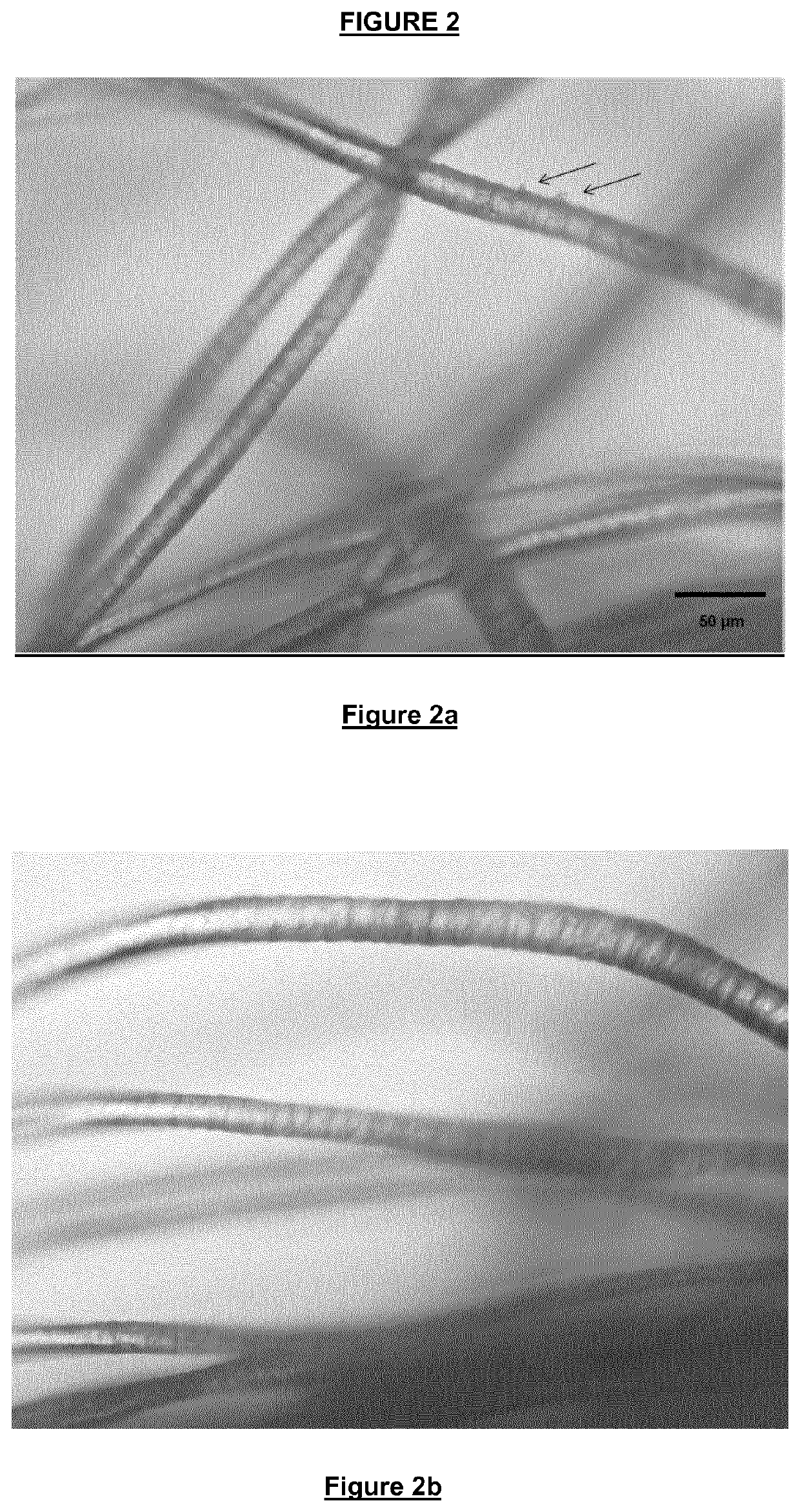
[0156]Fabric fibers that have been treated with Cationic Polygalactomannan 1 look smoother and less fibrils were found, compared to untreated fabric fibers (0 ppm group).
[0157]As depicted in FIG. 1, fabrics treated with the DI water exhibited fibrils on fiber surface under the microscopy, indicating damage to the fabrics.
[0158]As depicted in FIG. 2a, fabrics tre...
example 2
Wash Protocols
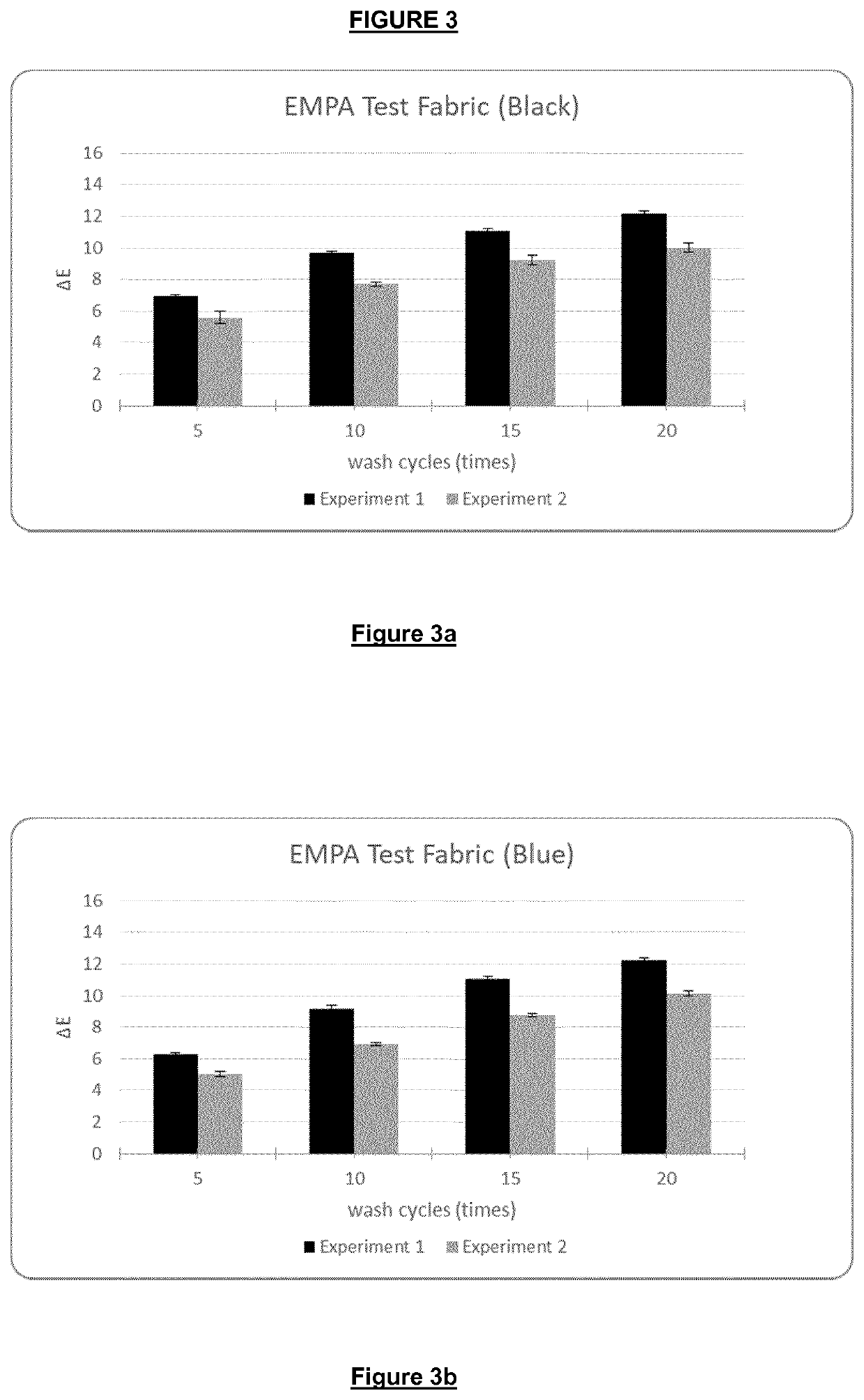
[0161]The test fabrics (in black, blue, red and green colors) were placed in Samsung front load washing machine (model: WW90H5200EW / SP) with washing program for cotton (washing temperature: 40° C. and washing time: 2 hours 42 min which includes 3 rinses with 1200 RPM spin);
[0162]Ballast load is 2.5 kg knitted cotton ballast load;
[0163]Liquid detergent was added in an amount of 35 mL per wash;
[0164]100 mL Cationic Polygalactomannan 1 (1% solution in water) was added, in other words 1 gram Cationic Polygalactomannan 1 per wash;
[0165]the test fabrics were washed for 5, 10, 15, and 20 cycles respectively.
[0166]For the above wash protocols, for each test fabric in black, blue, red and green colors, Cationic Polygalactomannan 1 was added, which were donated as Experiment 2. As a blank control, the test fabrics were washed without adding Cationic Polygalactomannan 1, which were donated as Experiment 1. For each test fabric, ΔE was determined with spectrophotometer as below:
[0...
the structure of the environmentally friendly knitted fabric provided by the present invention; figure 2 Flow chart of the yarn wrapping machine for environmentally friendly knitted fabrics and storage devices; image 3 Is the parameter map of the yarn covering machine
Login to View More
PUM
Property
Measurement
Unit
Temperature
aaaaa
aaaaa
Viscosity
aaaaa
aaaaa
Viscosity
aaaaa
aaaaa
Login to View More
Abstract
The invention relates to a method for treating a fabric, notably a method for preventing or recovering degradation of a fabric, by using a cationic polygalactomannan, wherein the cationic polygalactomannan contains non-ionic hydroxyalkyl substituents and has a Brookfield RVT viscosity at 25° C. and 20 rpm greater than 700 mPa·s, at a concentration of 1 wt % in water.
Description
[0001]This application claims priority filed on 14 November 2018 in EUROPE with Nr 18206306.5, the whole content of this application being incorporated herein by reference for all purposes.FIELD OF THE INVENTION[0002]The present invention relates to a method for treating a fabric, notably a method for preventing or recovering degradation of a fabric, by using a cationic polygalactomannan containing non-ionic hydroxyalkyl substituents and having a specific viscosity.BACKGROUND[0003]Washing of fabrics, especially machine washing of fabrics, leads to a physical and chemical degradation of the fabric fibers, and most particularly of cotton and wool fibers. The alkalinity delivered by detergents and also by certain specific compounds, such as oxidizing substances (perborate or percarbonate) and certain enzymes, may be the cause of the chemical degradation of fabric fibers. However, it is generally the combination of the chemical and mechanical actions which leads to degradation of the fi...
Claims
the structure of the environmentally friendly knitted fabric provided by the present invention; figure 2 Flow chart of the yarn wrapping machine for environmentally friendly knitted fabrics and storage devices; image 3 Is the parameter map of the yarn covering machine
Login to View More
Application Information
Patent Timeline
Application Date:The date an application was filed.
Publication Date:The date a patent or application was officially published.
First Publication Date:The earliest publication date of a patent with the same application number.
Issue Date:Publication date of the patent grant document.
PCT Entry Date:The Entry date of PCT National Phase.
Estimated Expiry Date:The statutory expiry date of a patent right according to the Patent Law, and it is the longest term of protection that the patent right can achieve without the termination of the patent right due to other reasons(Term extension factor has been taken into account ).
Invalid Date:Actual expiry date is based on effective date or publication date of legal transaction data of invalid patent.


 Login to View More