
Transmitting the pilot data channel for each operator in a system for radio communication with mobile stations
a mobile station and pilot data technology, applied in the field of cellular systems for radio communication with mobile stations, can solve the problems of insufficient coverage at the limits of cells, difficult implementation of future changes, and relatively long time required by mobile stations to access the network, so as to simplify the management of carrier allocation, improve radio coverage, and reduce the time required
- Summary
- Abstract
- Description
- Claims
- Application Information
AI Technical Summary
Benefits of technology
Problems solved by technology
Method used
Image

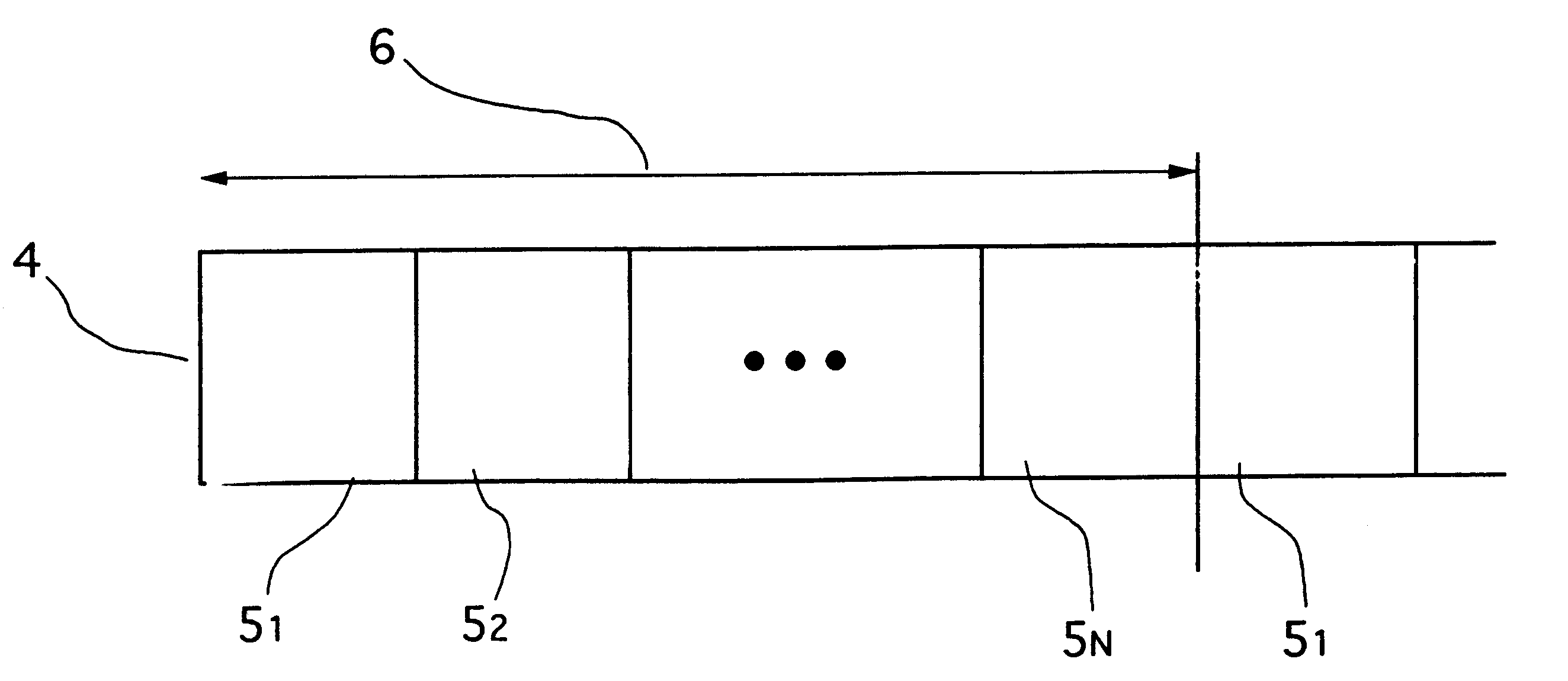
Examples
Embodiment Construction
The invention thus relates to a system for radio communication with mobile stations, the system being of the type enabling one or more network operators each to manage a distinct network, each network being constituted by geographical cells through which mobile stations travel.
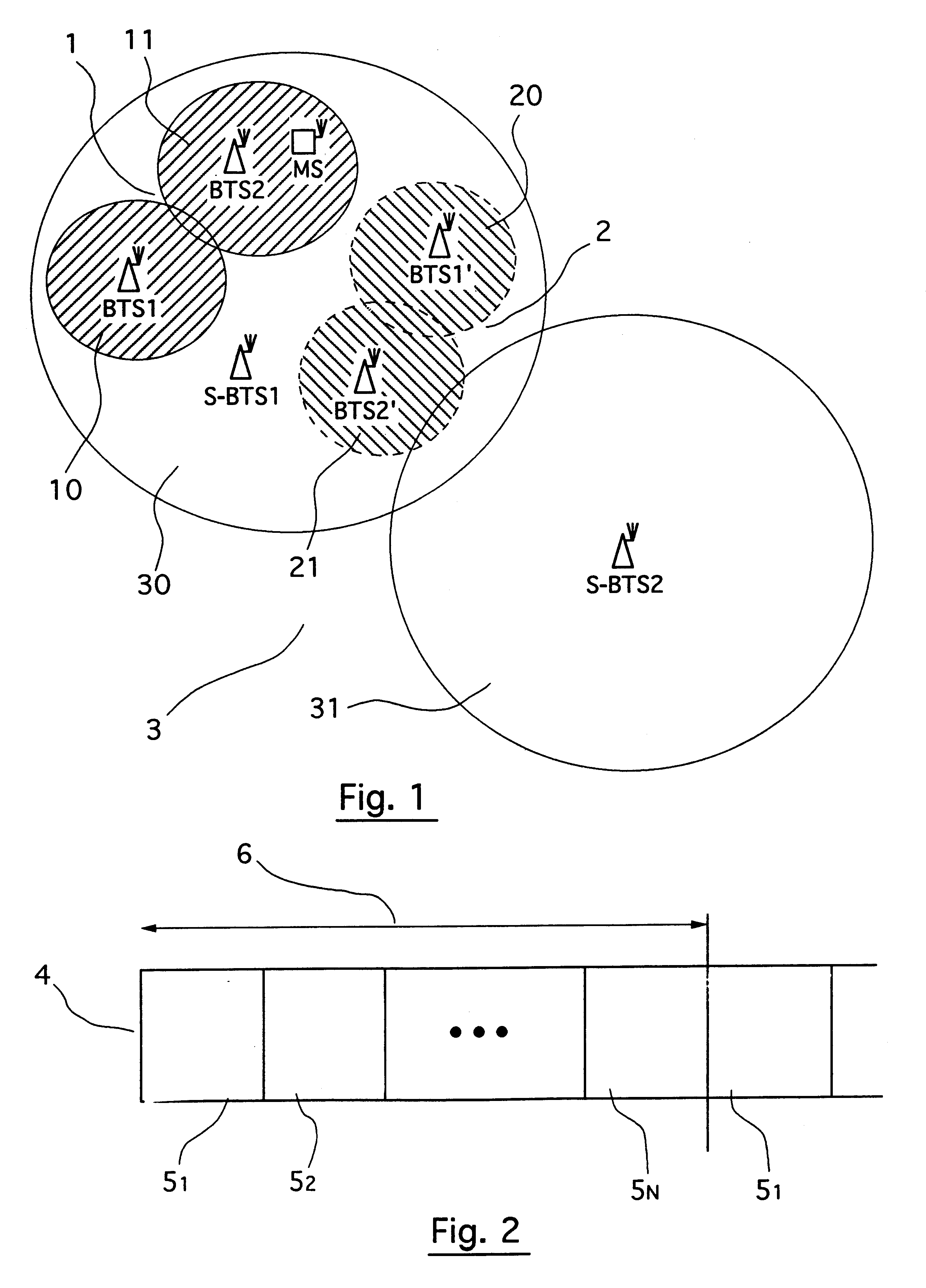
In the fragmentary diagrammatic view of FIG. 1, and for the purposes of simplification, the case is considered of a system shared between two networks having distinct operators 1 and 2. The person skilled in the art will easily be able to generalize to an arbitrary number of operator networks.
For each of these networks 1 and 2, only two cells are shown 10 & 11 and 20 & 21. Clearly, in reality, each network will comprise a large number of cells so as to cover as great an area as possible.
Each cell 10, 11, 20, and 21 is associated with a respective base station BTS1, BTS2, BTS1', BTS2' through which it can communicate with mobile stations that are located within the cell and that subscribe with the operator mana...
PUM
 Login to View More
 Abstract
Description
Claims
Application Information
 Login to View More