
Architecture of a framework for information extraction from natural language documents
a technology of information extraction and natural language documents, applied in the field of knowledge information processing, can solve the problems of only being able to extract information from relatively small databases, affecting the quality of information extraction,
- Summary
- Abstract
- Description
- Claims
- Application Information
AI Technical Summary
Problems solved by technology
Method used
Image

Examples
Embodiment Construction
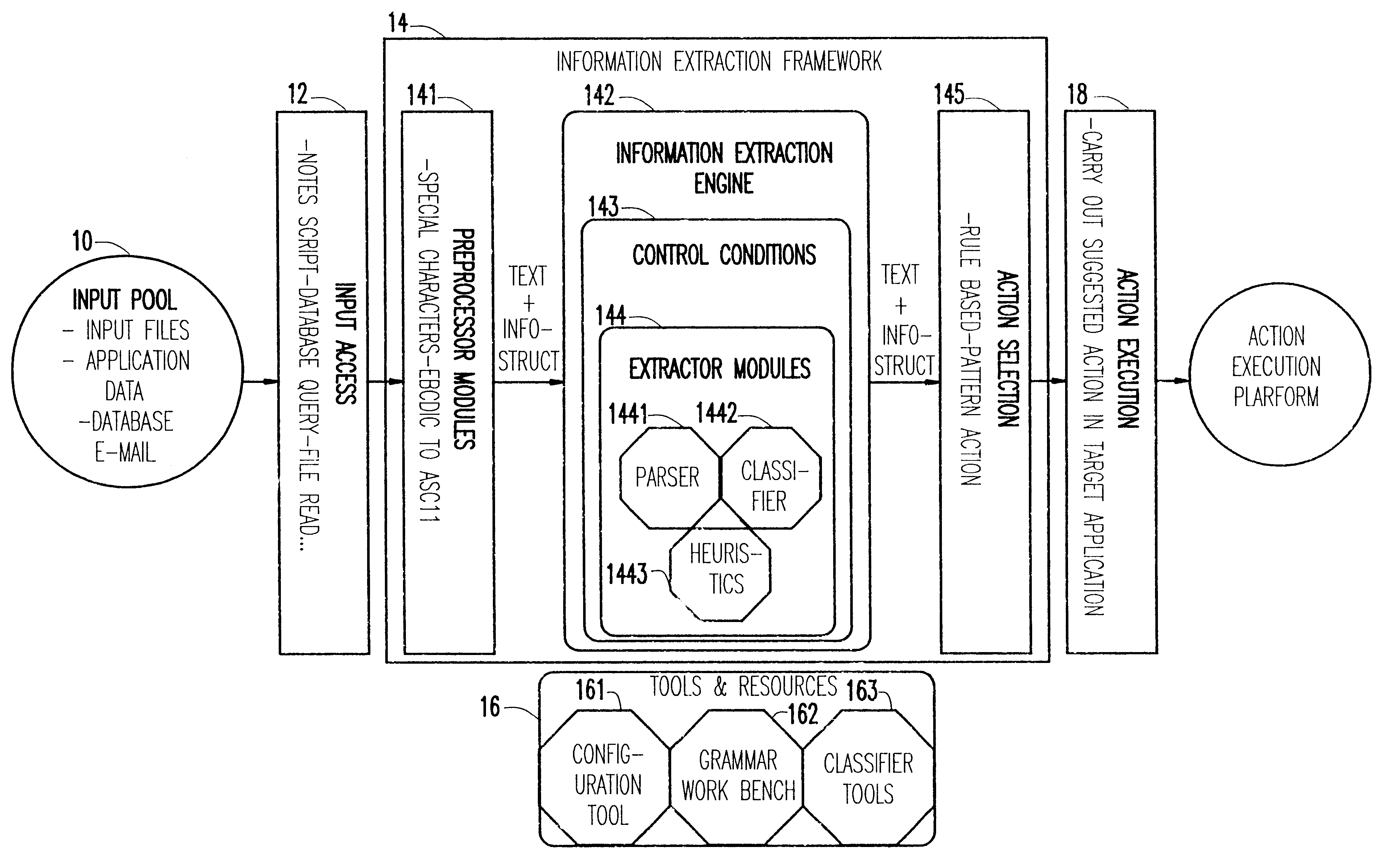
Referring now to the drawings, and more particularly to FIG. 1, the general layout of the architecture of the framework for information extraction according to the invention will first be described. The framework provides tools for information extraction and natural language processing integrated in an easy to use access layer. This enables adding an information extraction component to an application by interfacing to the framework via an API.
Inside the framework, requests for information extraction are passed on to the actual extractors. The framework can handle pre- and postprocessing of the application data, control of the extractors and it also enriches the information extracted by the extractors. It also can suggest necessary actions the application should take on the data.
To achieve the goal of easy integration and extension, the framework provides two interfaces:
1. Integration (outside) API: This is the API for the application that wants to use the framework. The framework ca...
PUM
 Login to View More
 Abstract
Description
Claims
Application Information
 Login to View More