Gas specie electron-jump chemical energy converter

a chemical energy converter and electron-jump technology, which is applied in the direction of fluid couplings, light radiation electric generators, batteries, etc., can solve the problems of large volume needed for fuel cells using liquid, material problems, and the form of fuel cells cannot replace batteries

US7119272B2Inactive Publication Date: 2006-10-10NEOKISMET L L C
95 Cites 14 Cited by

Patent Information

Authority / Receiving Office
US · United States
Patent Type
Patents(United States)
Current Assignee / Owner
Publication Date
2006-10-10
Estimated Expiration
Not applicable · inactive patent

Smart Images

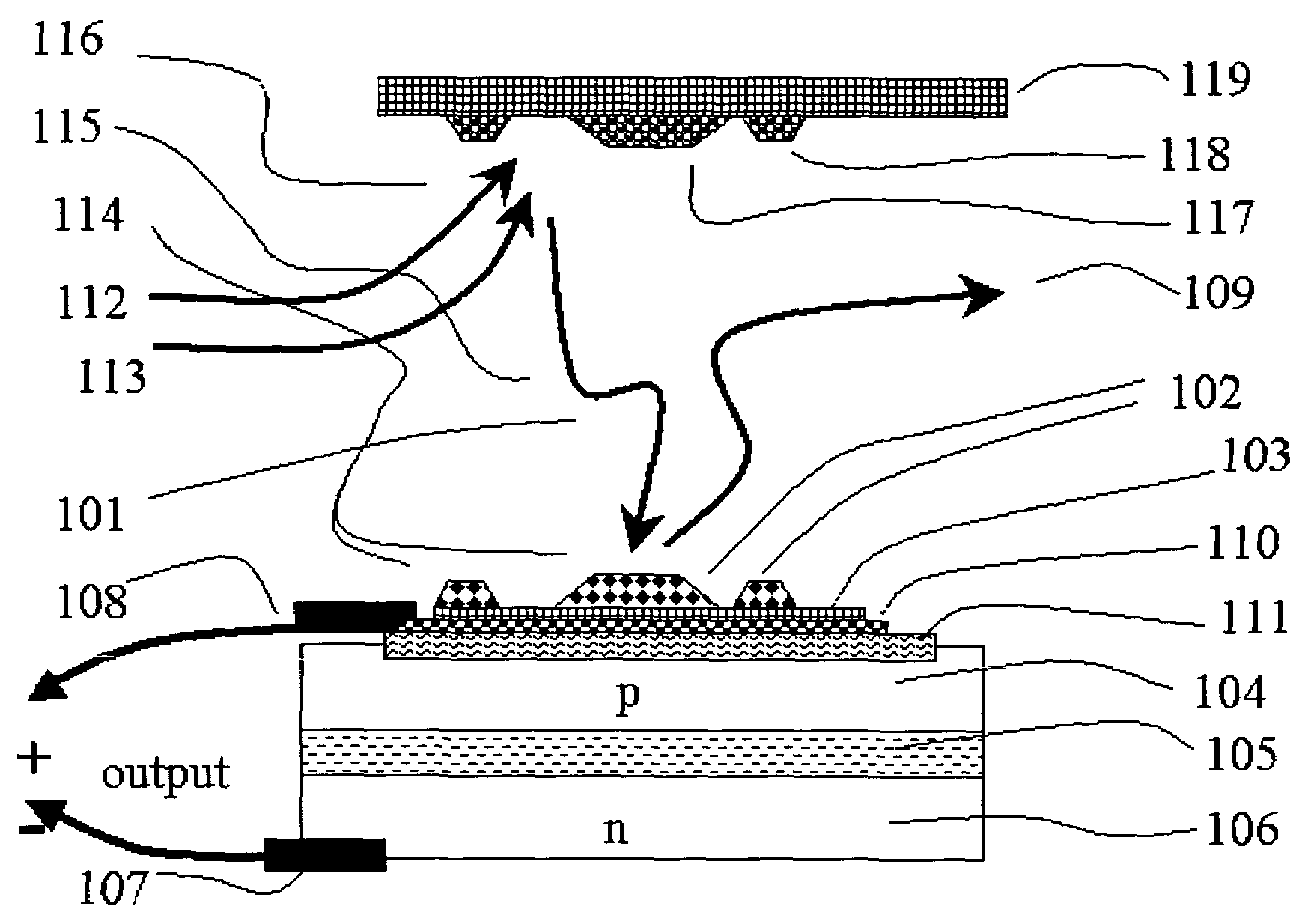
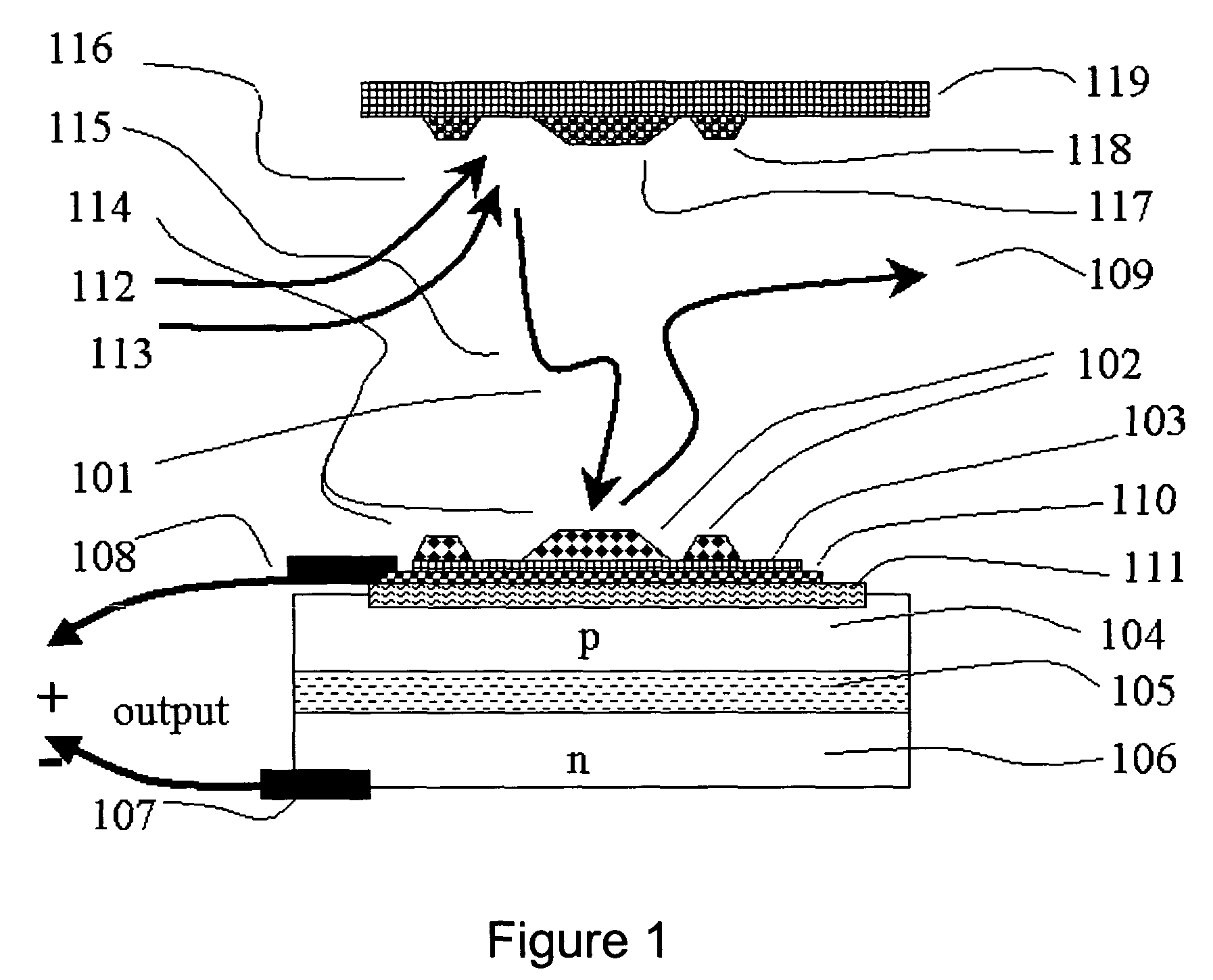
  • Figure 1
    Figure 1
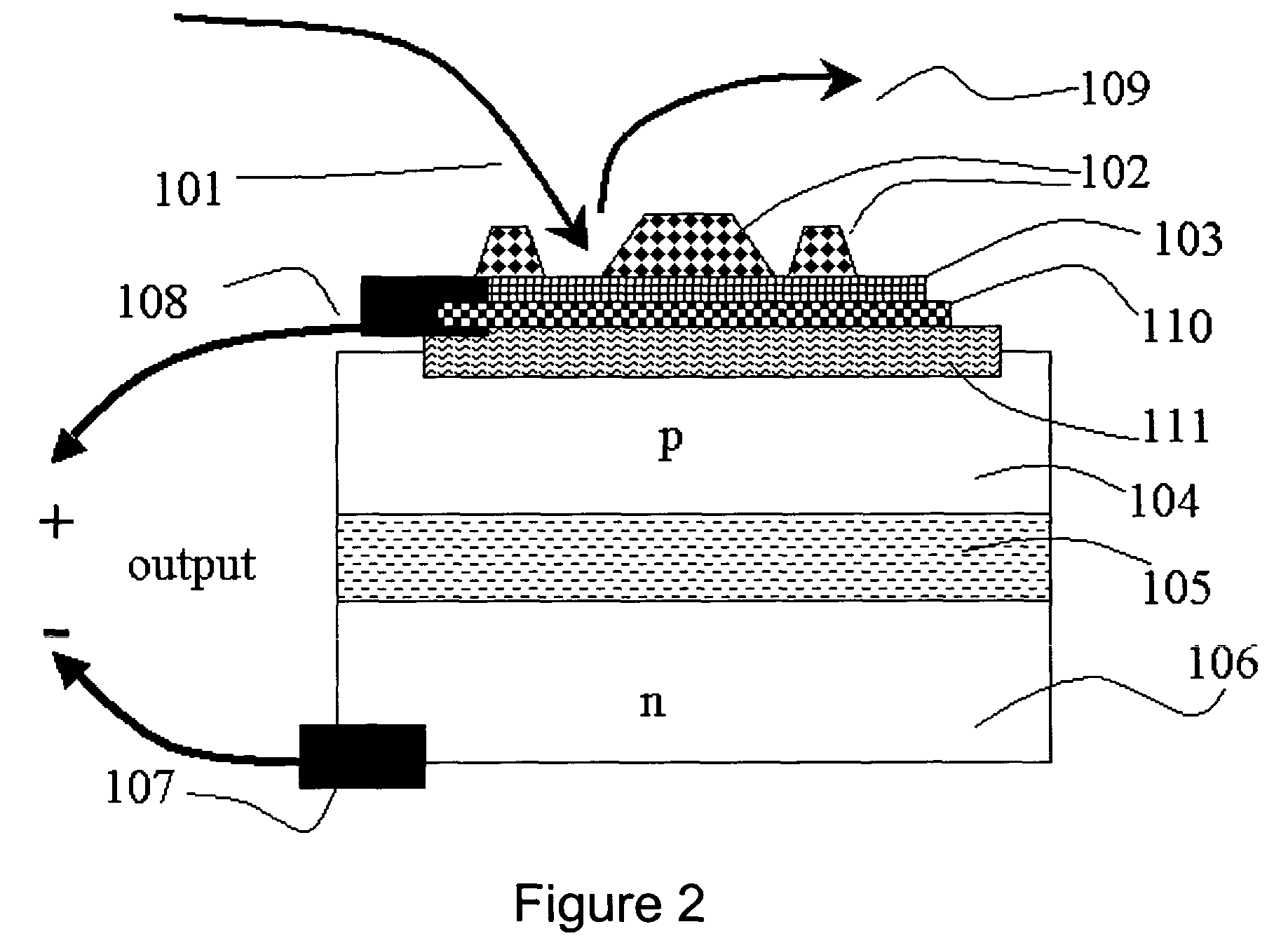
  • Figure 2
    Figure 2
  • Figure 3
    Figure 3
Patent Text Reader

Abstract

An apparatus and method for extracting energy is provided. In one aspect the method includes using chemical reactions to generate vibrationally excited molecules, such as high-quantum-number-vibrationally-excited gas molecules in a region. The vibration energy in the vibrationally excited molecules is converted into hot electrons when the excited molecules contact a conductor. A geometry is provided so that the excited molecules may travel, diffuse or wander into a conductor before loosing a useful fraction of the vibrational energy. Optionally, the generating and the converting process may be thermally separated, at least in part. The short lived hot electrons are converted into longer lived entities such as carriers and potentials in a semiconductor, where the energy is converted into a useful form.
Need to check novelty before this filing date? Find Prior Art

Description

CROSS REFERENCE TO RELATED APPLICATIONS

[0001] This application is a continuation of U.S. patent application Ser. No. 10 / 142,684, filed May 10, 2002, now U.S. Pat. No. 6,649,823, U.S. patent application Ser. No. 10 / 142,684 claims the benefit of U.S. Provisional Patent Application No. 60 / 290,058, filed on May 10, 2001, which application is incorporated herein by reference in its entirely. U.S. patent application Ser. No. 10 / 142,684 is a continuation-in-part of U.S. patent application Ser. No. 10 / 038,257 filed on Oct. 24, 2001, now U.S. Pat. No. 6,700,056. U.S. patent application Ser. No. 10 / 038,257 is a continuation of U.S. patent application Ser. No. 09 / 589,669, filed on Jun. 7, 2000, now U.S. Pat. No. 6,327,859. U.S. patent application Ser. No. 09 / 589,669 is a divisional of U.S. patent application Ser. No. 09 / 304,979, filed on May 4, 1999, now U.S. Pat. No. 6,114,620.TECHNICAL FIELD OF THE INVENTION

[0002] The invention relates generally to a method and device to convert chemical react...

Examples

Embodiment Construction

[0029]In one aspect, the method and apparatus provided enhance the peak power and the rate of energy conversion and further enhance the desorption of exhaust and contamination products from the conducting surface. The method, in one aspect, includes choosing catalysts with relatively low affinity for exhaust products. Such catalysts include platinum, palladium and related catalysts have shown this property with respect to hydrogen and alcohol combustion.

[0030]In another aspect, the method includes bringing fuel and oxidizer into the reaction region and permitting exhaust products to leave the reaction region. Exhaust products may migrate and diffuse away. One way to allow the exhaust products to migrate and diffuse away includes flowing gaseous reactants over the reaction surface and letting the exhaust products leave the surface into the gas flow. In another aspect, the apparatus provided may be designed to generate a single, one time pulse of power, in which case the exhaust produ...