
Airbed
a technology for airbeds and beds, applied in the field of beds, can solve the problems of ineffective cost effectiveness of airbeds, and achieve the effects of convenient portability, cost saving, and light weigh
- Summary
- Abstract
- Description
- Claims
- Application Information
AI Technical Summary
Benefits of technology
Problems solved by technology
Method used
Image

Examples
Embodiment Construction
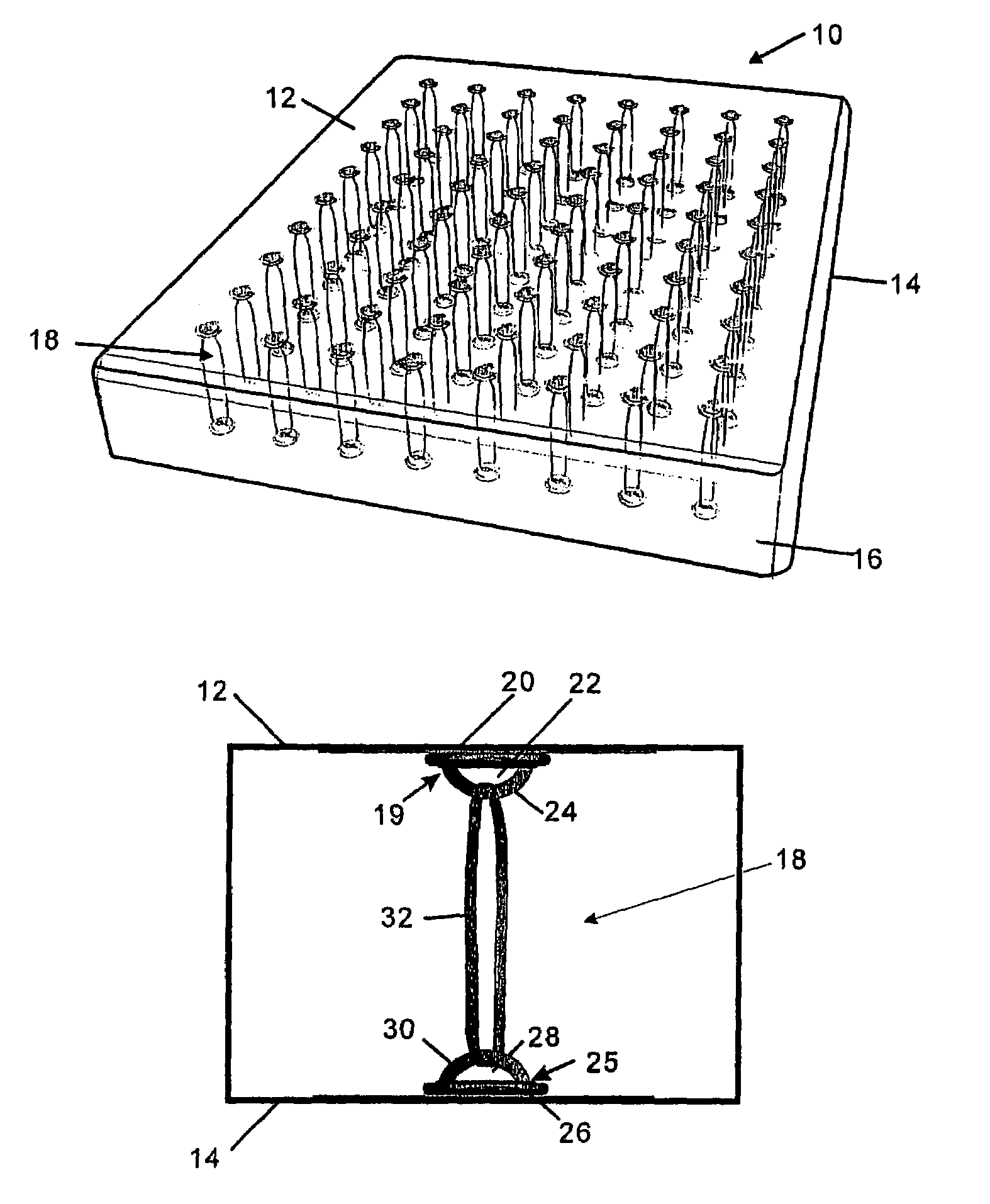
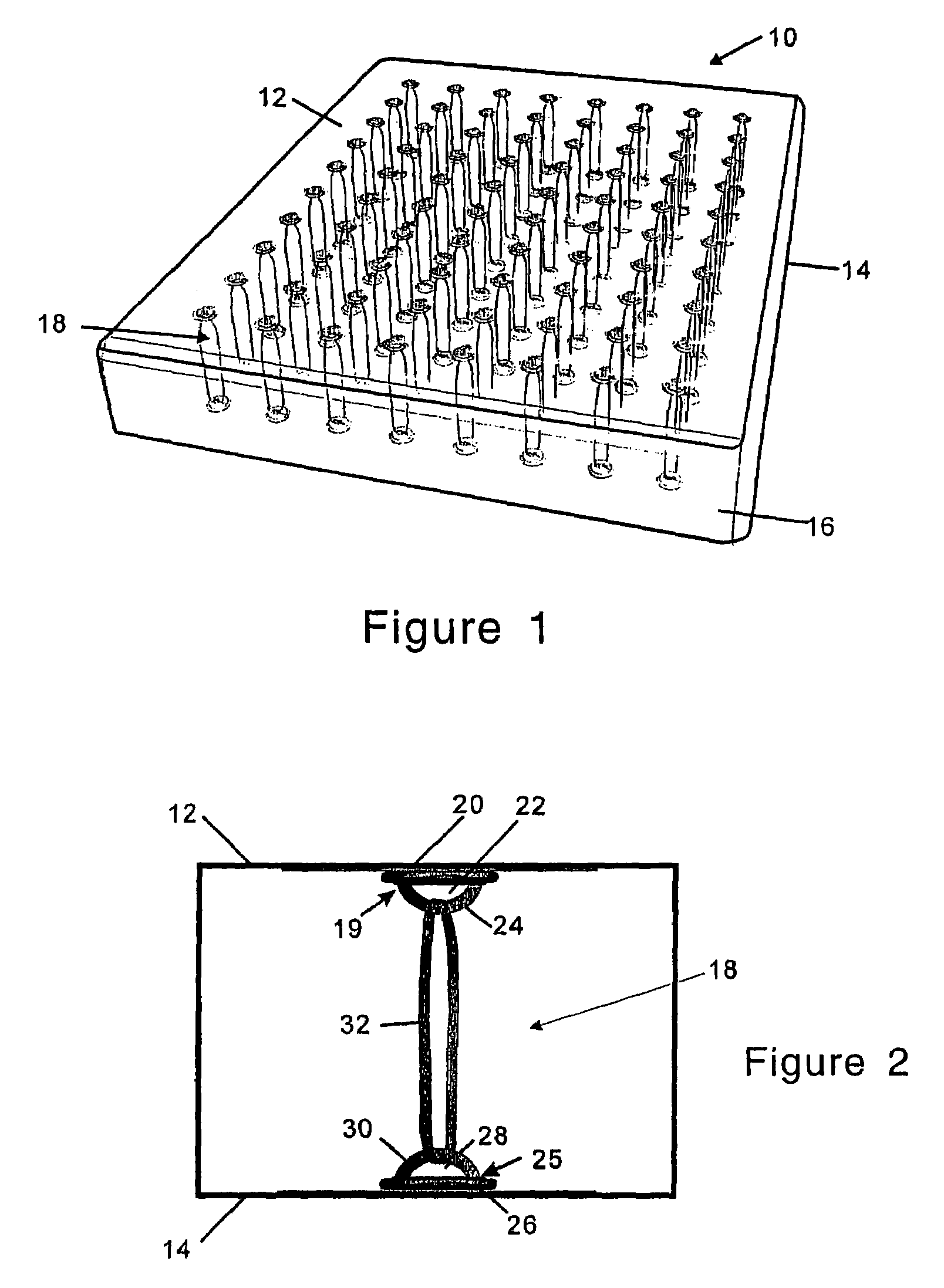
[0012]Referring to FIG. 1, in the exemplary embodiment, the exterior of the airbed 10 of the present invention may be of any design known in the art. The airbed 10 of the exemplary embodiment includes a top sheet 12, a bottom sheet 14, and a side sheet 16. Typically, the top edges of the side sheet 16 are connected to the edges of the top sheet 12 and the bottom edges of the side sheet 16 are connected to the edges of bottom sheet 14 such that the airbed 10 forms a gas chamber upon inflation.
[0013]As shown in FIG. 1, there are also coil beams 18 located throughout the interior of the airbed 10 which are connected on one end to the top sheet 12 and on the other end to the bottom sheet 14. The coil beams 18 can maintain the shape of the airbed 10 by preventing the various portions of the top sheet 12 or the bottom sheet 14 from stretching out too far (for example, into a balloon shape) when air is pumped therein.
[0014]The detailed structure of the coil beams 18 is shown in FIG. 2 and ...
PUM
 Login to View More
 Abstract
Description
Claims
Application Information
 Login to View More