
Ion generation by the temporal control of gaseous dielectric breakdown
a dielectric breakdown and temporal control technology, applied in the field of producing ions and free electrons in gaseous dielectric breakdown with electric current pulse, can solve the problems of gas breakdown and transition from electrical insulator to conductor, inability to produce a large number of ions, nano-featured cathode emitters are prone to contamination and damage, etc., to prevent the formation of destructive plasma or glow, and stop the breakdown of gas
- Summary
- Abstract
- Description
- Claims
- Application Information
AI Technical Summary
Benefits of technology
Problems solved by technology
Method used
Image

Examples
Embodiment Construction
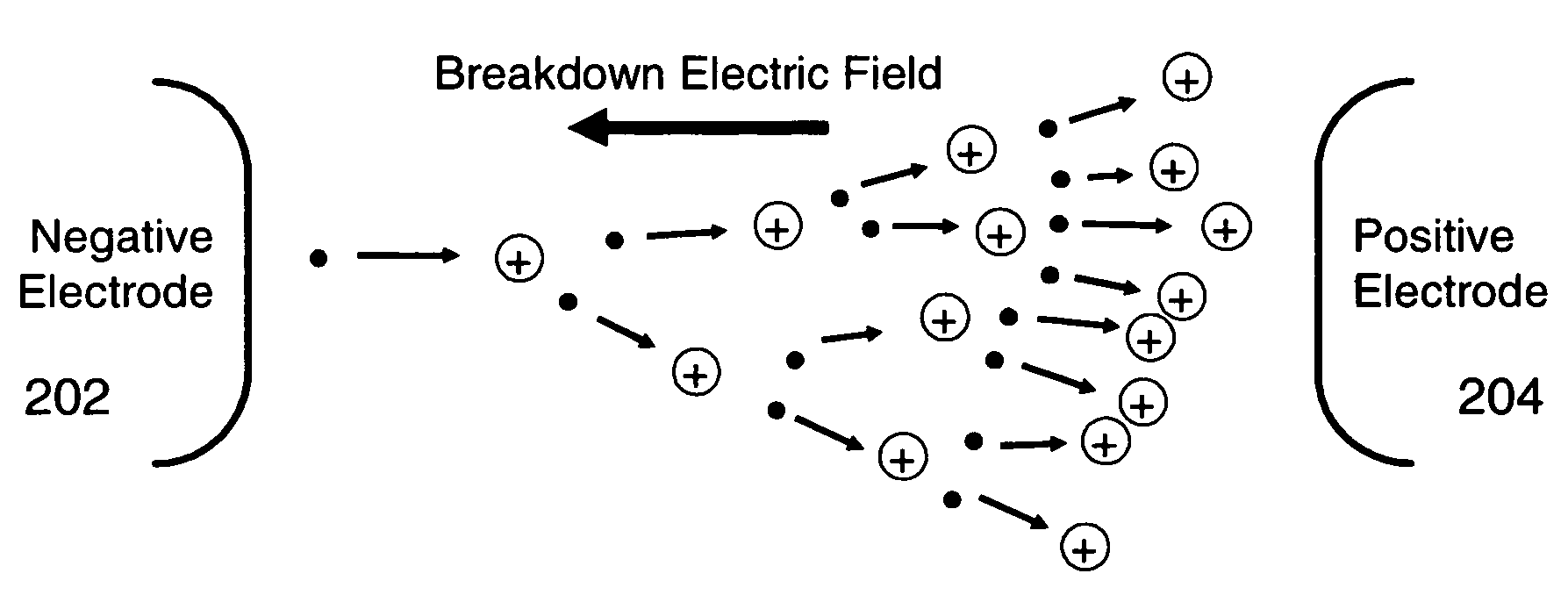
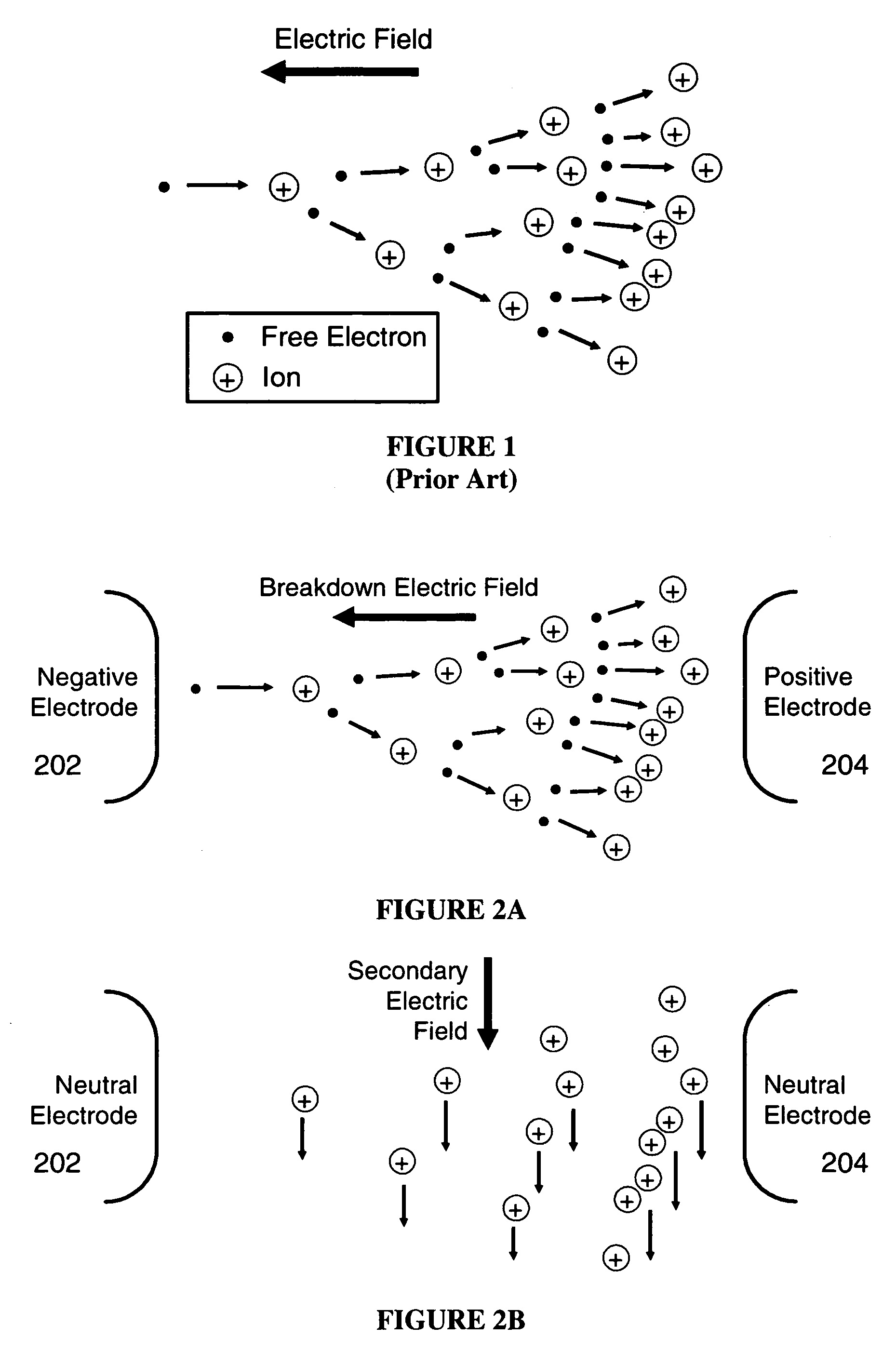
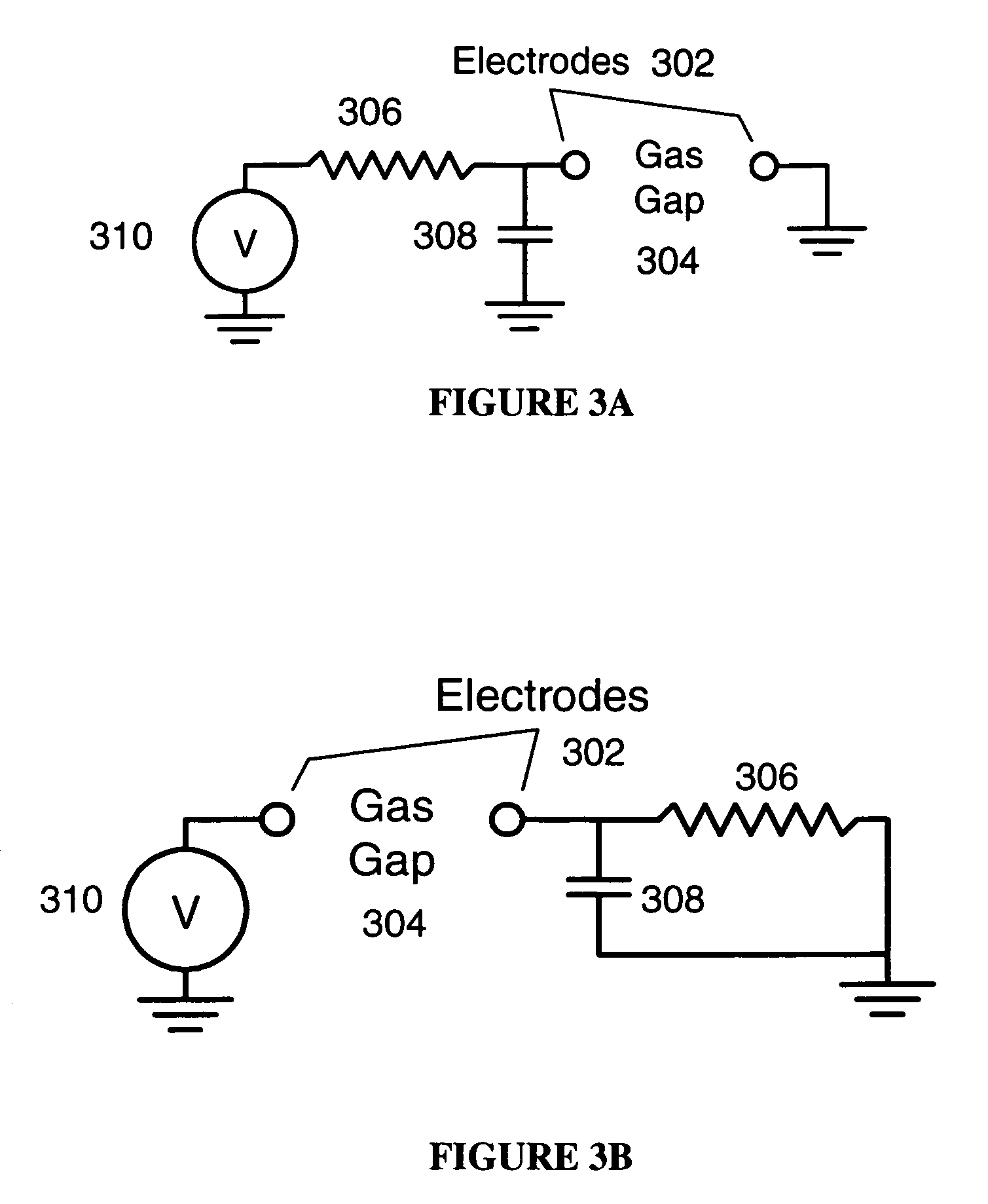
[0024]The present invention will now be described in detail with reference to the drawings, which are provided as illustrative examples of the invention so as to enable those skilled in the art to practice the invention. Notably, the figures and examples below are not meant to limit the scope of the present invention to a single embodiment, but other embodiments are possible by way of interchange of some or all of the described or illustrated elements. Moreover, where certain elements of the present invention can be partially or fully implemented using known components, only those portions of such known components that are necessary for an understanding of the present invention will be described, and detailed descriptions of other portions of such known components will be omitted so as not to obscure the invention. In the present specification, an embodiment showing a singular component should not be considered limiting; rather the invention can be extended to other embodiments incl...
PUM
 Login to View More
 Abstract
Description
Claims
Application Information
 Login to View More