
Ambient noise-based adaptation of secondary path adaptive response in noise-canceling personal audio devices
a technology of adaptive response and secondary path, applied in the field of personal audio devices, can solve the problem that the secondary path estimate cannot be typically updated
- Summary
- Abstract
- Description
- Claims
- Application Information
AI Technical Summary
Benefits of technology
Problems solved by technology
Method used
Image

Examples
Embodiment Construction
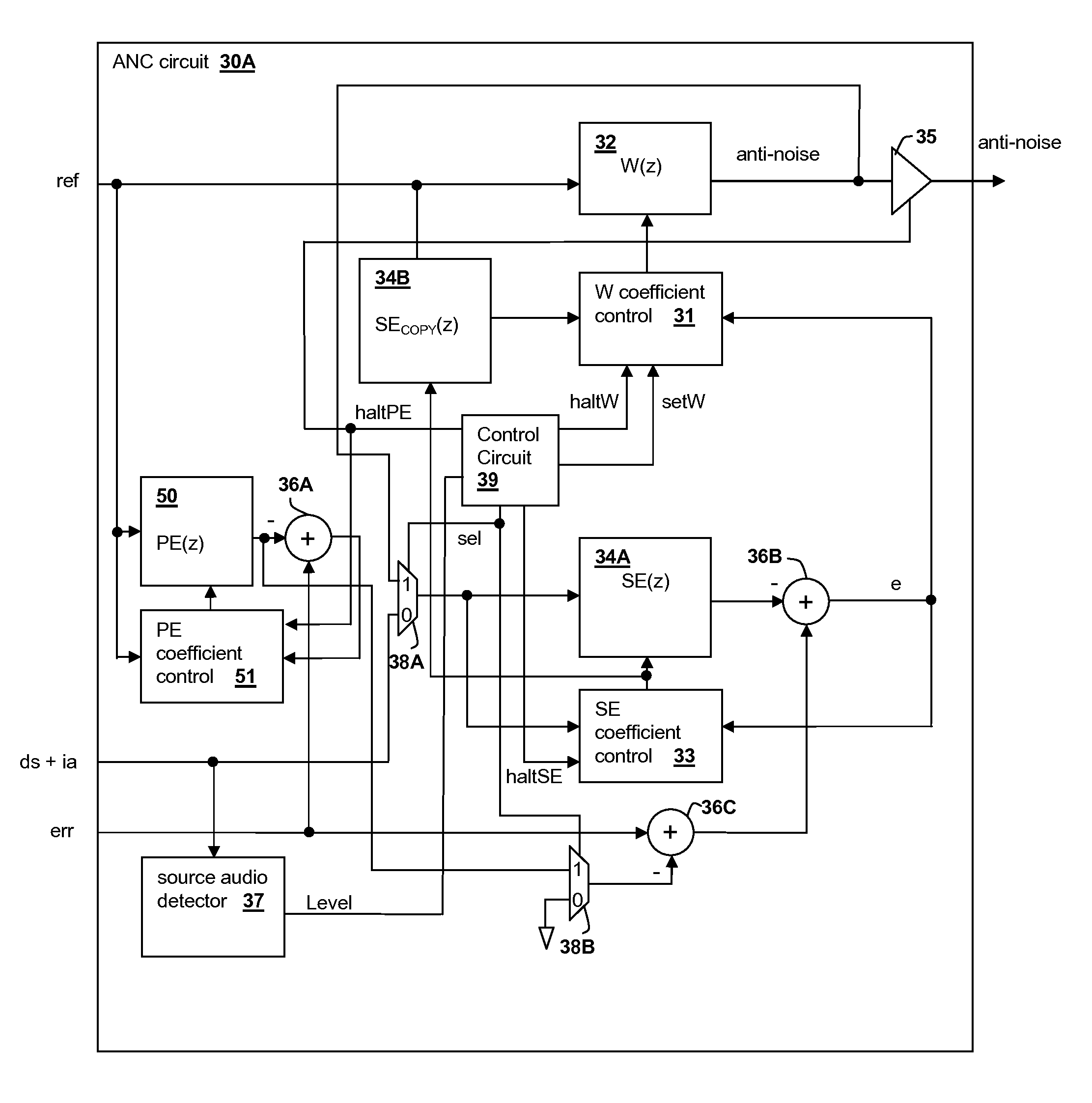
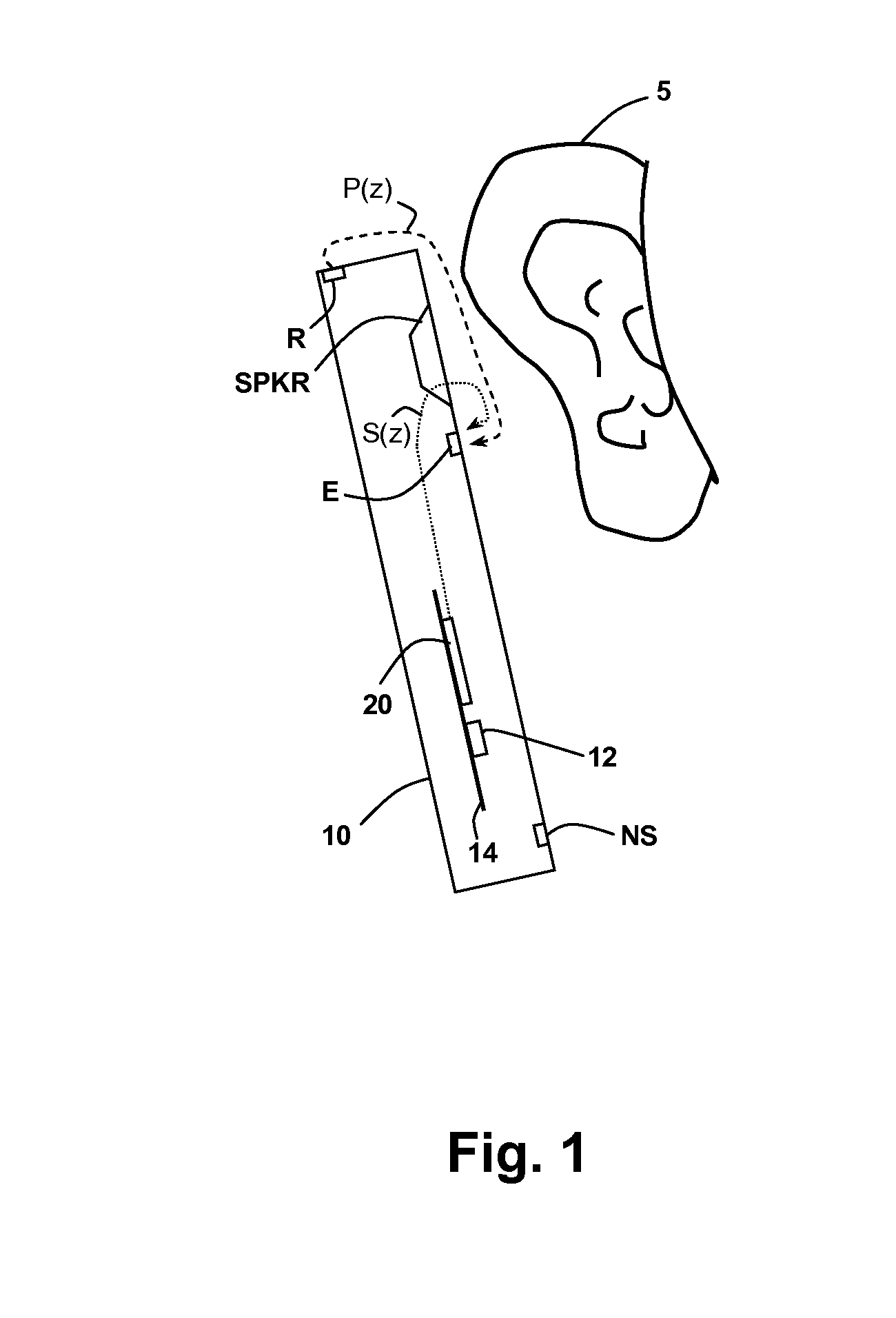
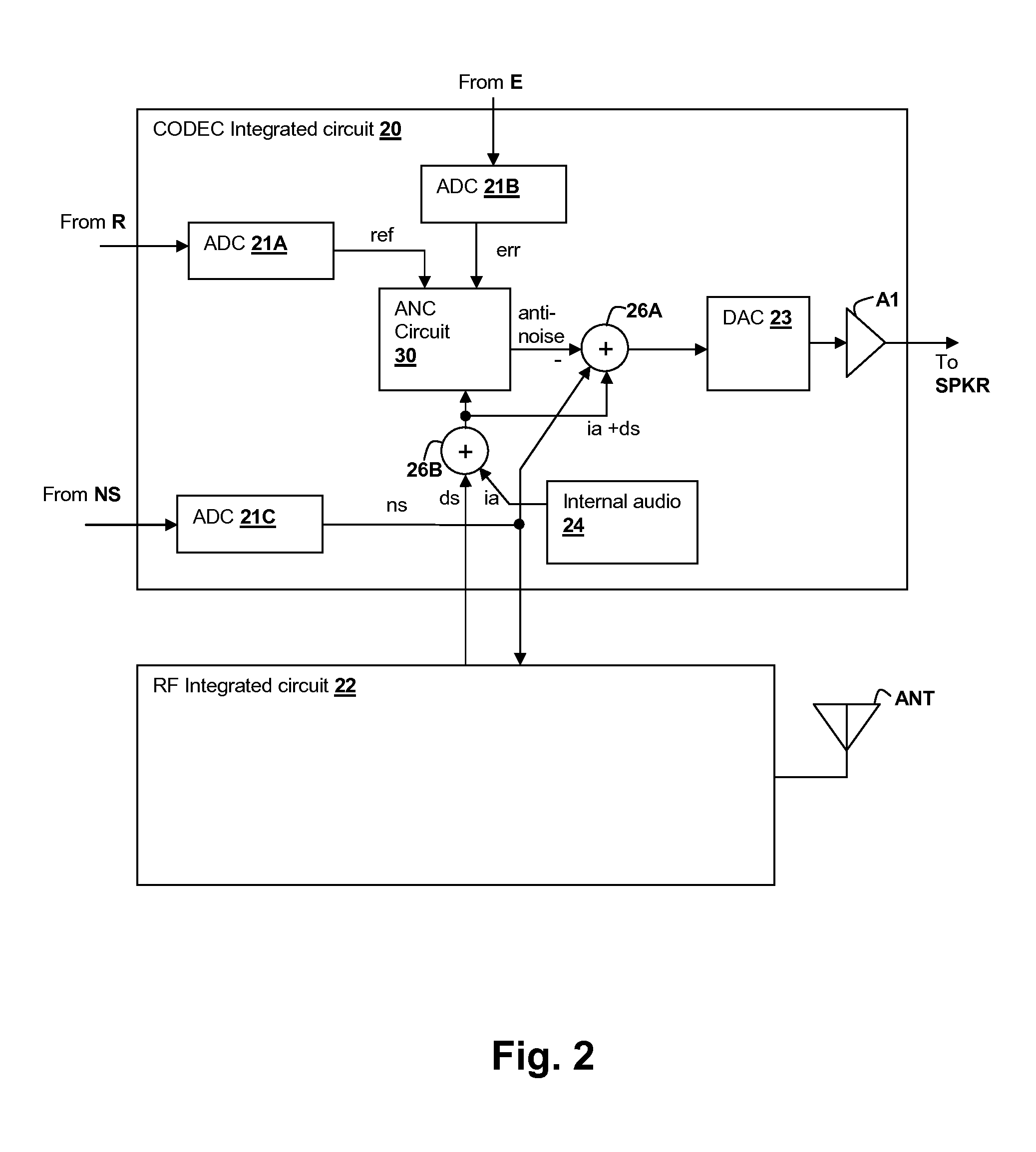
[0016]The present disclosure reveals noise canceling techniques and circuits that can be implemented in a personal audio device, such as a wireless telephone. The personal audio device includes an adaptive noise canceling (ANC) circuit that measures the ambient acoustic environment and generates a signal that is injected into the speaker (or other transducer) output to cancel ambient acoustic events. A reference microphone is provided to measure the ambient acoustic environment, and an error microphone is included to measure the ambient audio and transducer output at the transducer, thus giving an indication of the effectiveness of the noise cancellation. A secondary path estimating adaptive filter is used to remove the playback audio from the error microphone signal, in order to generate an error signal. However, depending on the presence (and level) of the audio signal reproduced by the personal audio device, e.g., downlink audio during a telephone conversation or playback audio f...
PUM
 Login to View More
 Abstract
Description
Claims
Application Information
 Login to View More