
Peptide having anti-anxiety effect and method for screening thereof
A screening method and an anti-anxiety technology, applied in the field of peptides, can solve the problems of unclear function of GPR100, unclear function of SALPR, unknown relaxin-3 regulation of anxiety and depression, etc.
Patent Information
- Authority / Receiving Office
- CN · China
- Current Assignee / Owner
- Publication Date
- 2008-05-28
- Estimated Expiration
- Not applicable · inactive patent
Smart Images
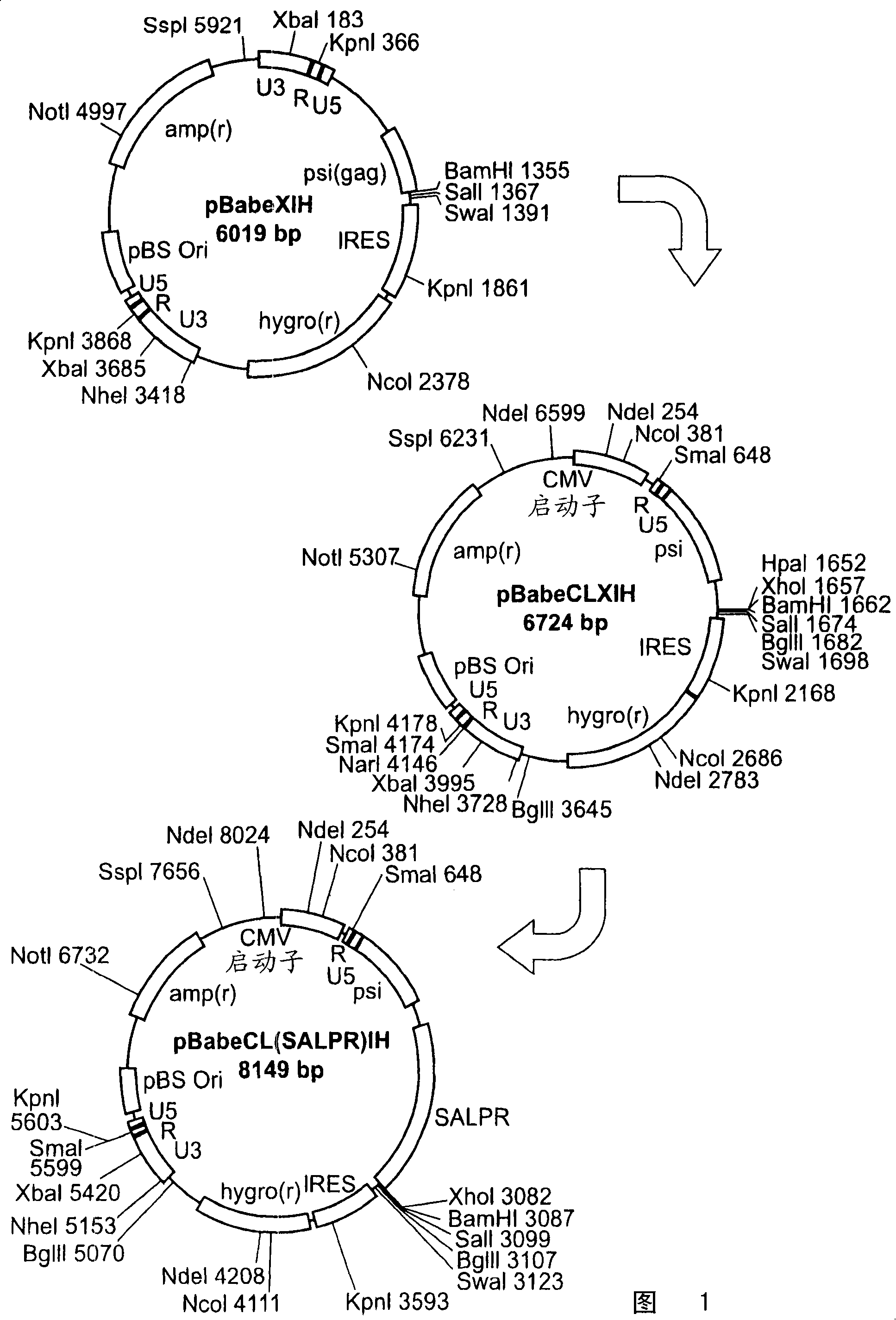
Figure 1 
Figure 2 
Figure 3
Abstract
Description
[0001] Technology Classification
[0002] The present invention relates to a polypeptide with anti-anxiety effect; a method for using the polypeptide to treat anxiety; a method for screening compounds or their salts or hydrates related to anxiety regulation that activate or inhibit the receptor of the polypeptide and the screening agent kit. Background technique
[0003] Physiologically active substances such as brain-gut hormones, chemokines, neuropeptides or neurotransmitters exert their effects through specific receptors present on the cell membrane. Among these receptors, receptors that have a structure that penetrates the cell membrane seven times and are coupled to a G protein trimer in the cell are specifically classified as G protein-coupled receptors (GPCRs). When GPCR binds to a specific ligand, it transmits a signal to the cell, activates or inhibits the cell, and thus plays an important role in the functional expression of various organs. Therefore, agonists that...
Examples
preparation example Construction
[0144] Preparation of SALPR
[0145] The polynucleotide encoding SALPR is introduced into an appropriate host cell, and the obtained transformant is cultured under the condition that it can be expressed. The desired polypeptide can be obtained from the culture without purification, or it can be separated and purified according to the expression protein. SALPR is prepared by isolating and purifying the desired polypeptide from the culture by conventional methods. Examples of the above separation and purification methods include ammonium sulfate salting out, ion exchange column chromatography using ion exchange cellulose, molecular sieve column chromatography using molecular sieve gel, affinity column chromatography using protein A-bound polysaccharides , dialysis, or freeze-drying.
[0146] polynucleotide encoding SALPR
[0147] The polynucleotide encoding the SALPR of the present invention is not particularly limited as long as it is a polynucleotide encoding the SALPR o...
Embodiment 1
[0210] [Example 1] Preparation of polynucleotide encoding SALPR
[0211] The polynucleotide encoding SALPR was isolated based on the base sequence shown in SEQ ID NO:3 as follows. There are 1410 base pairs shown in SEQ ID NO: 3, and the region encoding SALPR is known to be from position 1 to position 1407 (1410 base pairs, 469 amino acid residues) (GenBank accession number: NM_016568). In order to isolate the gene by polymerase chain reaction (PCR), PCR primers shown in SEQ ID NO: 11 and SEQ ID NO: 12 were prepared in a conventional manner.
[0212] Using human genomic DNA (Roche Diagnostics) as a template, using a combination of PCR primers comprising SEQ ID NO: 11 and SEQ ID NO: 12 and Expand High FidelityPCR System (Roche Diagnostics), according to the operating method of the manual (98 ° C for 1 minute - 57 ℃ 1 minute-72 ℃ minutes), repeated 30 times for PCR. As a result, a DNA fragment of about 1,400 base pairs was obtained.
[0213] This DNA fragment was inserted in...
Embodiment 2
[0214] [Example 2] Preparation of retroviral vector plasmids
[0215] By cutting pBabe Puro (Morgenstern, J.P. and Land, H. Nucleic Acids Res., 18, p.3587-3596, 1990) (SEQ ID NO: 13) with SalI and ClaI, the SV40promoter-puro (r) region was removed by Klenow fragment blunts the ends. Insertion of the IRES-hyg(r) region at the cleavage point resulted in pBabeXIH, in which the IRES-hyg(r) region was excised by cutting pIRES hyg (Clontech) with NsiI and XbaI, and the ends were processed by T4 polymerase flat end.
[0216] The 5'-LTR-packaging signal was removed by cleavage of pBabeXIH with SspI and BamHI. The 5'LTR-CMV promoter-packaging signal was inserted at the cutting point to obtain pBabeCLXIH, wherein the 5'LTR-CMV promoter-packaging signal was cut out by cutting pCLXSN (IMGENEX) with SspI and BamHI.