
Method for producing epoxybutane
A technology of butylene oxide and hydrogen peroxide, applied in the direction of hydrocarbon production from oxygen-containing organic compounds, organic chemistry, etc., can solve problems such as pollution, strong corrosion of equipment, large amount of waste water and waste residue, etc., and achieve good technical economy, The effect of good technical effects
Patent Information
- Authority / Receiving Office
- CN · China
- Patent Type
- Applications(China)
- Current Assignee / Owner
- Publication Date
- 2016-01-06
Smart Images
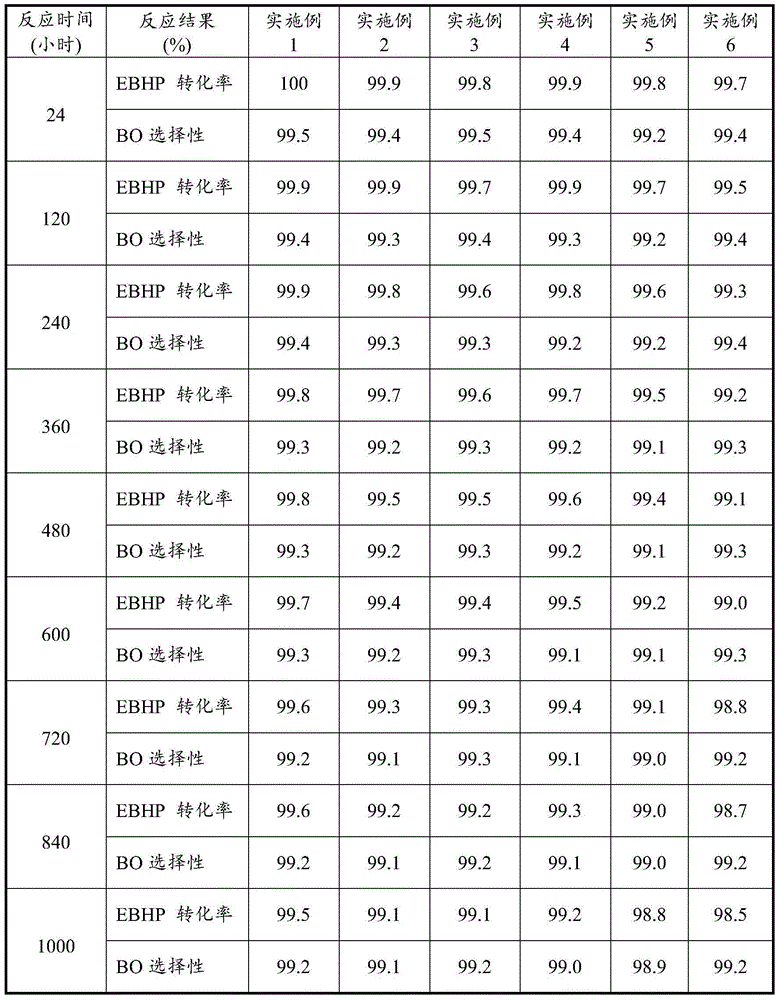
Figure 1
Abstract
Description
technical field
[0001] The present invention relates to a method for producing butylene oxide. Background technique
[0002] Polyether polyol, referred to as polyether, is a new type of synthetic lubricant base oil researched and developed in the late 1970s and early 1980s. There are many types of them, mainly distinguished by monomers. The monomers for the synthesis of polyethers have been developed to include ethylene oxide, propylene oxide, butylene oxide and tetrahydrofuran. In addition to being used as the base oil of new synthetic lubricants, polyether is also an important raw material for the production of polyurethane, and has multiple functions such as defoaming, demulsification, dispersion, penetration, and emulsification. Due to the limitation of butylene oxide production technology, our common polyethers are mainly polyether polyols synthesized from ethylene oxide or propylene oxide as monomer raw materials, and polyether polyols synthesized from butylene oxide ...
Examples
Embodiment 1
[0032] Under the conditions of 160°C, 0.4MPa, and controlling the volume content of tail oxygen to less than 5%, ethylbenzene and air undergo peroxidation reaction to obtain hydrogen peroxide ethylbenzene oxidation solution with a weight concentration of 10%, which is obtained by vacuum concentration. Concentration of 30% ethylbenzene hydrogen peroxide (EBHP) oxidation solution.
[0033] The above-mentioned weight concentration is 30% ethylbenzene hydrogen peroxide oxidation solution in the presence of Ti-HMS catalyst (the weight percentage of Ti is 1.6%), and 1-butene is carried out epoxidation reaction in fixed-bed reactor Generate 1,2-epoxybutane, α-methylbenzyl alcohol and a small amount of acetophenone. Wherein 1-butene / EBHP=4:1 (mol), the gravimetric space velocity of EBHP=3 hours -1 , the reaction temperature is 105°C, and the reaction pressure is 3.5MPa. The reaction results are shown in Table 1.
[0034] Pass the reaction mixture into a butene recovery tower to rec...
Embodiment 2
[0036] Under the conditions of 150°C, 0.3MPa, and controlling the volume content of tail oxygen to less than 5%, ethylbenzene and air undergo peroxidation reaction to obtain hydrogen peroxide ethylbenzene oxidation solution with a weight concentration of 10%, which is obtained by vacuum concentration. Concentration of 28% ethylbenzene hydroperoxide (EBHP) oxidation solution.
[0037] The above-mentioned weight concentration is that the hydrogen peroxide ethylbenzene oxidation liquid of 28% is in the presence of Ti-MCM-41 catalyst (the weight percent composition of Ti is 2.0%), and carries out epoxidation with 2-butene in a fixed-bed reactor The reaction produces 2,3-epoxybutane, α-methyl benzyl alcohol and a small amount of acetophenone. Wherein 2-butene / EBHP=7:1 (mol), the gravimetric space velocity of EBHP=4 hours -1 , the reaction temperature is 98°C, and the reaction pressure is 3.0MPa. The reaction results are shown in Table 1.
[0038] Pass the reaction mixture into a...
Embodiment 3
[0040] Under the conditions of 155°C, 0.35MPa, and controlling the volume content of tail oxygen to less than 5%, ethylbenzene and air undergo peroxidation reaction to obtain hydrogen peroxide ethylbenzene oxidation solution with a weight concentration of 10%, which is obtained by vacuum concentration. Concentration of 30% ethylbenzene hydrogen peroxide (EBHP) oxidation solution.
[0041] The above weight concentration is 30% ethylbenzene hydrogen peroxide oxidation solution in the presence of Ti-TUD-1 catalyst (the weight percentage of Ti is 1.5%), in a fixed bed reactor and isobutylene to carry out epoxidation reaction to generate 2-Methyl-1,2-propylene oxide, α-methylbenzyl alcohol and a small amount of acetophenone. Wherein isobutylene / EBHP=6:1 (mol), the gravimetric space velocity of EBHP=4 hours -1 , the reaction temperature is 100°C, and the reaction pressure is 3.5MPa. The reaction results are shown in Table 1.
[0042] Pass the reaction mixture into a butene recove...