
Polymer composition, and liquid crystal alignment film for horizontal electric field drive-mode liquid crystal display element
A composition and polymer technology, applied in optics, instruments, nonlinear optics, etc., can solve problems such as inability to rub liquid crystal alignment film uniformly, failure to achieve liquid crystal alignment, and static electricity
Patent Information
- Authority / Receiving Office
- CN · China
- Current Assignee / Owner
- Publication Date
- 2016-05-18
Smart Images
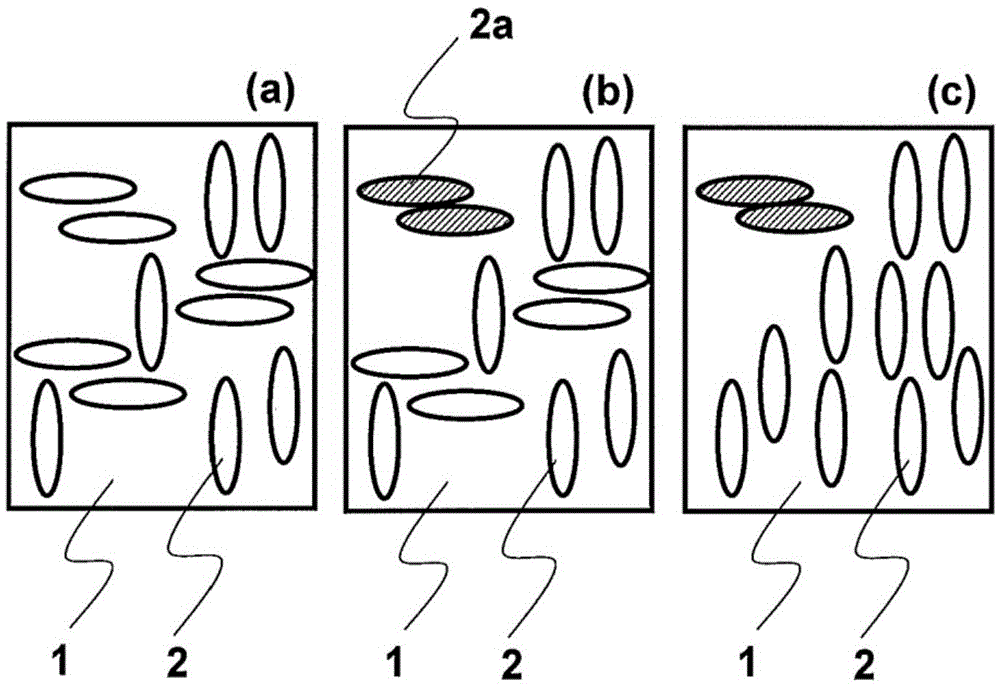
Figure 1 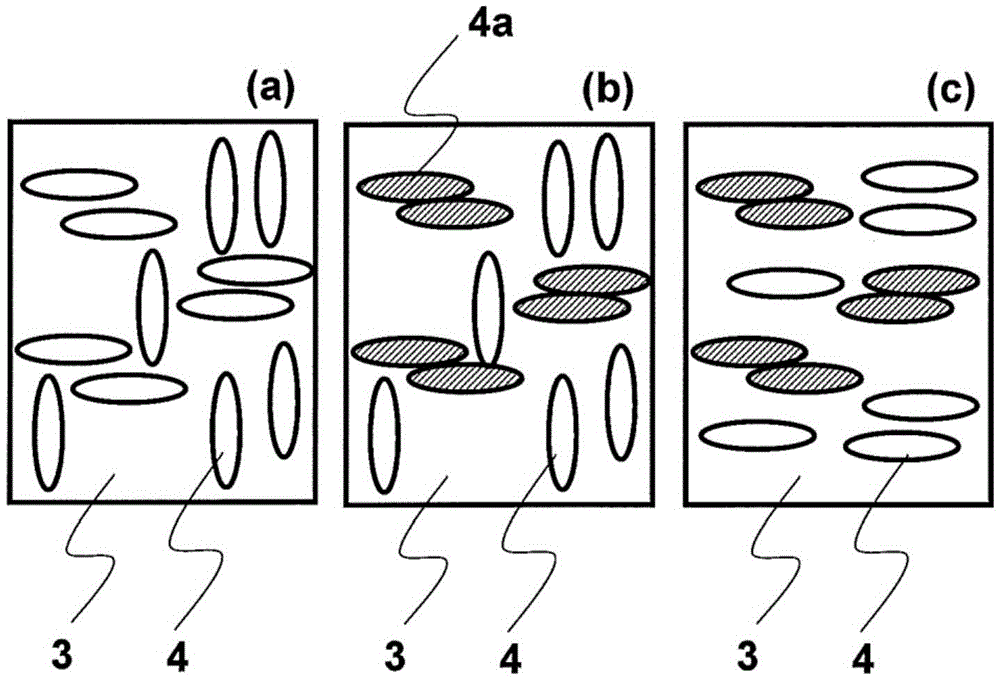
Figure 2 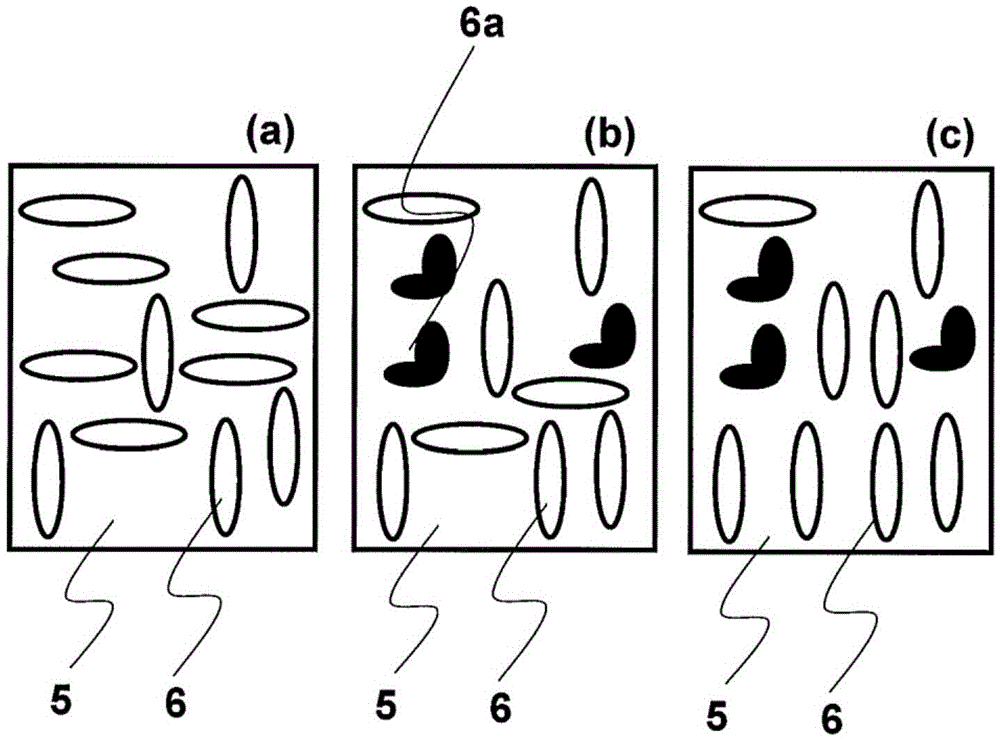
Figure 3
Abstract
Description
technical field
[0001] The present invention relates to a novel polymer composition, a liquid crystal alignment film for a transverse electric field-driven liquid crystal display element using the same, and a method for manufacturing a substrate having the alignment film. Furthermore, the present invention relates to a novel method for producing a liquid crystal display element having excellent image sticking properties and reliability such as voltage retention. Background technique
[0002] Liquid crystal display devices are known as display devices that are light in weight, thin in cross-section, and low in power consumption. In recent years, they have been used in large-scale television applications, etc., and have achieved remarkable development. The liquid crystal display element is constituted, for example, by sandwiching a liquid crystal layer between a pair of transparent substrates provided with electrodes. Also, in a liquid crystal display element, an organic film...
Examples
preparation example Construction
[0243] [Preparation of polymer composition]
[0244] It is preferable to prepare the polymer composition used for this invention in the form of a coating liquid, and to suitably form a liquid crystal aligning film. That is, the polymer composition used in the present invention is preferably prepared in the form of a solution in which a resin component for forming a resin coating is dissolved in an organic solvent. Here, the resin component refers to a resin component containing the above-mentioned photosensitive side chain type polymer capable of expressing liquid crystallinity. In this case, the content of the resin component is preferably 1% by mass to 20% by mass, more preferably 3% by mass to 15% by mass, particularly preferably 3% by mass to 10% by mass.
[0245] In the polymer composition of this embodiment, the above-mentioned resin components may all be the above-mentioned photosensitive side-chain polymers capable of exhibiting liquid crystallinity, and may be mixed ...
Embodiment
[0314] Abbreviations used in Examples are as follows.
[0315] (methacrylic monomer)
[0316]
[0317]
[0318] MA1 was synthesized by the synthesis method described in the patent document (WO2011-084546).
[0319] MA2 was synthesized by the synthesis method described in the patent document (Japanese Patent Laid-Open No. 9-118717).
[0320] MA3 is a novel compound that has not yet been disclosed in literature, and its synthesis method will be described in detail in Synthesis Example 1 below.
[0321] MA3-1 was synthesized by the synthesis method described in literature (LiquidCrystals (2005), 32(8), 1031-1044.).
[0322] As MA4, commercially available M6BC (manufactured by Midori Chemical Co., Ltd.) was used.
[0323] (Organic solvents)
[0324] THF: Tetrahydrofuran
[0325] NMP: N-methyl-2-pyrrolidone
[0326] BC: Butyl cellosolve
[0327] EDC: 1-(3-Dimethylaminopropyl)-3-ethylcarbodiimide hydrochloride
[0328] DMAP: 4-Dimethylaminopyridine
[0329] (polymeriz...
Synthetic example 1
[0332] Synthesis of compound [MA3] (MA9 in the following formula)
[0333]
[0334] Add compound [MA2] (20.00g, 65.3mmol), compound [MA9-1] (ie, compound MA3-1) (14.09g, 71.8mmol), EDC (15.02g, 78.4mmol), DMAP (0.80g, 6.53mmol), THF (200g) were reacted at 23°C. Reaction tracking was carried out by HPLC, and after confirming completion|finish of reaction, the reaction solution was poured into distilled water (1.2L), ethyl acetate (2L) was added, and the water layer was removed by liquid separation operation. After the organic layer was washed three times with distilled water (500 mL), the organic layer was dried over magnesium sulfate. Thereafter, the solvent was filtered and distilled off with an evaporator to obtain compound [MA9-2] (ie, compound MA3-2) as an oily compound.
[0335] Next, pyridinium p-toluenesulfonate (referred to as PPTS) (1.59 g, 6.3 mmol) and ethanol (100 g) were added to the obtained compound [MA9-2], and it heated and stirred at 60 degreeC. Reactio...