
Liquid crystal alignment agent, liquid crystal alignment film, liquid crystal display element, polyamide acid and imidized polymers thereof, and diamine compound
A technology of liquid crystal alignment agent and liquid crystal alignment film, which is applied in the preparation of organic compounds, preparation of amino hydroxyl compounds, liquid crystal materials, etc., can solve the problems that cannot meet the requirements of regenerative display at the same time, cannot be fully improved, and achieve high contrast, electrical Excellent effect
Patent Information
- Authority / Receiving Office
- CN · China
- Patent Type
- Applications(China)
- Current Assignee / Owner
- Publication Date
- 2014-12-17
- Estimated Expiration
- Not applicable · inactive patent
Smart Images
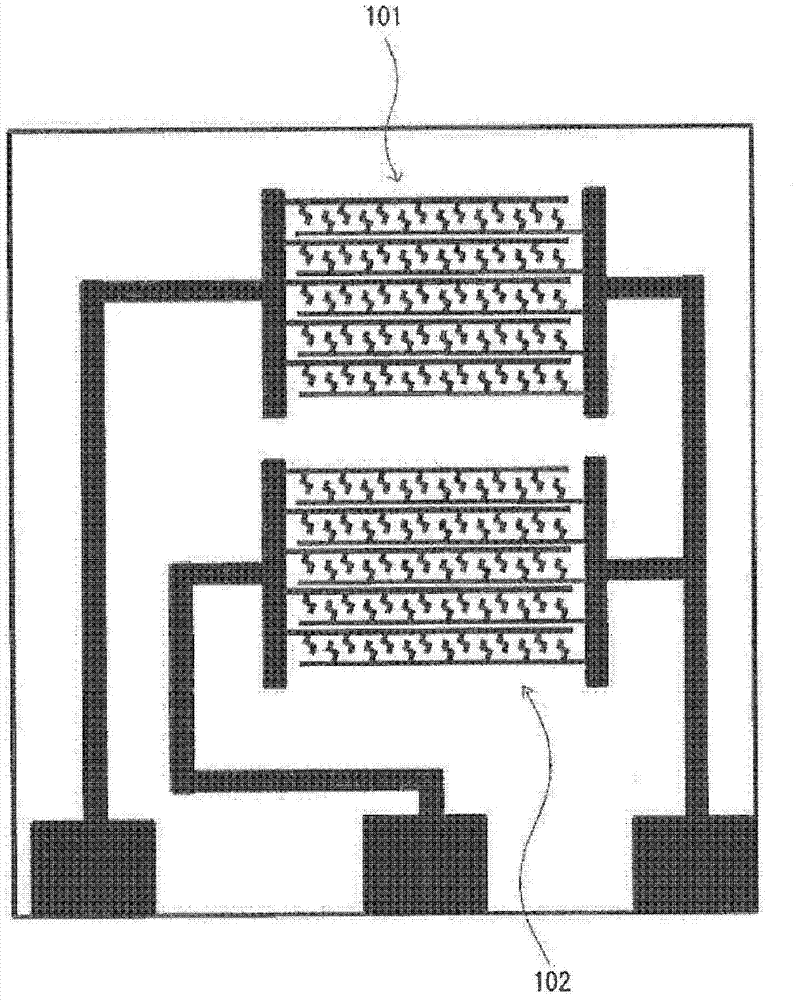
Figure 1 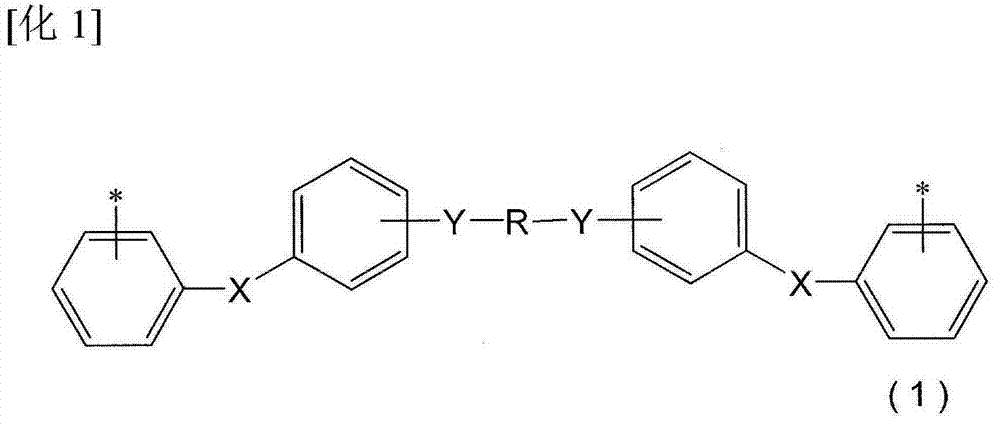
Figure 2 
Figure 3
Abstract
Description
technical field
[0001] The invention relates to a liquid crystal aligning agent. Background technique
[0002] In liquid crystal display elements widely used in televisions, mobile devices, various monitors, etc., a liquid crystal aligning film is used to align liquid crystal molecules in a liquid crystal cell. As a method of imparting liquid crystal alignment ability to this liquid crystal alignment film, a method of rubbing an organic film, a method of obliquely vapor-depositing silicon oxide, a method of forming a monomolecular film having a long-chain alkyl group, and the like are conventionally known.
[0003] The photo-alignment method can realize uniform liquid crystal orientation without generating static electricity and dust, and can also precisely control the orientation direction of liquid crystal, so research has been actively conducted in recent years (Patent Document 1 to Patent Document 3).
[0004] However, there is a paradoxical relationship between obtaini...
Examples
Embodiment
[0158] Hereinafter, although an Example demonstrates this invention more concretely, this invention is not limited to these Examples.
[0159] The solution viscosity of each polymer solution in the following polymer synthesis examples is a value measured at 25° C. using an E-type rotational viscometer for the polymer solution indicated in each synthesis example.
[0160]
[0161] The following synthesis examples were repeatedly carried out on the following scales as necessary to ensure the required amounts for the synthesis of the following polymers.
Synthetic example A-1
[0163] Compound (A-1-1) was synthesized according to Scheme 1 below.
[0164]
[0165]
[0166] Process 1
[0167] (1) Synthesis of compound (A-1-1a)
[0168] 105.0mmol (15.98g) of methyl 4-hydroxybenzoate, 50.0mmol (10.80g) of 1,4-dibromobutane, 120.0mmol (16.59g) of potassium carbonate, and N, N-dimethyl 100 mL of acetamide was mixed and reacted at 80°C for 6 hours while stirring. Formation of crystals was observed in the reaction system from the middle of the reaction.
[0169] After the reaction was completed, 500 mL of ethyl acetate and 300 mL of distilled water were sequentially added to the reaction mixture for liquid separation and washing. After washing, the recovered organic layer was placed under reduced pressure, the solvent was removed, and the entire amount of the obtained solid was recovered, washed with ethanol, and dried under reduced pressure to obtain a white crystalline compound (A- 1-1a) 44.4 mmol (15.91 g) (88.8% yield).
[0170] (2) Synthesis ...
Synthetic example A-2
[0179] Compound (A-8-1) was synthesized according to Scheme 2 below.
[0180]
[0181] Process 2
[0182] (Ts in the formula (A-8-1b) is a tosyl group.)
[0183] (1) Synthesis of Compound (A-8-1a)
[0184] 20 g of 4-nitrophenylacetic acid, 10 g of p-hydroxybenzaldehyde, and 5 mL of piperidine were charged into a 200 mL three-necked flask equipped with a nitrogen gas inlet tube, a reflux tube, and a thermometer, and the reaction was carried out at 140° C. for 1 hour. Then, 75 mL of ethanol, 25 mL of water, and 0.5 mL of acetic acid were added thereto, and the reaction was performed under reflux for 2 hours. After completion of the reaction, the generated precipitate was collected by filtration and recrystallized using isopropanol to obtain 17 g of a reddish-brown compound (A-8-1a).
[0185] (2) Synthesis of Compound (A-8-1c)
[0186] 14 g of the obtained compound (A2-8-1a), 20 g of potassium carbonate, and 460 mL of acetonitrile were put into a 1 L three-necked flask e...