
Vertical-axis wind turbine
A wind turbine, vertical axis technology, applied to wind turbines, wind turbines at right angles to the wind direction, engines, etc., can solve the problem of poor sand or rain erosion resistance, unstable operation of generator blades, and increased bearing usage. Time and other issues to achieve good heat transfer and thermal insulation properties, improve adhesion properties, poor heat resistance properties, and enhance service life
Patent Information
- Authority / Receiving Office
- CN · China
- Patent Type
- Applications(China)
- Current Assignee / Owner
- Publication Date
- 2016-11-23
Smart Images
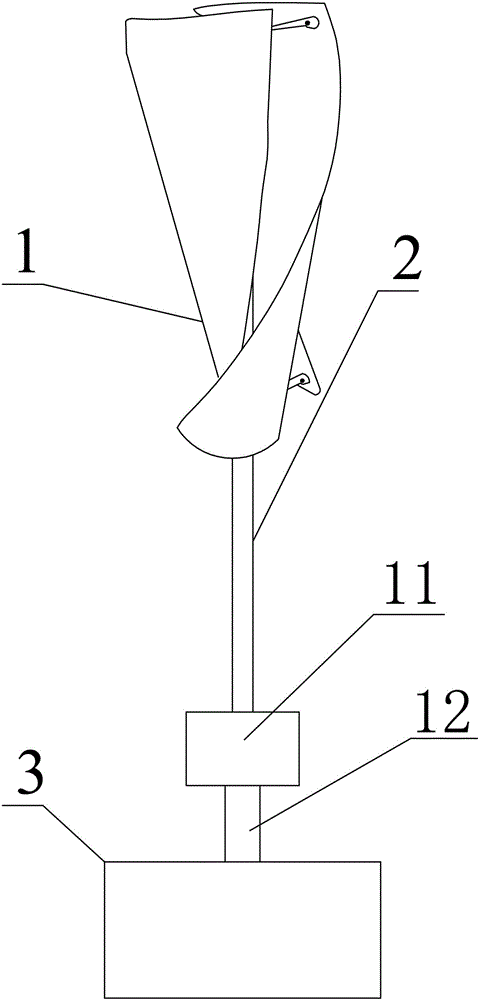
Figure 1 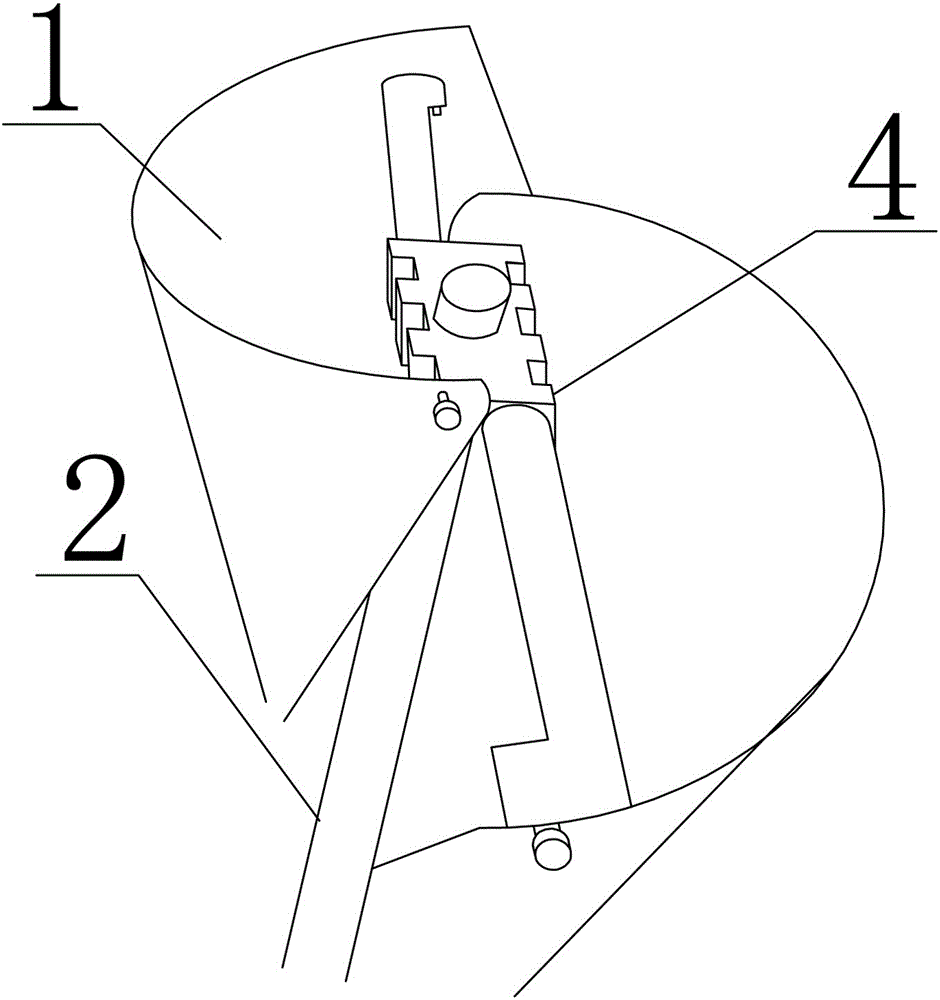
Figure 2 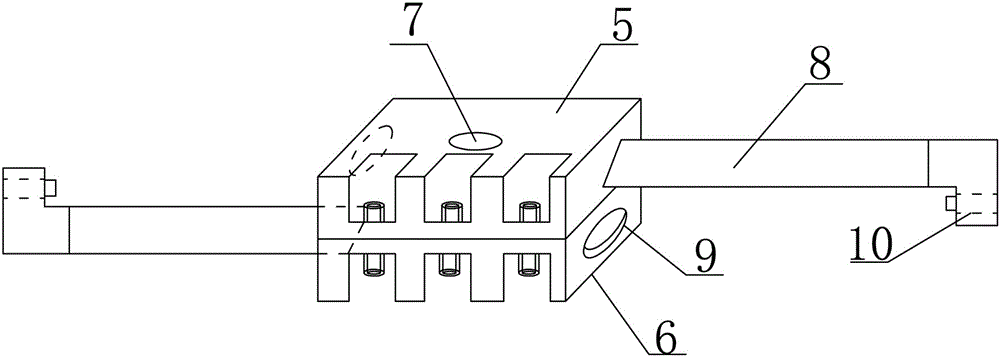
Figure 3
Abstract
Description
technical field
[0001] The invention belongs to the field of wind power generation, in particular to a vertical axis wind power generator. Background technique
[0002] At present, the survey found that most of the structures of vertical axis generator sets sold on the market are fan blades connected to the upper and lower flanges of the generator through connecting rods. On the upper and lower flanges, the service life of the generator set is reduced. Another structure is to wrap the generator in the welded frame, and the deep groove ball bearings at both ends play a supporting role. The whole weight is shared by the frame. However, due to the selection of Deep groove ball bearings, while the generator set is installed on a vertical shaft, so during operation, the axial force on the bearing is much greater than the radial force, which reduces the service life of the bearing. At the same time, the outer rotor motor needs to be used during installation. As far as the fan mou...
Examples
Embodiment 1
[0033] Such as Figure 1-Figure 3As shown, a vertical axis wind power generator includes a blade 1, a main shaft 2 and a main motor base 3, wherein the blade 1 is fixed on the main shaft 2 through a connecting bracket 4, and the connecting bracket 4 includes a vertically fixedly connected first connecting body 5 and The second connecting body 6, the first connecting body 5 and the second connecting body 6 are provided with interconnected spindle holes 7, the right side of the first connecting body 5 and the left side of the second connecting body 6 are respectively provided with connecting rods 8, the first The left side of the connecting body 5 and the right side of the second connecting body 6 are respectively provided with a threaded hole 9, and the top of the connecting rod 8 is provided with a threaded hole 10, and the two ends of the blade 1 are respectively connected to the threaded hole 9 and the threaded hole on the connecting bracket 4 by bolts. Two 10 are fixedly co...
Embodiment 2
[0044] The structure of the vertical axis wind power generator in embodiment 2 is the same as that of embodiment 1, the difference is that: the blade protective coating comprises the raw material preparation of the following parts by weight: 42 parts of styrene-acrylic emulsion, 28 parts of epoxy resin, modified nano TiO 2 11 parts, 9 parts of rutile titanium dioxide, 0.6 parts of dispersant, 0.9 parts of leveling agent, 9 parts of hollow glass microspheres, 0.2 parts of ultraviolet absorber, 6 parts of graphite powder, and 11 parts of organic solvent.
[0045] Wherein the dispersant is calcium stearate.
[0046] Among them, the leveling agent is an acrylic leveling agent.
[0047] Wherein the organic solvent is butyl acetate.
[0048] Wherein the ultraviolet absorber is 2-hydroxy-4-methoxybenzophenone.
[0049] Among them, modified nano-TiO 2 The preparation method is: TiO 2 Dispersed in an aqueous solution of γ-aminopropyltriethoxysilane with a mass fraction of 2%, in w...
Embodiment 3
[0053] The structure of the vertical axis wind power generator in embodiment 3 is the same as that of embodiment 1, the difference is that: the blade protective coating comprises the raw material preparation of following parts by weight: 44 parts of styrene-acrylic emulsion, 26 parts of epoxy resin, modified nano TiO 2 10 parts, 10 parts of rutile titanium dioxide, 0.7 parts of dispersant, 0.8 parts of leveling agent, 10 parts of hollow glass microspheres, 0.3 parts of ultraviolet absorber, 5 parts of graphite powder, and 12 parts of organic solvent.
[0054] Wherein the dispersant is monoglyceride stearate.
[0055] Among them, the leveling agent is an acrylic leveling agent.
[0056] Wherein the organic solvent is methyl nylon acid.
[0057] Wherein the ultraviolet absorber is phenyl salicylate.
[0058] Among them, modified nano-TiO 2 The preparation method is: TiO 2 Dispersed in an aqueous solution of γ-aminopropyltriethoxysilane with a mass fraction of 3%, in which T...