
Preparation method of 3-hydroxy-propionaldehyde
A technology of hydroxypropionaldehyde and cobalt carbonyl, which is applied in the field of preparation of 3-hydroxypropionaldehyde, can solve the problems such as the difficulty of recycling the catalyst, and achieves the effects of mild catalytic reaction conditions, solving difficulty in separation, and good activity
Patent Information
- Authority / Receiving Office
- CN · China
- Current Assignee / Owner
- Publication Date
- 2017-06-13
- Estimated Expiration
- Not applicable · inactive patent
Smart Images
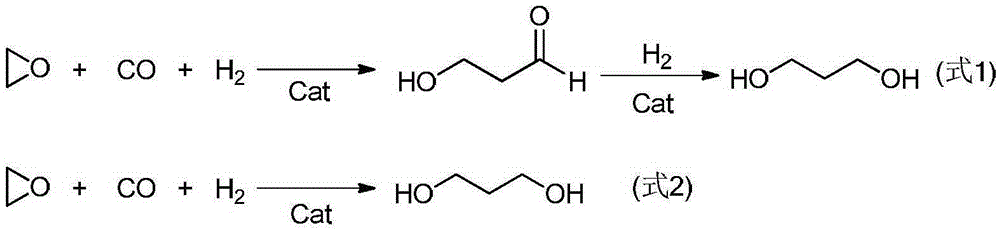
Figure 1 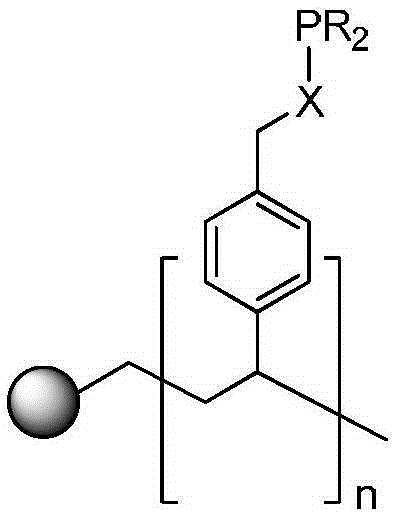
Figure 2 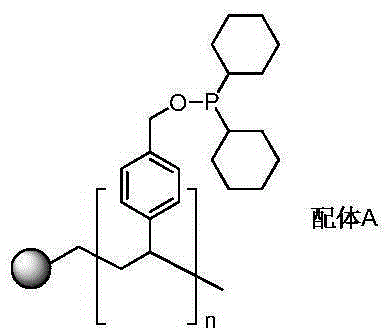
Figure 3
Abstract
Description
technical field
[0001] The invention relates to a method for preparing 3-hydroxypropanal, in particular to a method for synthesizing 3-hydroxypropanal with ethylene oxide and synthesis gas as raw materials. Background technique
[0002] 1,3-Propanediol is an important organic fine chemical, which can be used as a raw material for the production of antifreeze, plasticizer, preservative and emulsifier, and is also widely used in industries such as food, cosmetics and pharmaceuticals. Its most important The application is to synthesize polytrimethylene terephthalate polyester fiber PTT as a monomer. Compared with the commonly used polyethylene terephthalate fiber PET, PTT fiber has excellent light resistance, less water absorption and good stability. At the same time, it has the advantages of good resilience, easy biodegradation and little environmental pollution. It has wide application prospects and is the focus of current research and development.
[0003] 1,3-Propanediol c...
Examples
Embodiment 1
[0034] Add 5.0 g of gel-type hydroxymethylated polystyrene resin (1% divinylbenzene cross-linked, hydroxyl content of 3.5 mmol / g to 4.5 mmol / g) and 225 mmol of dicyclohexyl chloride in a 100 mL reaction tube. Phosphine, 50mol of triethylamine and 200mL of dry toluene; replace the air in the reaction tube with high-purity nitrogen three times, and react at 45°C for 72 hours under nitrogen atmosphere. After the reaction was completed, the solid was filtered with suction, washed with 20 mL of toluene and 20 mL of dichloromethane for several times, and vacuum-dried to obtain 6.40 g of light yellow solid which was Ligand A (the phosphorus content was 1.1 mmol / g).
[0035]
[0036] 1.0mmol of Co 2 (CO) 8 Dissolve in 30mL of chlorobenzene, add 0.91g of Ligand A, and stir at room temperature for 4 hours; then transfer the solution to a 100mL reactor, purging the reactor with high-purity nitrogen three times, adding 50mmol of ethylene oxide, Add synthesis gas (the volume ratio of ...
Embodiment 2
[0039] Add 5.0 g of gel-type hydroxymethylated polystyrene resin (1% divinylbenzene cross-linked, hydroxyl content of 3.5 mmol / g to 4.5 mmol / g) into a 100 mL reaction tube, 225 mmol of diphenyl chloride Phosphine, 50 mol of triethylamine and 200 mL of dry toluene; replace the air in the reaction tube with high-purity nitrogen three times, and react at 45°C for 72 hours under a nitrogen atmosphere. After the reaction was completed, suction filtered, the solid was washed several times with 20 mL toluene and 20 mL dichloromethane respectively, and vacuum-dried to obtain 7.10 g of a light yellow solid which was Ligand B (with a phosphorus content of 1.6 mmol / g).
[0040]
[0041] 1.0mmol of Co 2 (CO) 8 Dissolve in 30mL of 1,3-dioxolane, add 1.6g of Ligand B, and stir at room temperature for 4 hours; then transfer the solution to a 100mL reactor, purging the reactor with high-purity nitrogen three times, adding 50mmol of ethylene oxide was added into synthesis gas (the volume ...
Embodiment 3
[0043] Add 5.0 g of gel-type hydroxymethylated polystyrene resin (1% divinylbenzene cross-linked, hydroxyl content of 3.5 mmol / g to 4.5 mmol / g) and 225 mmol of bis(4-formaldehyde) into a 100 mL reaction tube. phenyl) phosphine chloride, 50 mol of triethylamine and 200 mL of dry toluene; replace the air in the reaction tube with high-purity nitrogen three times, and react at 45° C. for 72 hours under a nitrogen atmosphere. After the reaction was completed, the solid was filtered with suction, washed with 20 mL of toluene and 20 mL of dichloromethane for several times, and dried in vacuo to obtain 7.30 g of a yellow solid which was Ligand C (with a phosphorus content of 1.48 mmol / g).
[0044]
[0045] 1.0mmol of Co 2 (CO) 8 Dissolve in 30mL of methyl tert-butyl ether, add 1.4g of ligand C, and stir at room temperature for 4 hours; then transfer the solution to a 100mL reaction kettle, purging the reaction kettle with high-purity nitrogen three times, and adding 50mmol of ring ...