

Stimuli-responsive triphenylethylene-based photochromic material, its synthesis method and application
A technology of photochromic materials and tristyrene, which is applied in the directions of color-changing fluorescent materials, chemical instruments and methods, preparation of organic compounds, etc., can solve the problems of high material cost, complicated design and synthesis, easy oxidation cycle times, etc. Simple, easy-to-purify effects
Patent Information
- Authority / Receiving Office
- CN · China
- Patent Type
- Patents(China)
- Current Assignee / Owner
- Publication Date
- 2020-08-25
Smart Images
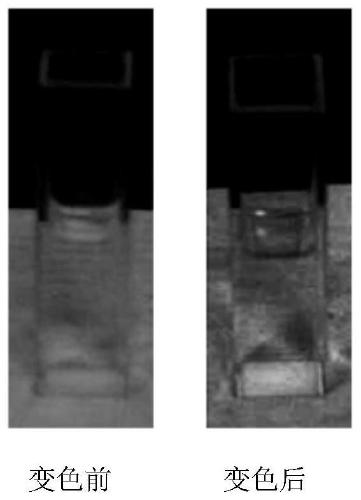
Figure 1 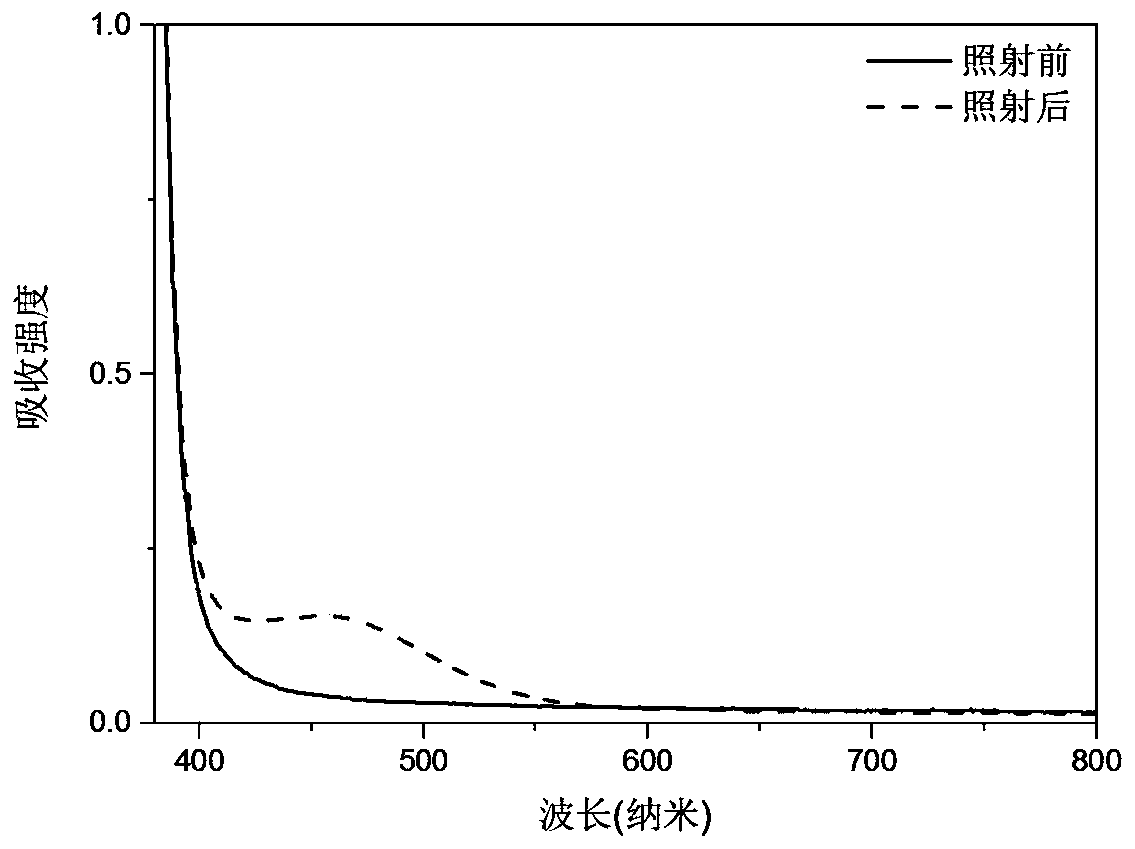
Figure 2 
Figure 3
Abstract
Description
technical field
[0001] The invention relates to the field of organic light-emitting materials, in particular to a stimulus-responsive triphenylethylene-based photochromic material and a synthesis method thereof, as well as applications in light-control materials and optical information storage. Background technique
[0002] Photochromic materials refer to materials that can undergo reversible or irreversible physical or chemical changes under the action of light, and can change in visible light absorption. (Diirr, H., Bouas-Lament H. Pure and Applied Chemistry, 2001) With the development of basic scientific theory and analytical detection technology in recent decades, people have been able to realize various physical and chemical reactions at the molecular scale by using photochromic materials. Precise regulation of chemical properties. Photochromic materials have shown great research and application value in the fields of security and anti-counterfeiting, optical masks, op...
Examples
preparation example Construction
[0030] The synthesis method of the above-mentioned stimuli-responsive triphenylethylene photochromic material comprises:
[0031] Method (1) react a compound containing a phosphine or boron-containing aromatic ring or an aromatic heterocyclic substituent with a triphenylethylene derivative containing halogen at one, two or three terminals to obtain the target product. Preferably, the method (1) is to provide a compound containing a phosphine or a boron-containing aromatic ring or its aromatic heterocyclic substituent and a triphenylethylene derivative containing a halogen, in a toluene solution, under the action of a palladium catalyst, heat and reflux to obtain the target product.
[0032] Method (2) Reaction of benzophenone derivatives with benzene series containing diethyl phosphate groups through Wittig reaction to obtain the target product. Preferably, method (2) is to provide benzophenone derivatives and benzene series containing diethyl phosphate groups in tetrahydrofu...
Embodiment 1
[0037] (1) Synthesis of intermediate [diethyl 4-iodophenylphosphate]
[0038]
[0039] Add 2.95 g of 4-iodobenzyl bromide (0.01 mol) and 6.85 ml of triethyl phosphite (0.04 mol) into a 250 ml single-necked flask. The reaction liquid starts to be a suspension, and on a magnetic stirrer, use a metal heating mantle to heat to 190 ° C Reflux to obtain a clear solution, after reflux for 6 hours, cool to room temperature, distill off excess triethyl phosphite under reduced pressure (oil bath temperature not higher than 120°C), and obtain a solid after cooling the residual solution, wash with n-hexane, filter , and dried to obtain 3.20 g of yellow-white solid with a yield of 90.40%.
[0040] (2) Synthesis of intermediate [1,1-bis(4-chlorobenzene)-2-(4-iodobenzene)ethylene]
[0041]
[0042] Add 4-iodobenzyl bromide (1.77g, 5.00mmol) into a 250mL three-necked flask, add an appropriate amount of THF, and add t-BuOK (1.68g, 15.00mmol) in a nitrogen atmosphere. After stirring for h...
Embodiment 2
[0047]
[0048] The product obtained in Example 1 (0.38 g, 0.75 mmol) was added into a round bottom flask, and dissolved in 20 mL of tetrahydrofuran. 6 mL of aqueous hydrogen peroxide solution (30%) was added, and after stirring for 5 hours, 50 mL of dichloromethane and 50 mL of water were added to the reaction liquid, followed by liquid separation. The dichloromethane layer was spin-dried with a rotary evaporator to obtain a white powder. The white powder was recrystallized from dichloromethane / n-hexane to obtain 0.34 g of white solid with a yield of 86.28%. 1 H NMR (600MHz, CDCl 3 ,298K,relative toMe 4 Si): δ=6.9599(s,1H),7.10-7.14(m,4H),7.24(d,8.6Hz,2H),7.31-7.33(m,4H),7.45-7.50(m,6H),7.55 -7.58(m,2H),7.65-7.68(m,4H).
[0049] The comparison before and after the solution photochromism of the product of this example figure 1 As shown, the UV absorption spectrum is compared with figure 2 shown.