
PI-3 kinase inhibitor prodrugs
a technology of pikinase inhibitors and prodrugs, which is applied in the direction of biocide, cardiovascular disorders, drug compositions, etc., can solve the problems of severe limitations in the anti-cancer application of ly294002 and undesirable side effects, and achieve the effects of enhancing tumor cell radiosensitivity, disrupting leukocyte function, and enhancing tumor cell chemosensitivity
Patent Information
- Authority / Receiving Office
- US · United States
- Patent Type
- Applications(United States)
- Current Assignee / Owner
- Publication Date
- 2005-09-15
- Estimated Expiration
- Not applicable · inactive patent
Smart Images
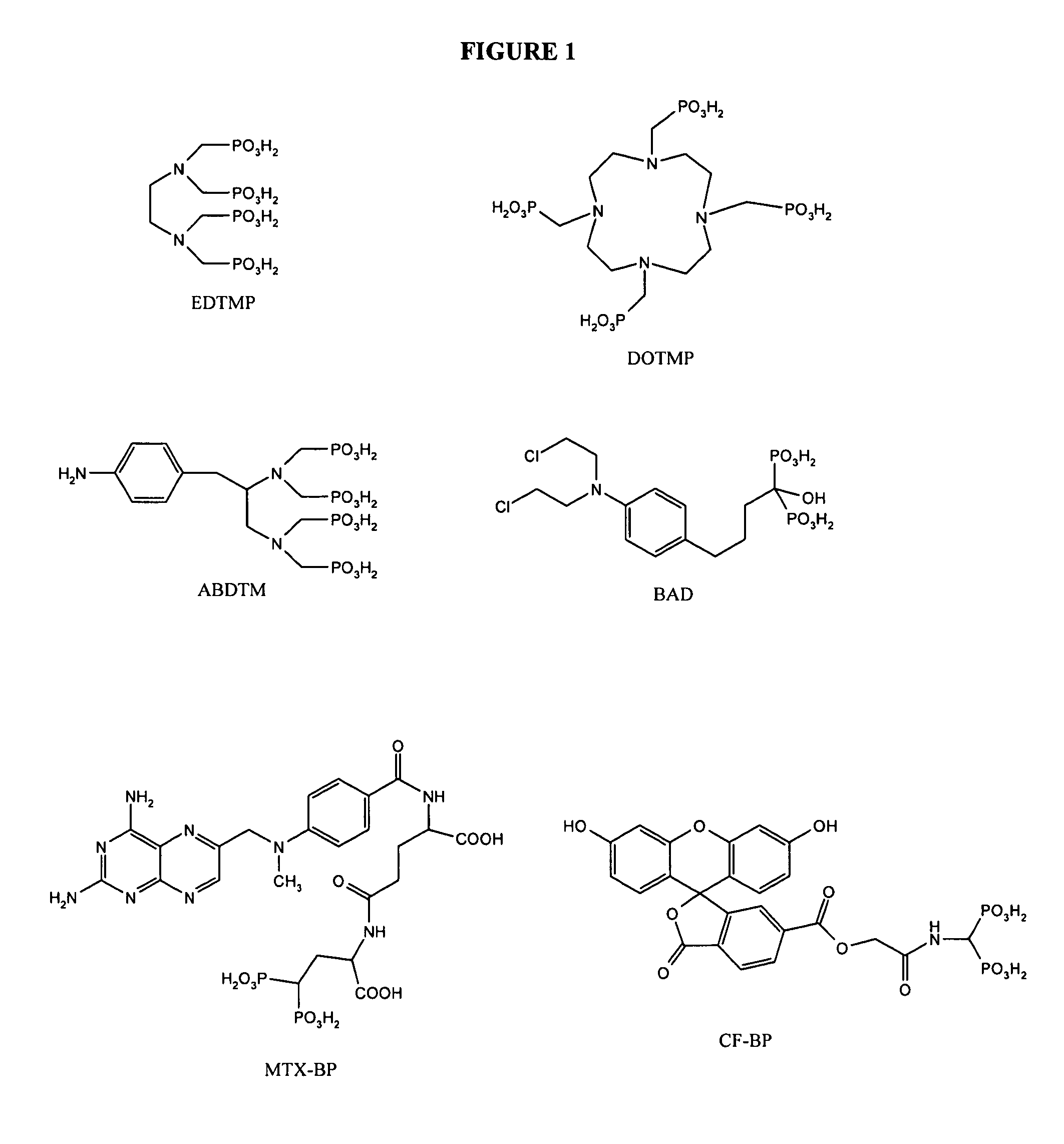
Figure 1 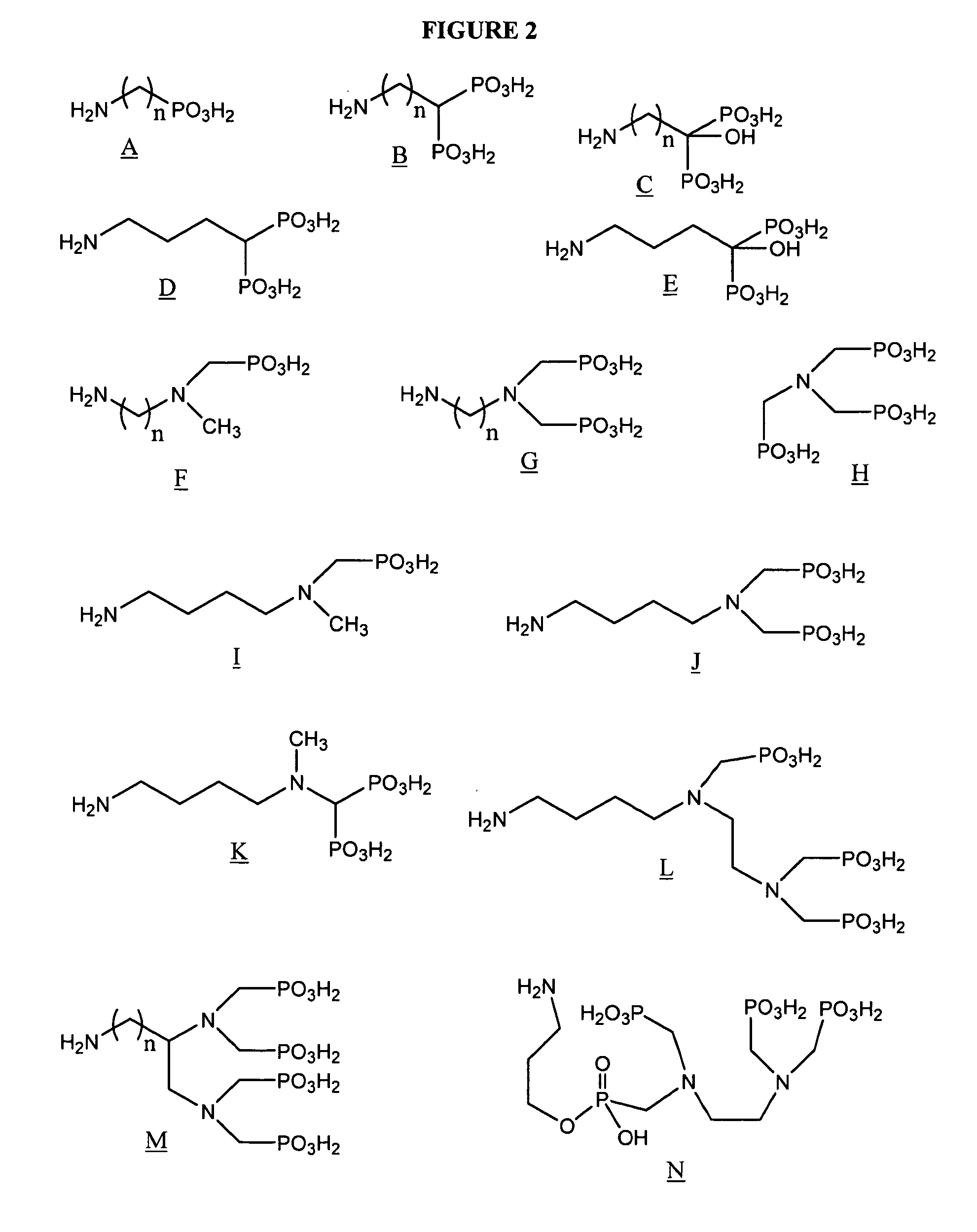
Figure 2 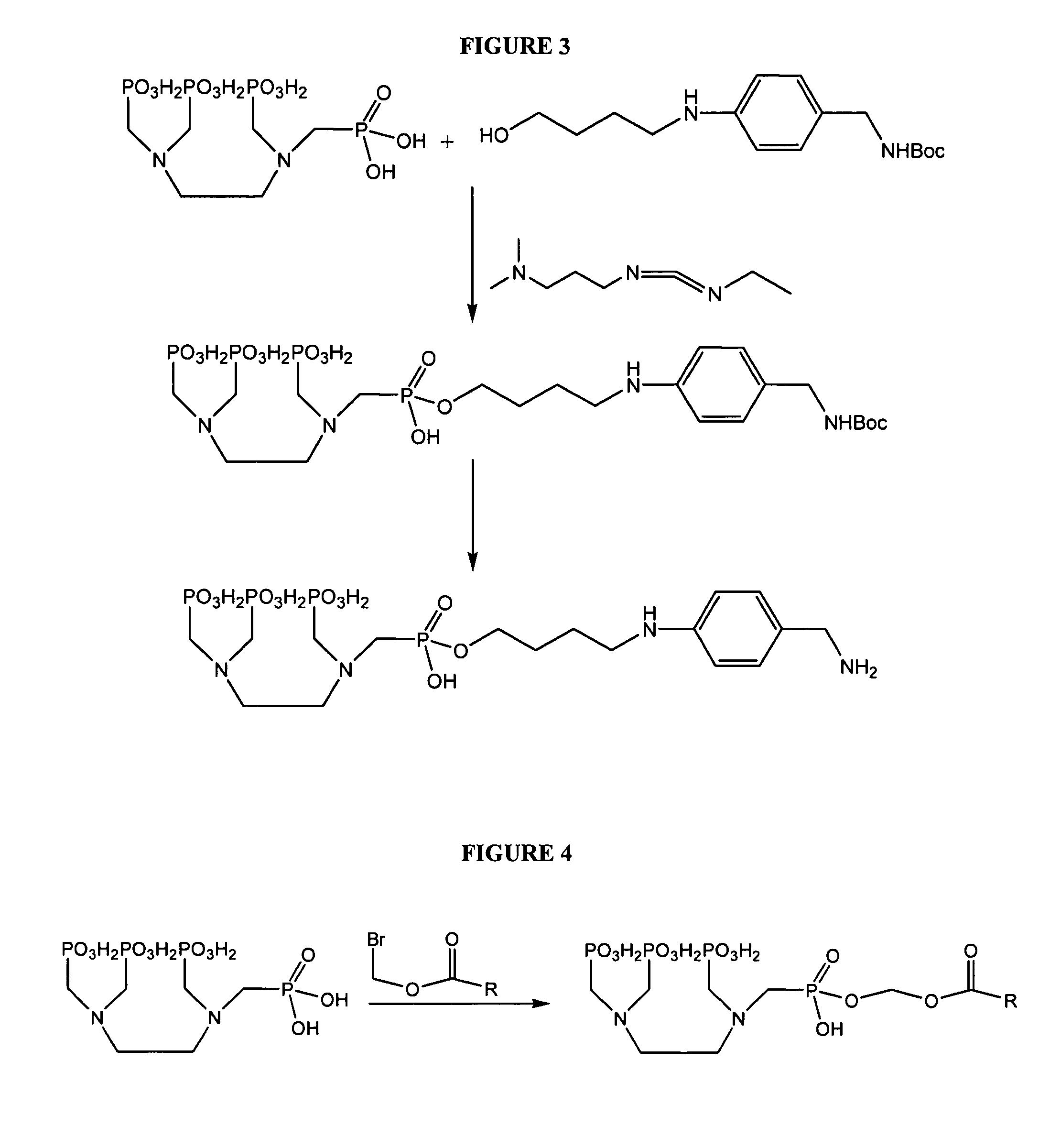
Figure 3
Abstract
Description
CROSS REFERENCE TO RELATED APPLICATIONS
[0001] The present application is a continuation of U.S. application Ser. No. 10 / 818,145, filed Apr. 5, 2004, which claims the benefit of U.S. Provisional Application No. 60 / 460,137, filed Apr. 3, 2003.BACKGROUND OF THE INVENTION
[0002] 1. Field of the Invention
[0003] The present invention relates to prodrugs of PI-Kinase inhibitors and methods of using these inhibitors.
[0004] 2. Description of Related Art
[0005] PI-3 kinases are a large family of lipid kinases that phosphorylate phosphatidylinositol in the D3 position to generate an important second messenger, phosphatidylinositol 3′-phosphate. Members of the PI-3 kinase family are divided into 3 classes based on sequence homology and the product formed by enzyme catalysis. The class I PI-3 kinases are composed of 2 subunits: a 110 kd catalytic subunit and an 85 kd regulatory subunit. Class I PI-3 kinases are involved in important signal transduction events downstream of cytokines, integrin...
Examples
example 1
Preparation of LY294002
[0204] A 10 g sample of LY294002 was prepared according to Scheme 2 based on the procedure described in Vlahos et al., J. Biol. Chem. 269(7): 5241 (1994), the contents of which are incorporated by reference. The displacement of the thiomethyl group of thoichromones such as 12 by amines has been described previously (Bantick et al., J. Heterocyclic Chem, 18:679 (1981), the contents of which are incorporated by reference) as has the cyclization of methyl phenyl ketones such as 11 with carbon disulfide with concomitant alkylation of the thiol anion (Vlahos et al. and Bantick et al.). Preparation of methyl ketones (e.g., 11) in a one-step reaction from the carboxylic acid (10) was performed using the procedure described in Rubottom et al., J. Org. Chem., 48:1550 (1983), the contents of which are incorporated by reference.
example 2
Preparation of Quaternary Analogs of LY294002
[0205] Following the procedure of Scheme 3 the tertiary amine of LY294002 was quaternized using iodomethane or benzyl chlorides under forcing conditions to yield compounds A052-10 and Compound 13B. Example 56 describes the synthesis of methyl quaternary prodrug A052-10. Example 57 describes the synthesis of a phthalimido quaternary prodrug A052-08. Example 58 describes the synthesis of a paracarboxy benzyl quaternary A044-78. [0199][0216] describes the synthesis of a para-scn-benzyl quaternary prodrug A044-80.
example 3
Preparation of Chloromethyl Esters
[0206] Chloromethyl intermediates were prepared following the procedure described in Tsujihara, Synth Commun, 24, 767, 1994. Briefly, the appropriate carboxylic acid was diluted in a 50 / 50 mixture of dichloromethane / water. The mixture was cooled in an ice-water bath and sodium bicarbonate (4 equiv) and n-tetrabutyl ammonium hydrogen sulfate (0.05 equiv) was added. After stirring for 5 min, chloromethyl chlorosulfate (1.1 equiv) was added. The solution was stirred vigorously overnight. The mixture was transferred to a separatory funnel with more dichloromethane and washed with saturated sodium chloride solution. The organics were dried over sodium sulfate and the solvent removed to provide the product. The material was characterized by LC-MS and in some cases by 1H NMR spectroscopy. By this general procedure the following representative chloromethyl esters were prepared from the corresponding carboxylic acids:
TABLE 1STRUCTURESM RETSTRUCTUREREF. NO...