
Endoprostheses for peripheral arteries and other body vessels
a peripheral artery and endoprosthesis technology, applied in the field of endoprosthesis and intravascular stents, can solve the problems of poor blood flow and circulation, slow healing wounds and ulcers, poor patient comfort, etc., to achieve the effect of maintaining the patency of the body lumen, facilitating delivery, and high degree of fracture and fatigue resistan
Patent Information
- Authority / Receiving Office
- US · United States
- Current Assignee / Owner
- Publication Date
- 2009-01-01
- Estimated Expiration
- Not applicable · inactive patent
Smart Images
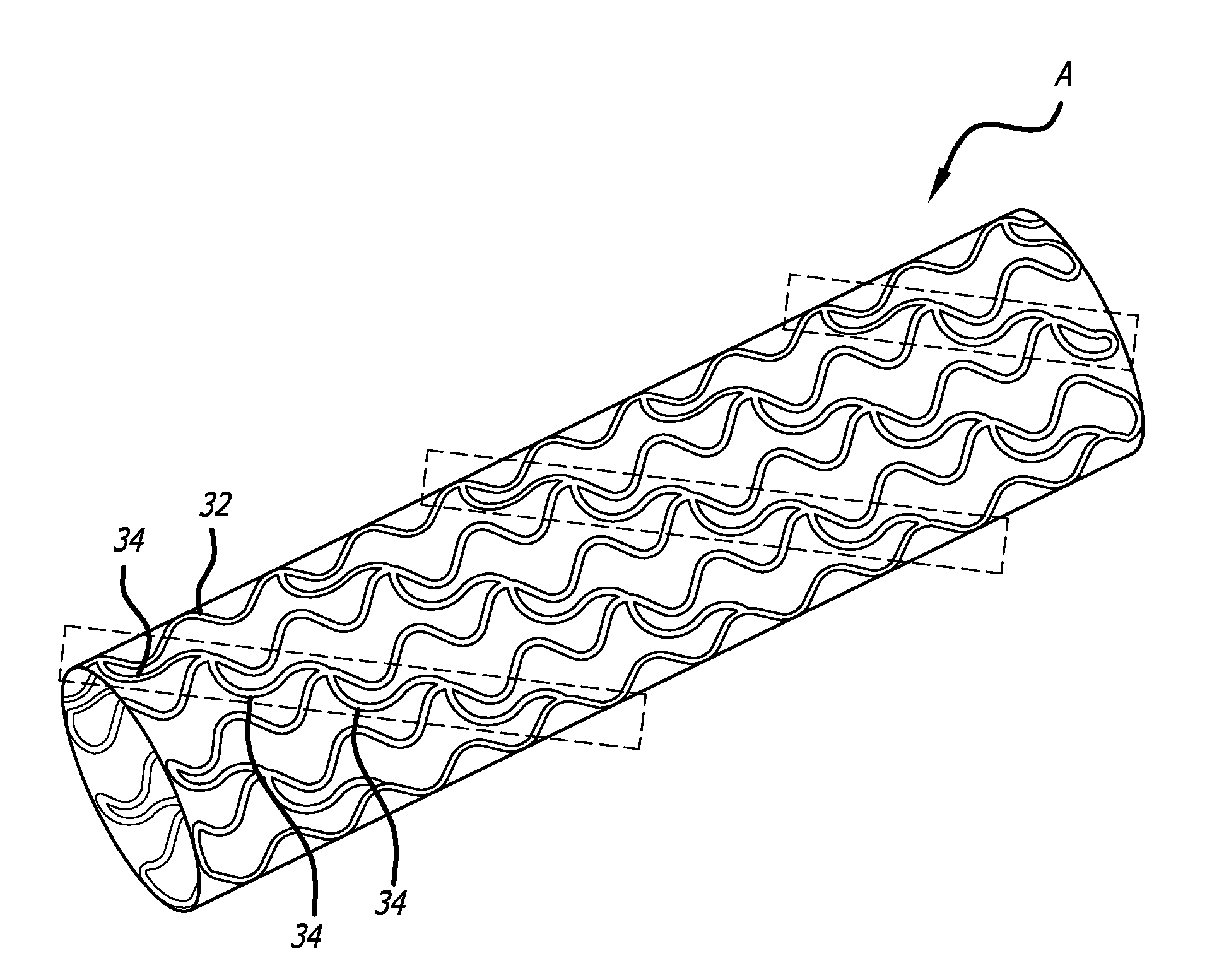
Figure 1 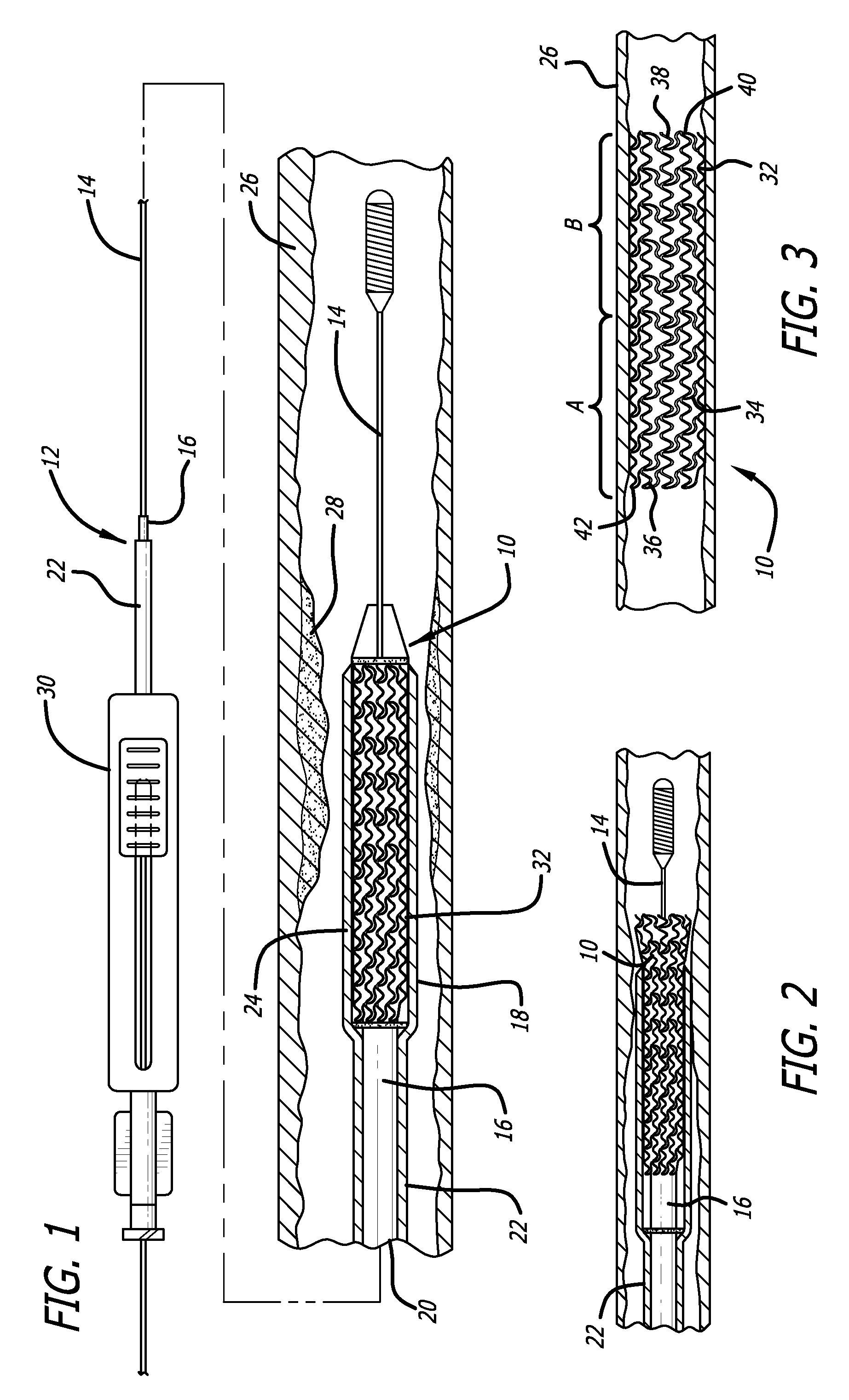
Figure 2 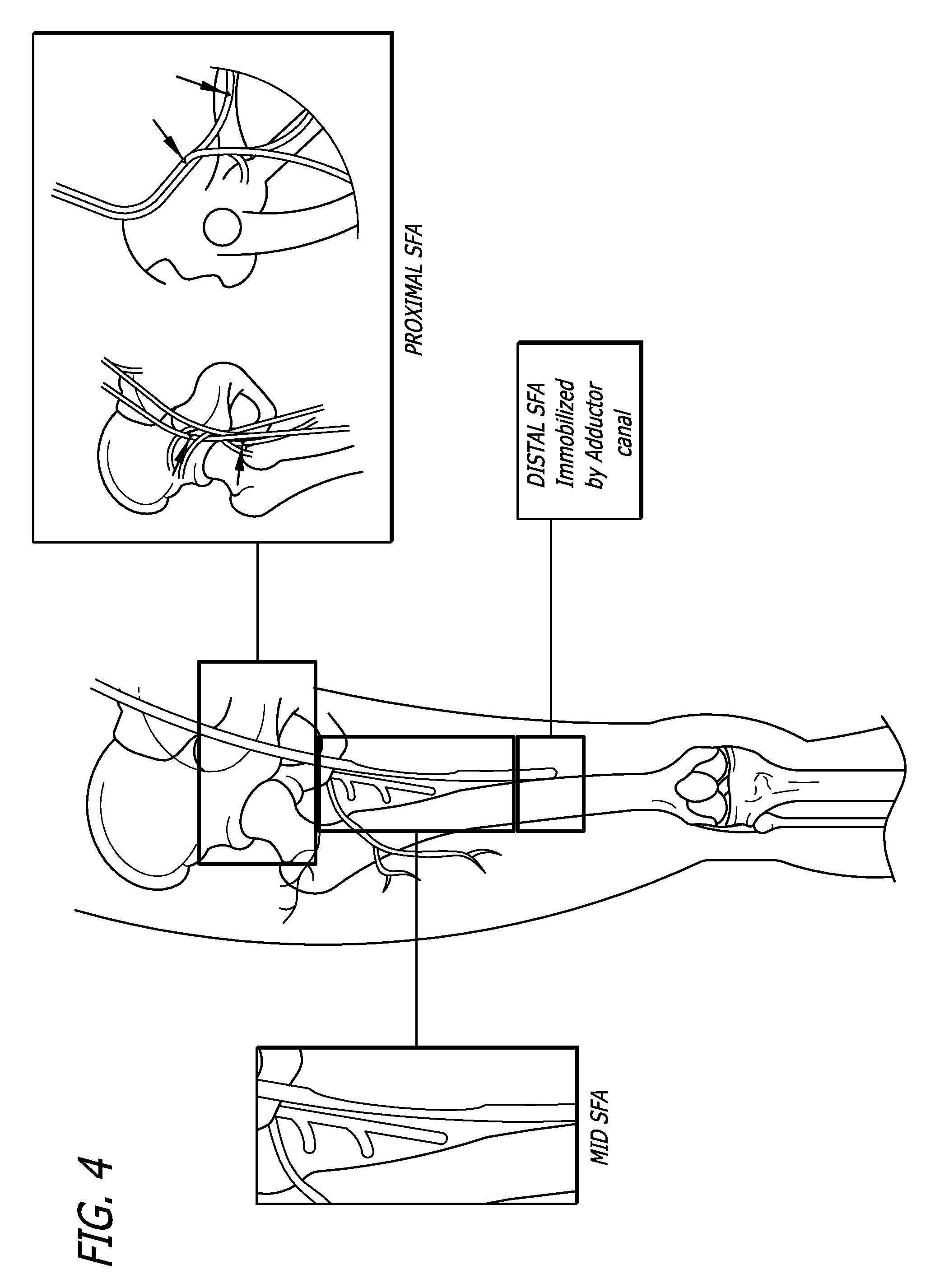
Figure 3
Abstract
Description
BACKGROUND OF THE INVENTION
[0001] The invention relates generally to vascular repair devices, and in particular to endoprostheses, more commonly referred to as intravascular stents, which are adapted to be implanted into a patient's body lumen, such as a blood vessel or artery, to maintain the patency thereof. Stents are particularly useful in the treatment of atherosclerotic stenosis in arteries and blood vessels. More particularly, the present invention is directed to an intravascular stent that has a pattern or configuration that permits the stent to be placed in body vessels which are susceptible to physiological deformations and provides a high degree of fracture and fatigue resistance to such deformations.
[0002] Peripheral Artery Disease, or PAD, is characterized by fatty plaque build-up in the arteries of the legs, which results in poor blood flow and circulation. Patients with PAD may experience muscle pain during walking, have wounds and ulcers that are slow to heal or, in th...
Examples
Embodiment Construction
[0036]The present invention stent improves on existing stents by providing a longitudinally flexible stent having a uniquely designed pattern which has a high degree of fracture and fatigue resistance when subjected to physiological deformations associated with some body vessels. In addition to providing longitudinal flexibility, the stent of the present invention also provides radial rigidity and a high degree of scaffolding of a vessel wall, such as a peripheral artery.
[0037]Turning to the drawings, FIGS. 1-3 depicts a stent 10 made in accordance with the present invention mounted on a conventional catheter assembly 12 used to deliver the stent 10 and implant it in a body lumen, such as a peripheral artery, a coronary artery or other vessel within the body. The catheter assembly 12 is configured to advance through the patient's vascular system by advancing the catheter assembly 12 over a guide wire 14 using well known methods associated with over-the-wire or rapid-exchange cathete...