
Abuse-resistant amphetamine prodrugs
Patent Information
- Authority / Receiving Office
- US · United States
- Current Assignee / Owner
- Publication Date
- 2009-09-17
Smart Images
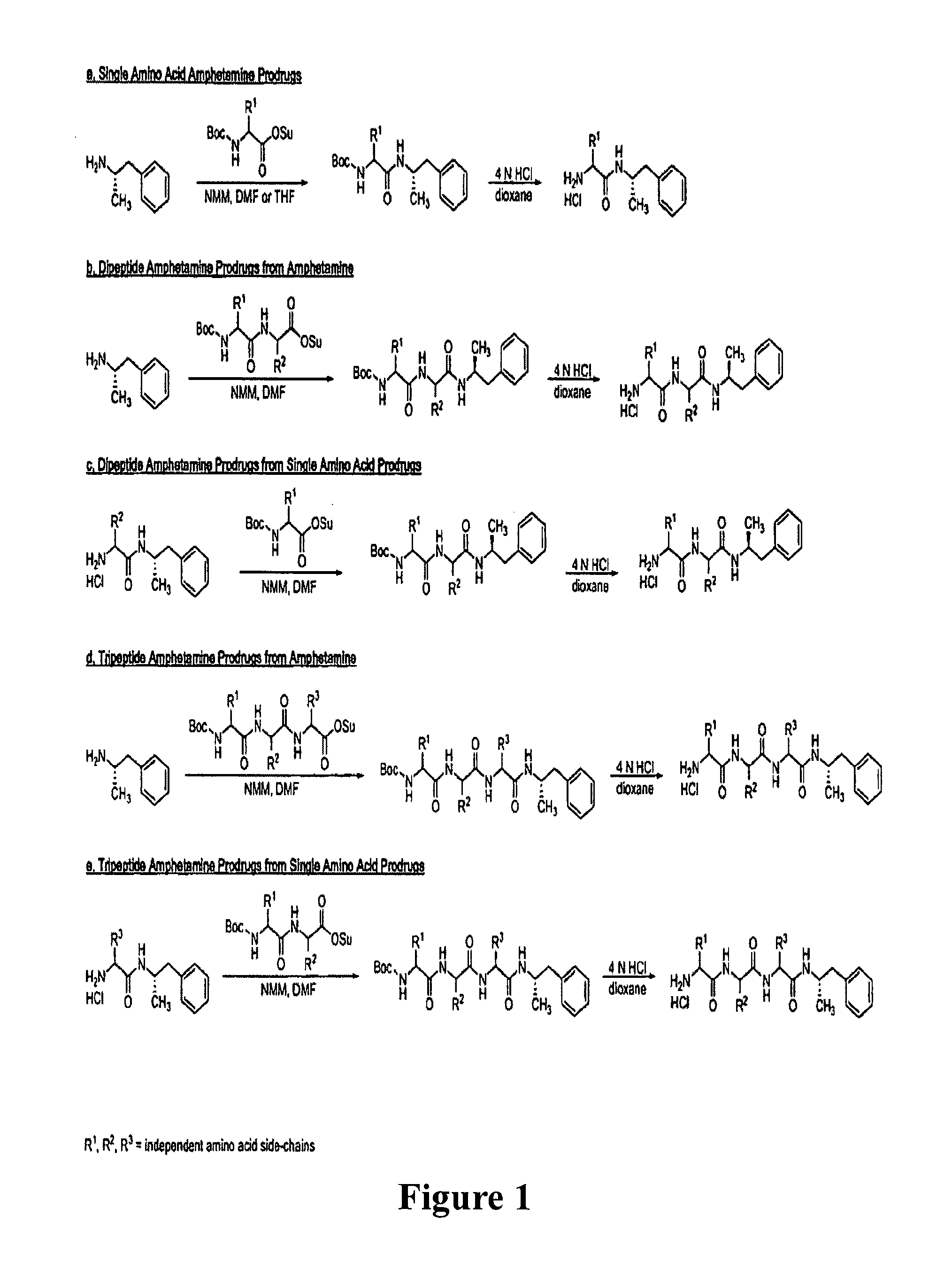
Figure 1 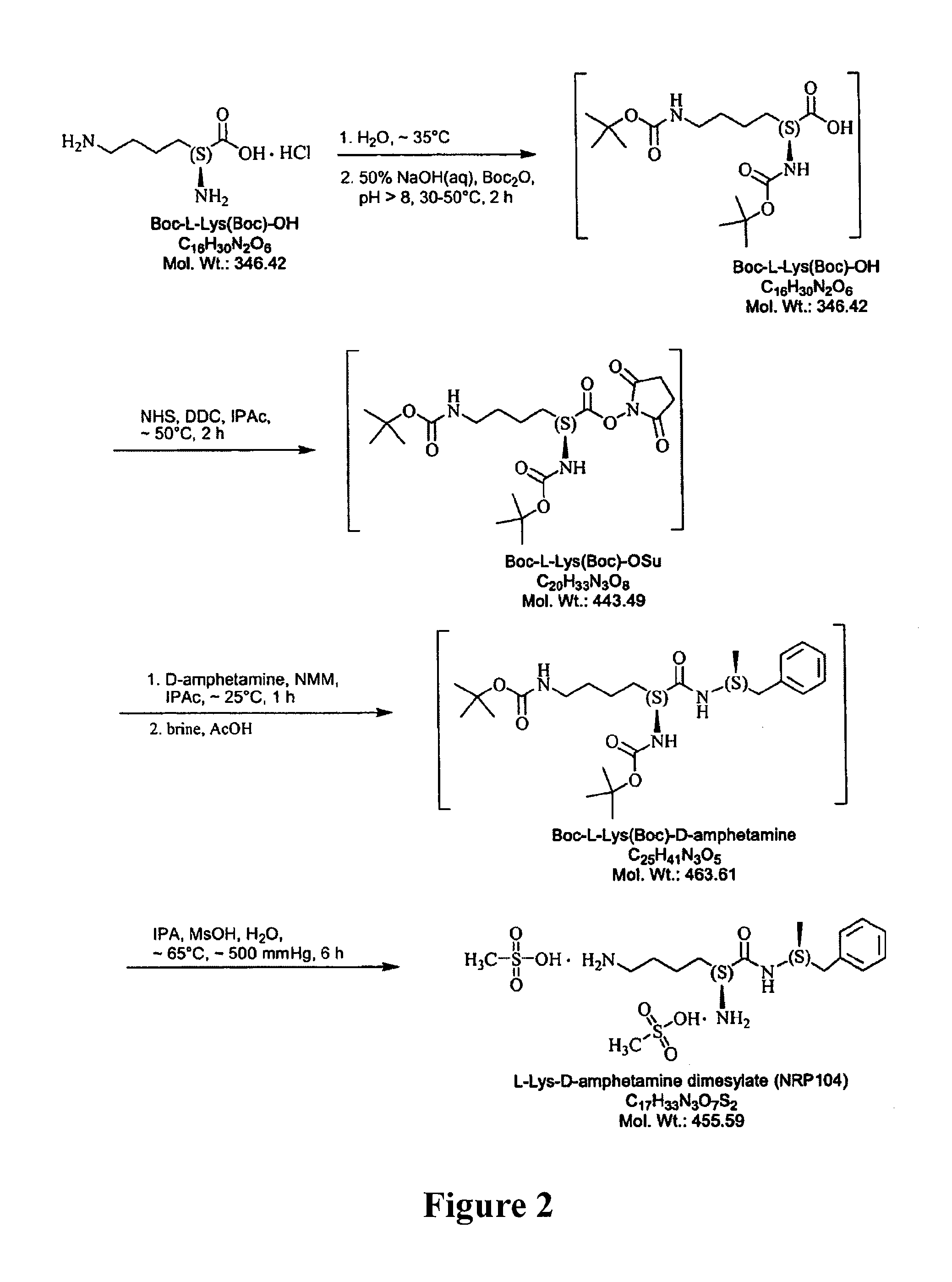
Figure 2 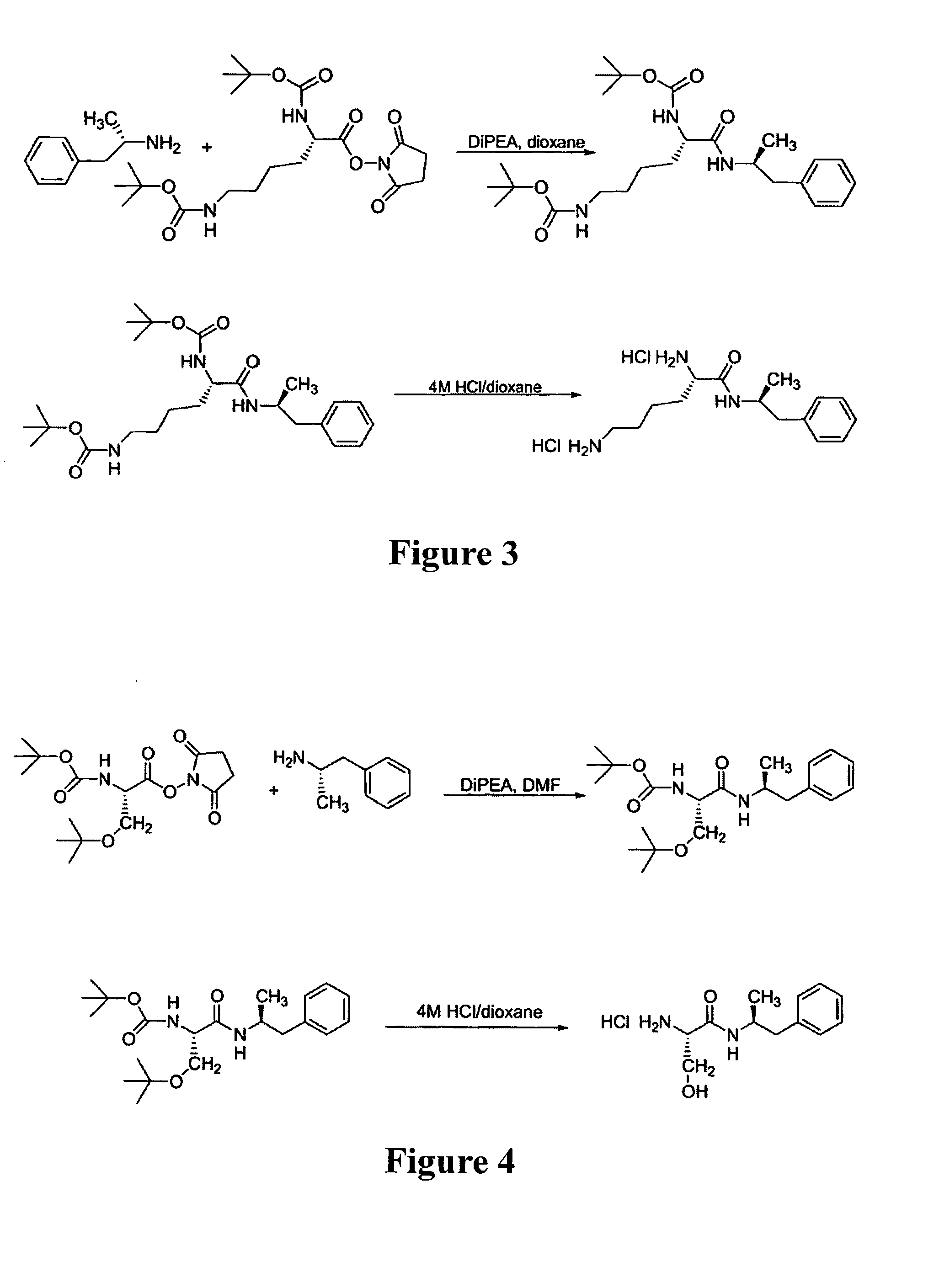
Figure 3
Abstract
Description
CROSS REFERENCE RELATED APPLICATIONS
[0001] This application is a continuation-in-part of U.S. application Ser. No. 11 / 400,304, filed Apr. 10, 2006, which in turn, (a) claims benefit under 35 U.S.C. 119(e) to U.S. Provisional Application Nos. 60 / 669,385 filed Apr. 8, 2005, 60 / 669,386 filed Apr. 8, 2005, 60 / 681,170 filed May 16, 2005, 60 / 756,548 filed Jan. 6, 2006, and 60 / 759,958 filed Jan. 19, 2006; (b) is a continuation-in-part of U.S. application Ser. No. 10 / 857,619 filed Jun. 1, 2004, which claims the benefit of under 35 U.S.C. 119(e) to U.S. Provisional Application Nos. 60 / 473,929 filed May 29, 2003 and 60 / 567,801 filed May 5, 2004; and (c) is a continuation-in-part of U.S. application Ser. No. 10 / 858,526 filed Jun. 1, 2004, which, in turn, is a continuation-in-part of international application PCT / US03 / 05525 filed Feb. 24, 2003, which claims priority to U.S. Provisional Application Nos. 60 / 358,368 filed Feb. 22, 2002 and 60 / 362,082 filed Mar. 7, 2002; application Ser. No. 10 / 858,...
Examples
example 1
General Synthesis of Peptide Amphetamine Conjugates
[0246]Peptide conjugates were synthesized by the general method described in FIG. 1. An iterative approach can be used to identify favorable conjugates by synthesizing and testing single amino acid conjugates, and then extending the peptide one amino acid at a time to yield dipeptide and tripeptide conjugates, etc. The parent single amino acid prodrug candidate may exhibit more or less desirable characteristics than its di- or tripeptide offspring candidates. The iterative approach can quickly suggest whether peptide length influences bioavailability.
General Synthesis of Single Amino Acid Amphetamine Conjugates
[0247]To a solution of a protected amino acid succinimidyl ester (2.0 eq) in 1,4-dioxane (30 mL) was added d-amphetamine sulfate (1.0 eq) and NMM (4.0 eq). The resulting mixture was allowed to stir for 20 h at 20° C. Water (10 mL) was added, and the solution was stirred for 10 minutes prior to removing solvents under reduced p...
example 2
Synthesis of L-lysine-d-amphetamine
[0251]L-lysine-d-amphetamine was synthesized by the following methods.
[0252]a. Preparation of HCl Salt (see FIG. 3)
[0253]i. Coupling
MolarReagentsMWWeightmmolesEquivalentsd-amphetamine free base135.24.75g35.131Boc-Lys(Boc)-OSu443.515.58g35.131Di-iPr-Et-Amine129906mg7.030.2, d = 0.74,1.22 mL1,4-Dioxane—100mL——
[0254]To a solution of Boc-Lys(Boc)-OSu (15.58 g, 35.13 mmol) in dioxane (100 mL) under an inert atmosphere was added d-amphetamine free base (4.75 g, 35.13 mmol) and DIPEA (0.9 g, 1.22 mL, 7.03 mmol). The resulting mixture was allowed to stir at room temperature overnight. Solvent and excess base were then removed using reduced pressure evaporation. The crude product was dissolved in ethyl acetate and loaded on to a flash column (7 cm wide, filled to 24 cm with silica) and eluted with ethyl acetate. The product was isolated, the solvent reduced by rotary evaporation, and the purified protected amide was dried by high-vac to obtain a white solid...
example 3
Synthesis of Ser-Amp
[0266]Ser-Amp was synthesized by a similar method (see FIG. 4) except the amino acid starting material was Boc-Ser(O-tBu)-OSu and the deprotection was done using a solution of trifluoroacetic acid instead of HCl.