
Extracts of phyllanthus niruri
a technology of phyllanthus and extracts, which is applied in the field of extracts of phyllanthus niruri, can solve the problems that the aging of the skin can adversely affect the elasticity and strength of the skin, and achieve the effect of reducing skin inflammation and reducing skin inflammation
Patent Information
- Authority / Receiving Office
- US · United States
- Patent Type
- Applications(United States)
- Current Assignee / Owner
- Publication Date
- 2011-04-07
- Estimated Expiration
- Not applicable · inactive patent
Smart Images
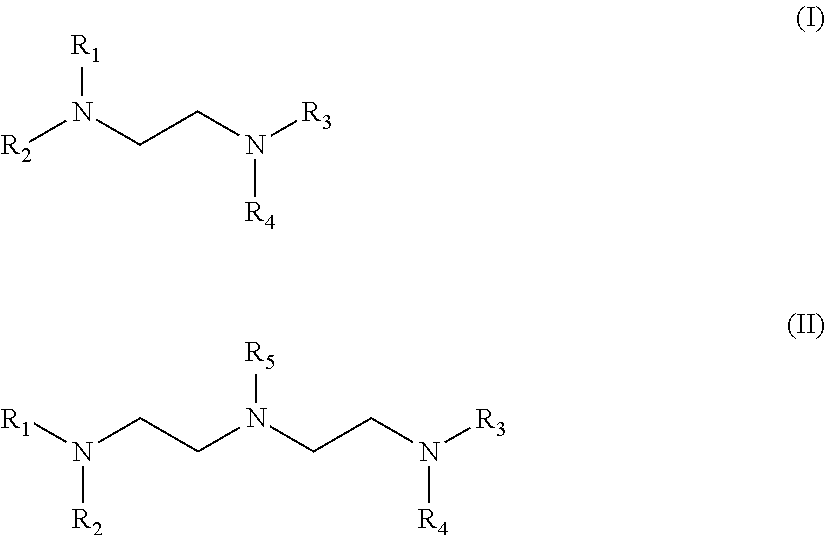
Figure 1 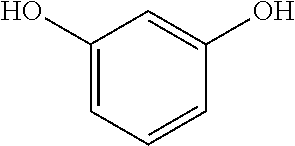
Figure 2 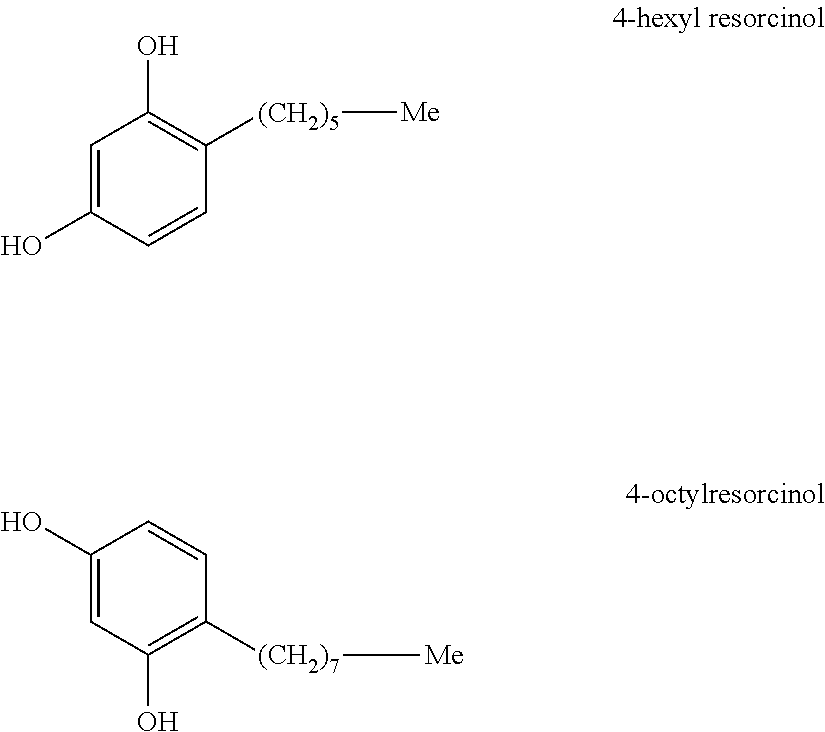
Figure 3
Abstract
Description
CROSS REFERENCE TO RELATED APPLICATIONS
[0001] This application is a continuation-in-part of U.S. Ser. No. 12 / 572,373 filed Oct. 2, 2009. The complete disclosure of the aforementioned related U.S. patent application is hereby incorporated herein by reference for all purposes.FIELD OF THE INVENTION
[0002] The present invention relates to compositions comprising, as well as methods of making and using, extracts of Phyllanthus niruri. The compositions are useful for example for improving the appearance of skin, for example improving the signs of skin aging, treating inflammation, and lightening the skin.BACKGROUND OF THE INVENTION
[0003] Aging of the skin can adversely affect elasticity and strength of the skin through changes in the two main constituents of the dermal extracellular matrix, the fibrous proteins collagen and elastin. For example, elastin is a large fibrous protein formed by the crosslinking of elastin precursor protein molecules (e.g., tropoelastin) into spiral filaments. The...
Examples
example i
[0088]Four different solvent extracts of Phyllanthus niruri were prepared. Phyllanthus niruri (Raintree Nutrition, Inc., Carson City, Nev.) was extracted separately in each of methanol, hexane, ethyl acetate, and water by sonicating for 30 min at 60° C. No molecular weight fractionation was performed on the solvent extracts, each of which was recovered by filtration though a Buchner funnel using a Whatman filter paper. Volatiles were evaporated by freeze drying.
example ii
[0089]Enzyme activities of the solvent extracts of Phyllanthus niruri of Example I were evaluated for collagenase inhibition using the EnzChek Collagenase assay. The ability of each solvent extract to inhibit the activity of the collagenase Type IV enzyme from Clostridium histolyticum on the DQ elastin from pig skin (substrate) was fluorometrically assayed in a Microplate reader. The IC50 values are indicated below in Table 1.
TABLE 1IC50 value for theExtractCollagenase EnzymeMethanol Extract Of>500ug / mlHexane Extract Of223.1ug / mlEthyl acetate Extract Of334.6ug / mlWater Extract Of27.6ug / ml
[0090]The water extract of Phyllanthus niruri provided a substantially greater collagenase inhibition than the methanol, hexane, or ethyl acetate extracts.
example iii
[0091]51.2 g of Phyllanthus niruri (Raintree Nutrition, Inc., Carson City, Nev.) was extracted with 320 mL of water by sonicating for 30 min at 60° C. The liquid phase was removed by filtration though a Buchner funnel using a Whatman filter paper.
[0092]A gel fractionation column was packed with 60 g of XAD-4 resin (non-ionic crosslinked polymer resin). The resin was thoroughly washed in sequence with water (1 L volume), water-methanol (50:50, 1 L), methanol (1 L) and conditioned with water prior to loading. The above prepared water extract was passed through a 100 kD membrane using Spectrum MiniKros (Spectrum Laboratories, Inc., Rancho Dominguez, Calif.) to concentrate and separate small molecules, yielding a low molecular weight fraction of the water extract.
[0093]A comparative water extract of Phyllanthus niruri was not fractionated (i.e., it contained both low molecular weight and high molecular weight species).
[0094]Volatiles were evaporated by freeze drying.
[0095]Enzyme activit...