

Combination of an opioid agonist and an opioid antagonist in the treatment of parkinson's disease
Patent Information
- Authority / Receiving Office
- US · United States
- Current Assignee / Owner
- Publication Date
- 2014-02-06
- Estimated Expiration
- Not applicable · inactive patent
Smart Images
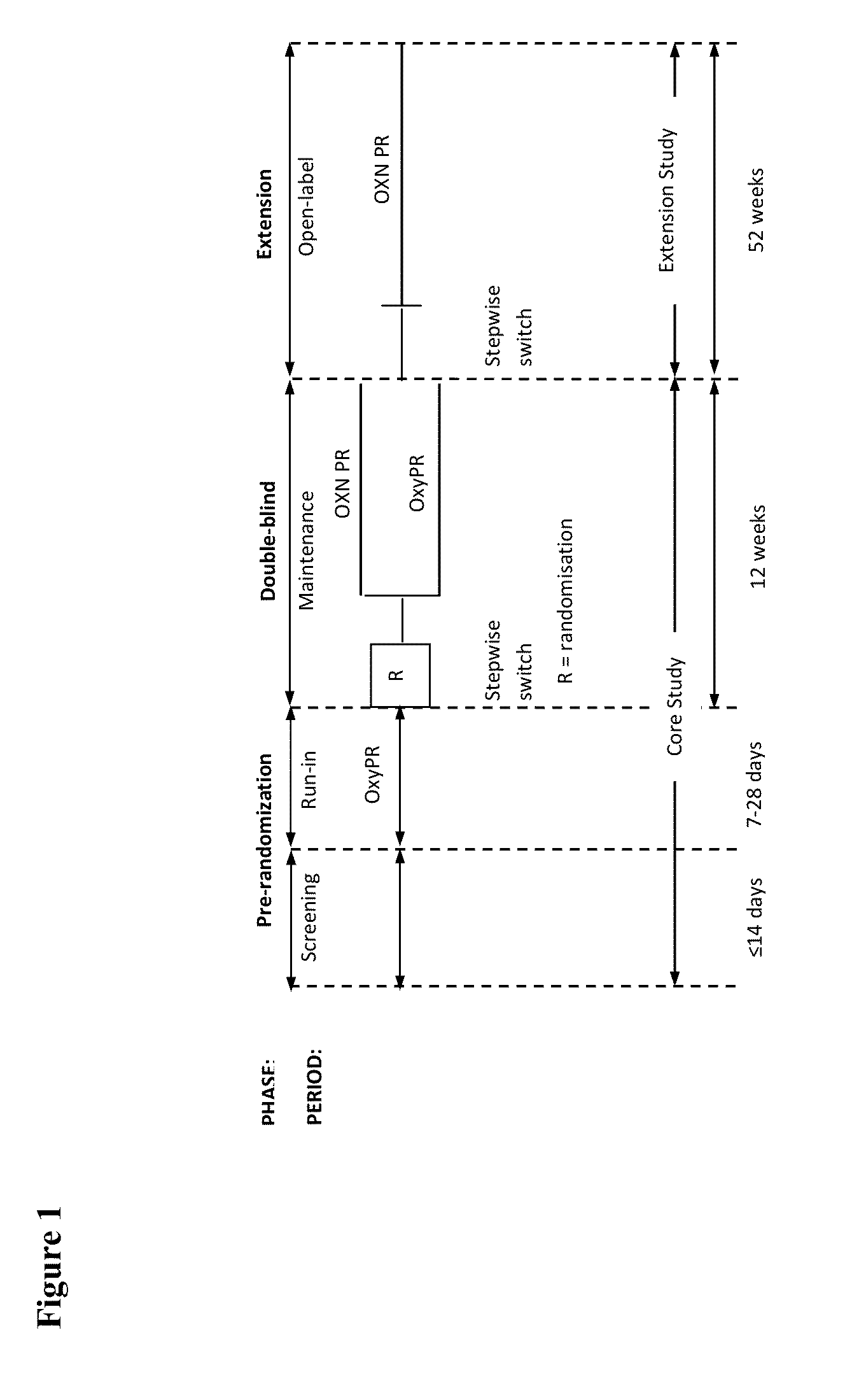
Figure 1 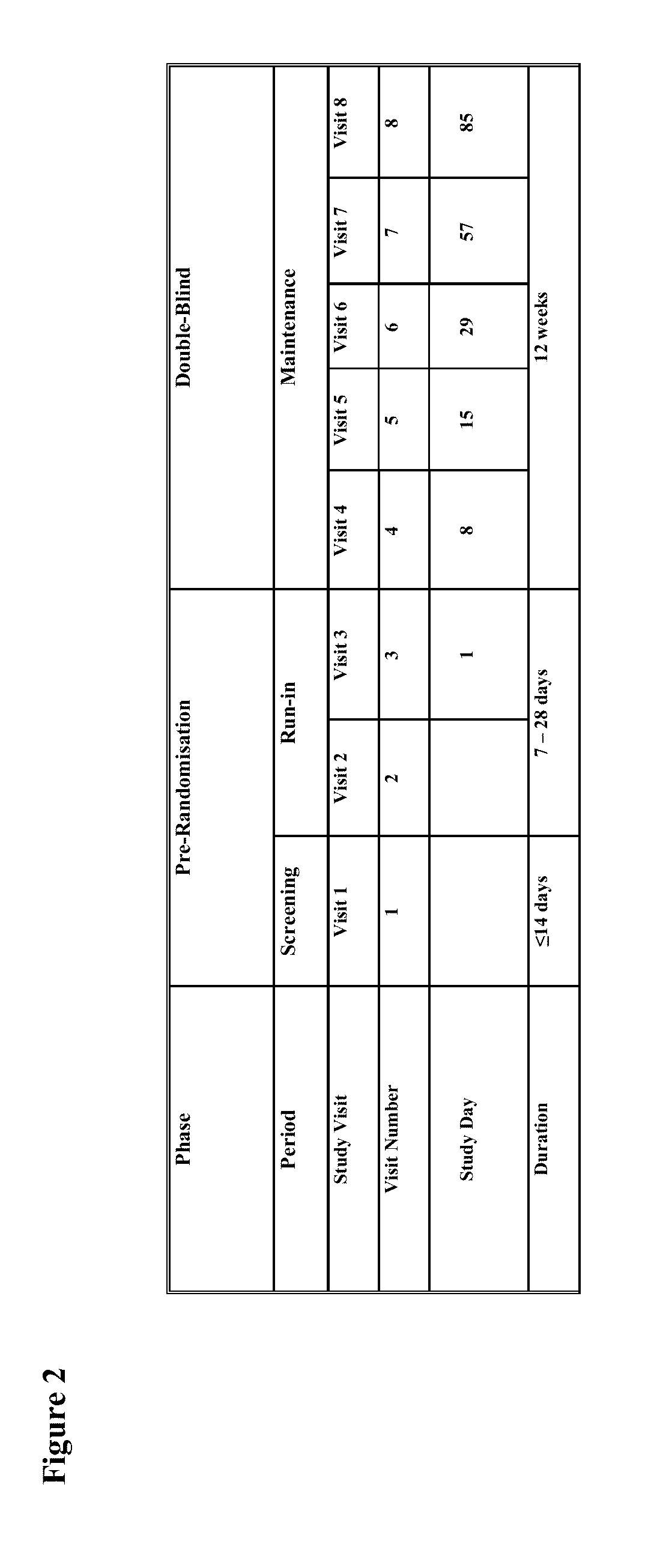
Figure 2 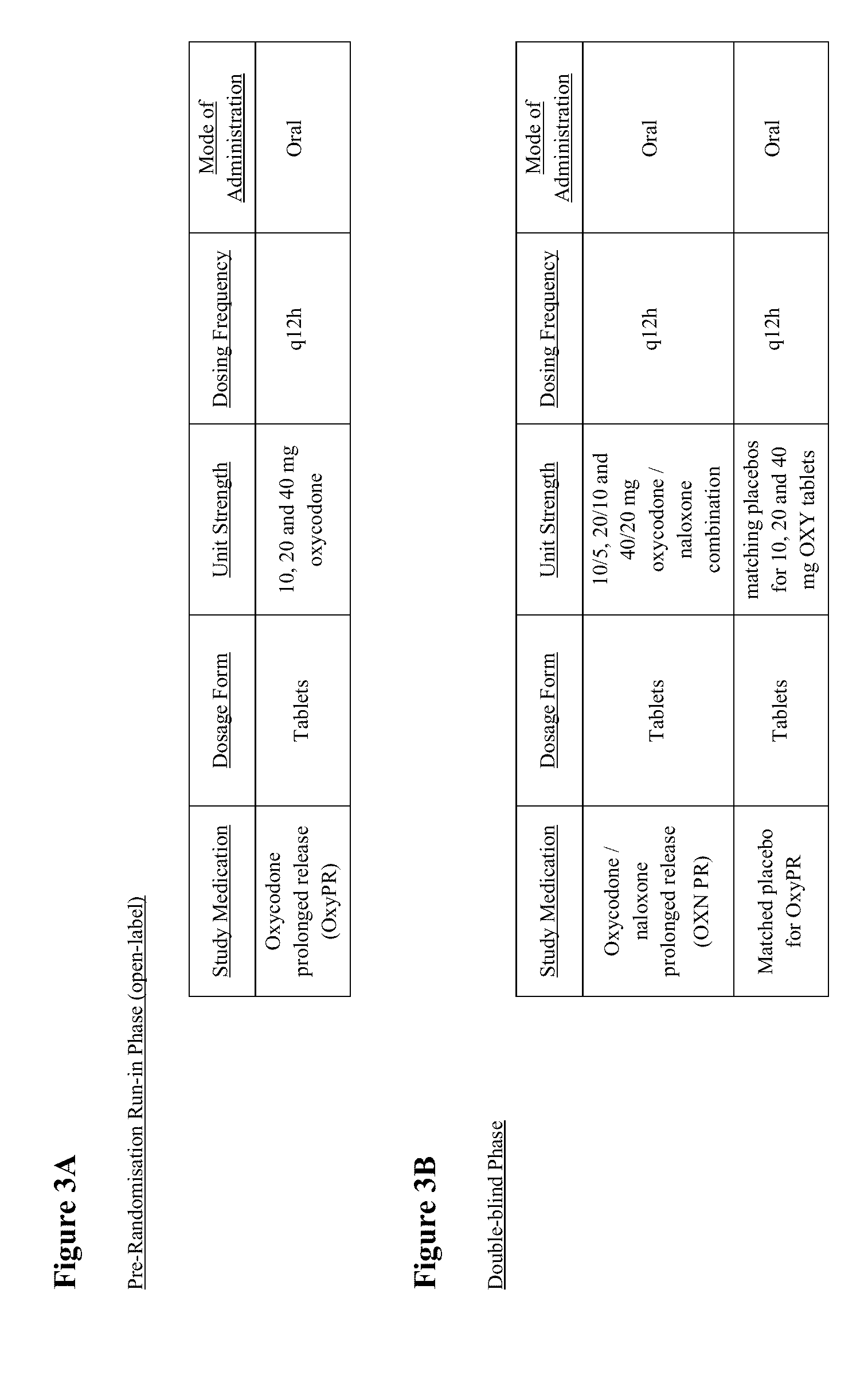
Figure 3
Abstract
Description
FIELD OF THE INVENTION
[0001] The present invention is concerned with a pharmaceutical dosage form comprising an opioid agonist and an opioid antagonist for use in the treatment of Parkinson's disease and / or at least one symptom thereof. The present invention further relates to the use of an opioid agonist in combination with an opioid antagonist in a pharmaceutical dosage form for treating Parkinson's disease and / or at least one symptom thereof.BACKGROUND OF THE INVENTION
[0002] Parkinson's disease (PD) is a neurodegenerative disease, which is inter alia characterized by hypokinesia, rigor and tremor. Hypokinesia as symptom of PD includes a slowing of physical movement (bradykinesia) and a loss of physical movement (akinesia) in extreme cases. The symptoms are the results of the decreased stimulation of the motor cortex by the basal ganglia, normally caused by the action of dopamine, which is produced in the dopaminergic neurons of the brain (specifically the substantia nigra). PD is b...
Examples
example 1
Improvement of Constipation and Pain in PD Patients: STUDY I
Objective:
[0159]The primary objective of study I was to demonstrate that subjects with moderate to severe non malignant pain taking OXN PR (oxycodone+naloxone in a prolonged release dosage form) have improvement in symptoms of constipation as measured by the BFI compared to subjects taking OxyPR (oxycodone in a prolonged release dosage form) alone. A secondary objective was to estimate the subjects'Average Pain over the last 24 Hours assessed at each double-blind study visit during treatment with OXN PR compared with OxyPR as measured by the Pain Intensity Scale. Three patients suffering from Parkinson's disease were among the subjects participating in the study.
Overall Study Design and Plan:
[0160]Study I was a randomized (1:1 ratio), double-blind, double-dummy, parallel group, multicenter, 12-week study to demonstrate improvement in symptoms of constipation in subjects taking oxycodone equivalent of 60-80 mg / day as OXN PR ...
example 2
Improvement of Constipation and Pain in PD Patients: STUDY II
[0238]Objective with Respect to Pain:
[0239]To demonstrate the superiority of OXN over placebo on the time from the initial dose of study medication to multiple (i.e. recurring) pain events (inadequate analgesia) during the Double-blind Phase. A pain event was demonstrated by unacceptable pain control for 2 consecutive days. Each pain event was 2 discrete days, e.g. there could be a maximum of 2 pain events in 4 days.
Objective with Respect to the Bowel Function:
[0240]To determine the degree of constipation during treatment with OXN (oxycodone+naloxone) compared with OXY (oxycodone) and placebo based on the patient bowel function index (difficulty of bowel movement, feeling of incomplete bowel evacuation, constipation self-assessment).
[0241]Two patients suffering from Parkinson's disease were among the subjects participating in the study.
Overall Study Design and Plan:
[0242]This was a multicenter, randomised, double-blind, pl...
example 3
Improvement of Pain and LID in PD Patients
[0317]The following data are based on case studies wherein PD patients were stationary treated with OXN PR (oxycodone+naloxone in a prolonged release dosage form).
[0318]The following table lists the age, the sex, the duration of PD, the indication and the amount of oxycodone in the dosage form (in mg) administered. Naloxone was present in each of the dosage forms in 0.5× the amount of oxycodone. Furthermore, the table provides information on the effect of OXN PR on pain and LID as well as adverse events.
AdversePatientAgeSexDurationIndicationOXNEffectevents169F16arthritis + LID10 mgPain: ++,noneLID: +273M23LBP + LID2 × 15 mgPain: ++,noneLID: + / −368M11Lumb.Disc. + LID3 × 20 mgPain: ++,noneLID: +472M7LBP, hip20 mgPain: ++none581F2LBP, Gonarth.2 × 5 mgpain: −sleep apnea674F5Osteoporosis2 × 20 mgpain: +constip.idem766F11LBP,3 × 10 mgpain: +,noneEpic.uln. + LIDLID: +869M2LBP,2 × 10 mgpain: ++nonelumb.fractureThe following abbreviations are used in...