
Optical multilayer film, polarizing plate and optical product
a multi-layer film and optical technology, applied in the field of optical multi-layer films, can solve the problems of difficult to obtain high degree of vacuum, difficult to achieve anti-reflection films having desired properties, and prone to distorted or modified resin base films, etc., to achieve enhanced visibility, reduce glare and mirroring, and reduce light reflection
Patent Information
- Authority / Receiving Office
- US · United States
- Patent Type
- Patents(United States)
- Current Assignee / Owner
- Publication Date
- 2007-10-23
Smart Images
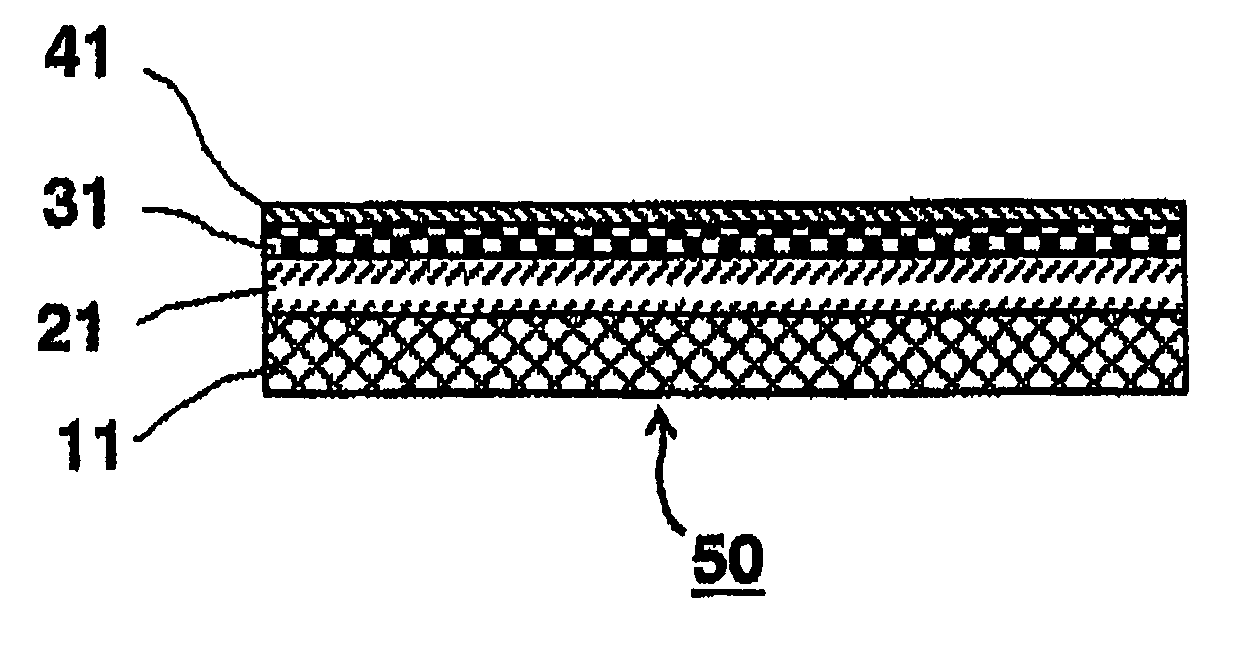
Figure 1 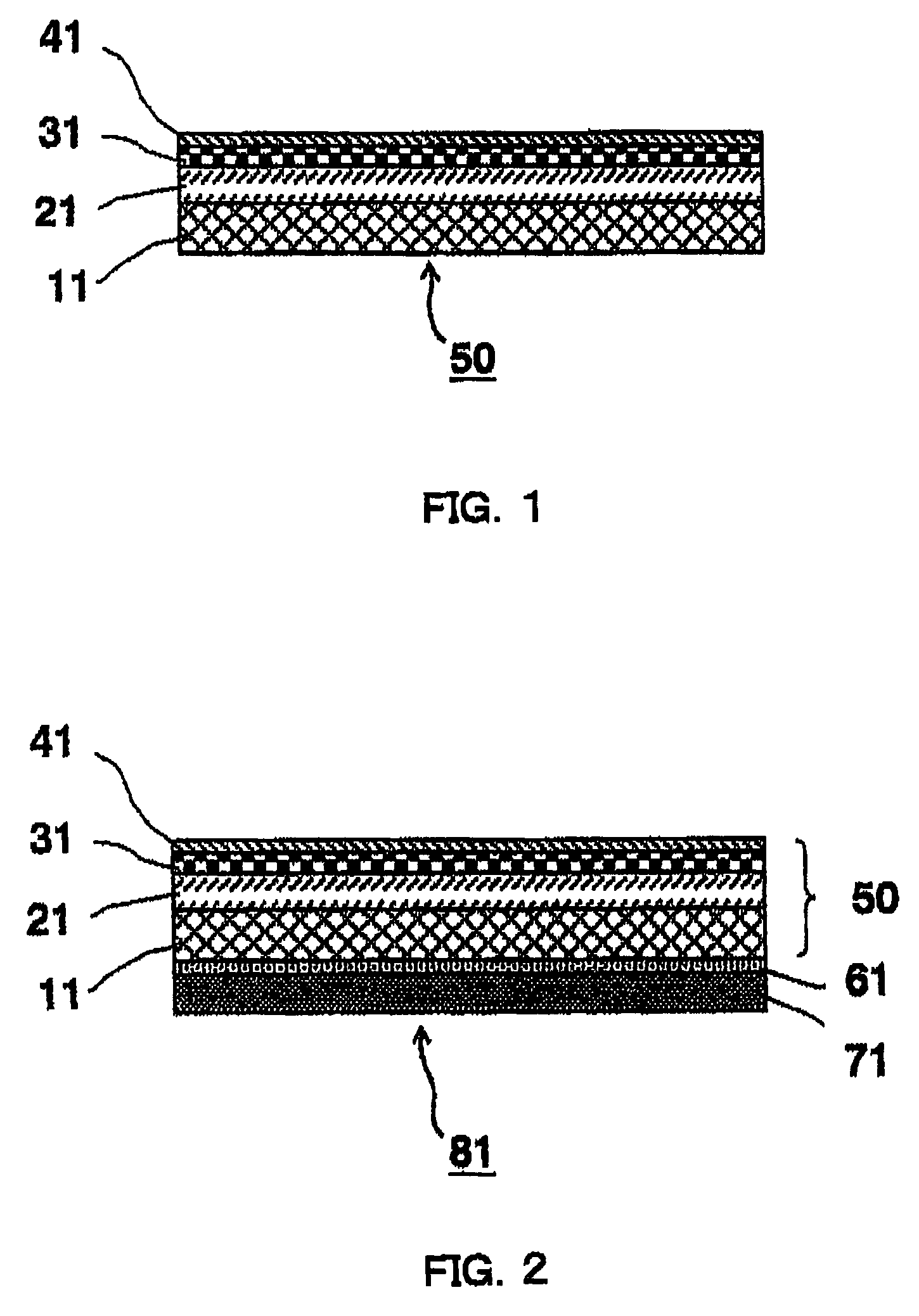
Figure 2 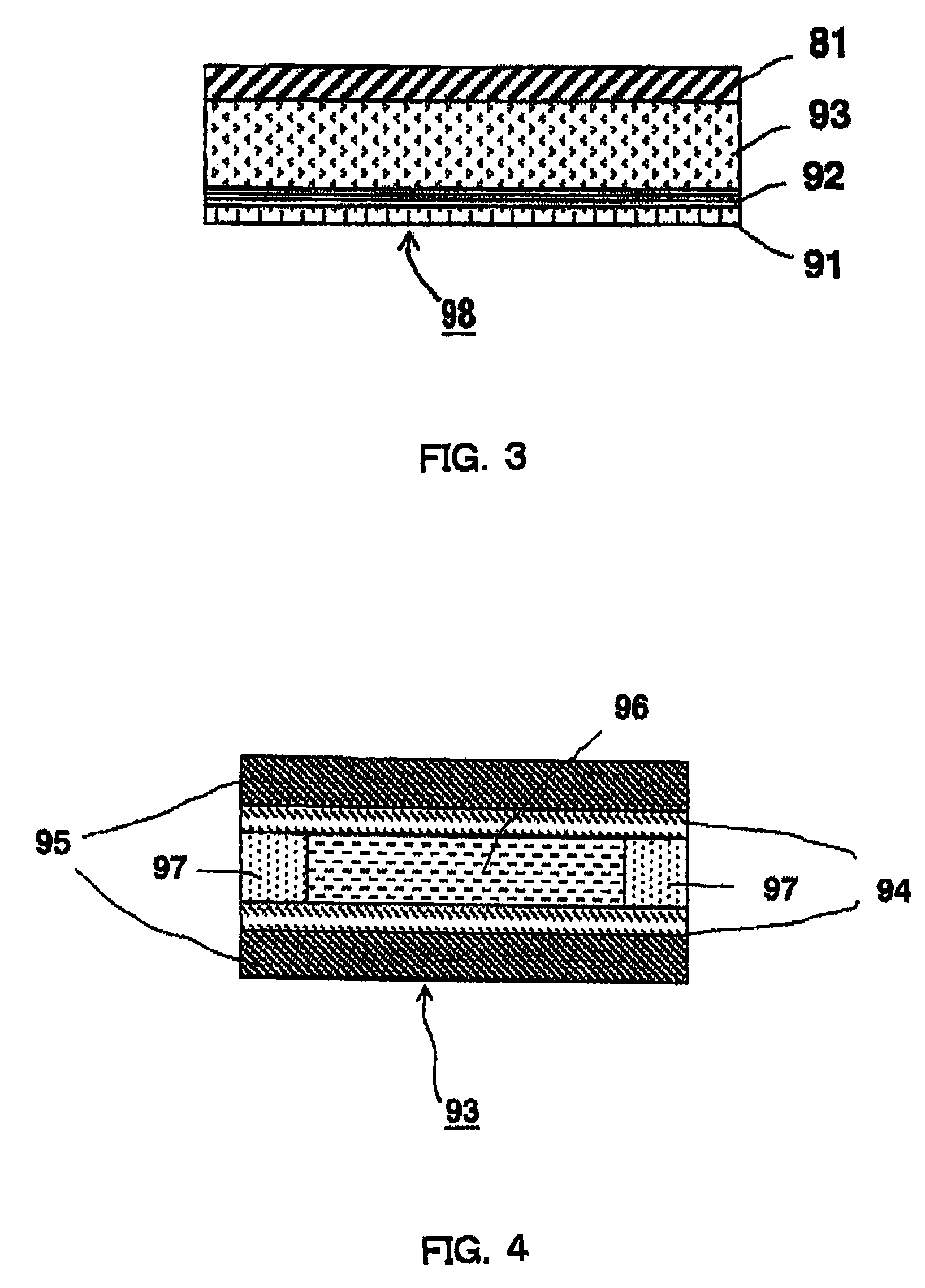
Figure 3
Abstract
Description
TECHNICAL FIELD
[0001] This invention relates to an optical multilayer film. More particularly it relates to an optical multilayer film having a low refractive index layer exhibiting a reduced reflectivity with enhanced efficiency, which is useful as an antireflection protective film provided in an optical member, or a polarizing plate-protecting film. The invention further relates to a polarizing plate having an antireflection function using the optical multilayer film, and to an optical product provided with this polarizing plate.BACKGROUND ART
[0002] A polarizing film of a liquid crystal display (hereinafter abbreviated to as “LCD” when appropriate) is often treated to provide with a low refractive index layer for preventing or minimizing mirroring. An enhanced antireflection performance is required especially for a polarizing film of LCD used in the fields. For this requirement, a low refractive index layer comprised of a multilayer film or a single layer film is formed on a base fi...
Examples
production example 1
[0171]Preparation of Base Film 1A
[0172]Pellets of a norbornene polymer (trade name “ZEONOR 1420R” available from Zeon Corporation, glass transition temperature: 136° C., saturation water absorption: below 0.01% by weight) were dried in a hot air oven at 110° C. for 4 hours. The pellets were melt-extruded at 260° C. through a single screw extruder equipped with a coathanger T-die with a lip width of 650 mm and having a die lip provided with a leaf disc-shaped polymer filter (filtration precision: 30 μm). The inner surface of the die lip used was chromium-plated and had a surface roughness Ra of 0.05 μm. Thus, a base film 1A having a width of 600 mm was obtained. The base film 1A had a volatile content of not larger than 0.01% by weight and a saturated water content of not larger than 0.01% by weight. The base film 1A had a datum thickness of 40 μm, a thickness fluctuation of 2.3% and a die line depth of 0.01 μm.
production example 2
[0173]Preparation of Hard Coat Layer-Forming Composition 1
[0174]To 100 parts by weight of a modified alcohol sol of antimony pentaoxide (solid content: 30%, supplied by Catalysts and Chemicals Ind. Co., Ltd.), 10 parts by weight of ultraviolet-curable urethane acrylate (tradename “Shikou UV 7000B” available from The Nippon Synthetic Chem. Ind. Co., Ltd.) and 0.4 part by weight of a photopolymerization initiator (tradename “Irgacure 184” available from Ciba-Geigy) were added and mixed together to prepare an ultraviolet-curable, hard coat layer-forming composition 1.
production example 3
[0175]Preparation of Silicon Alkoxide Solution 1
[0176]An oligomer of tetramethoxysilane (“Methyl silicate 51” available from Colcote Co.) was mixed with methanol at a ratio of 47:75 by mass to prepare liquid A. Water, aqueous ammonia (ammonia content: 28% by weight) and methanol were mixed together at a ratio of 60:1.2:97.2 by weight to prepare liquid B. Liquid A and Liquid B were mixed together at a ratio of 16:17 by weight to prepare a silicon alkoxide solution 1.