
Plated member and plated terminal for connector
a technology of plated terminals and connectors, which is applied in the manufacture of contact members, superimposed coating processes, transportation and packaging, etc., can solve the problems of insufficient heat resistance of conventional tin plated terminals, large insertion force, and large damage to the terminal surface during insertion, so as to achieve small variation, small space distribution, and high in-plane uniformity
Patent Information
- Authority / Receiving Office
- US · United States
- Patent Type
- Patents(United States)
- Current Assignee / Owner
- Publication Date
- 2017-09-05
Smart Images
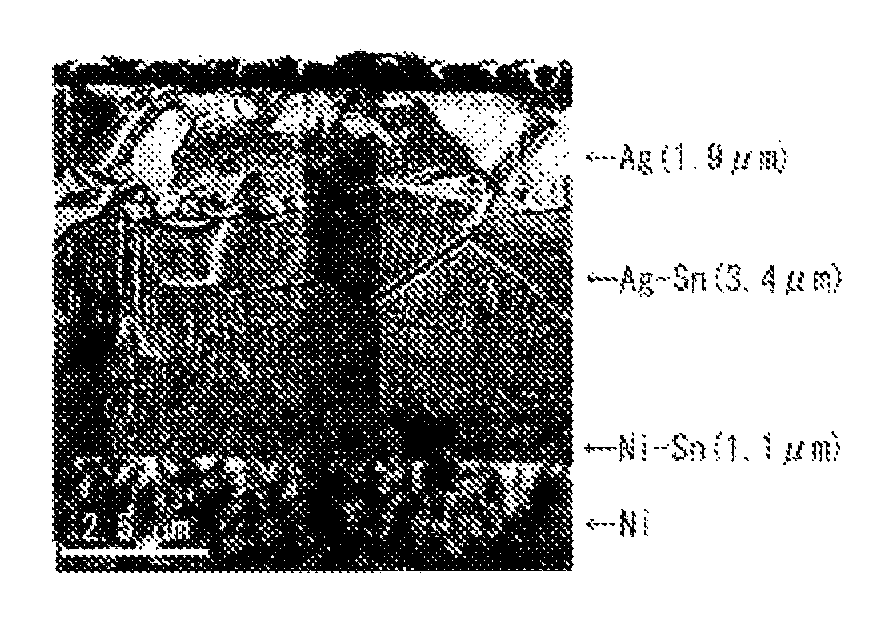
Figure 1 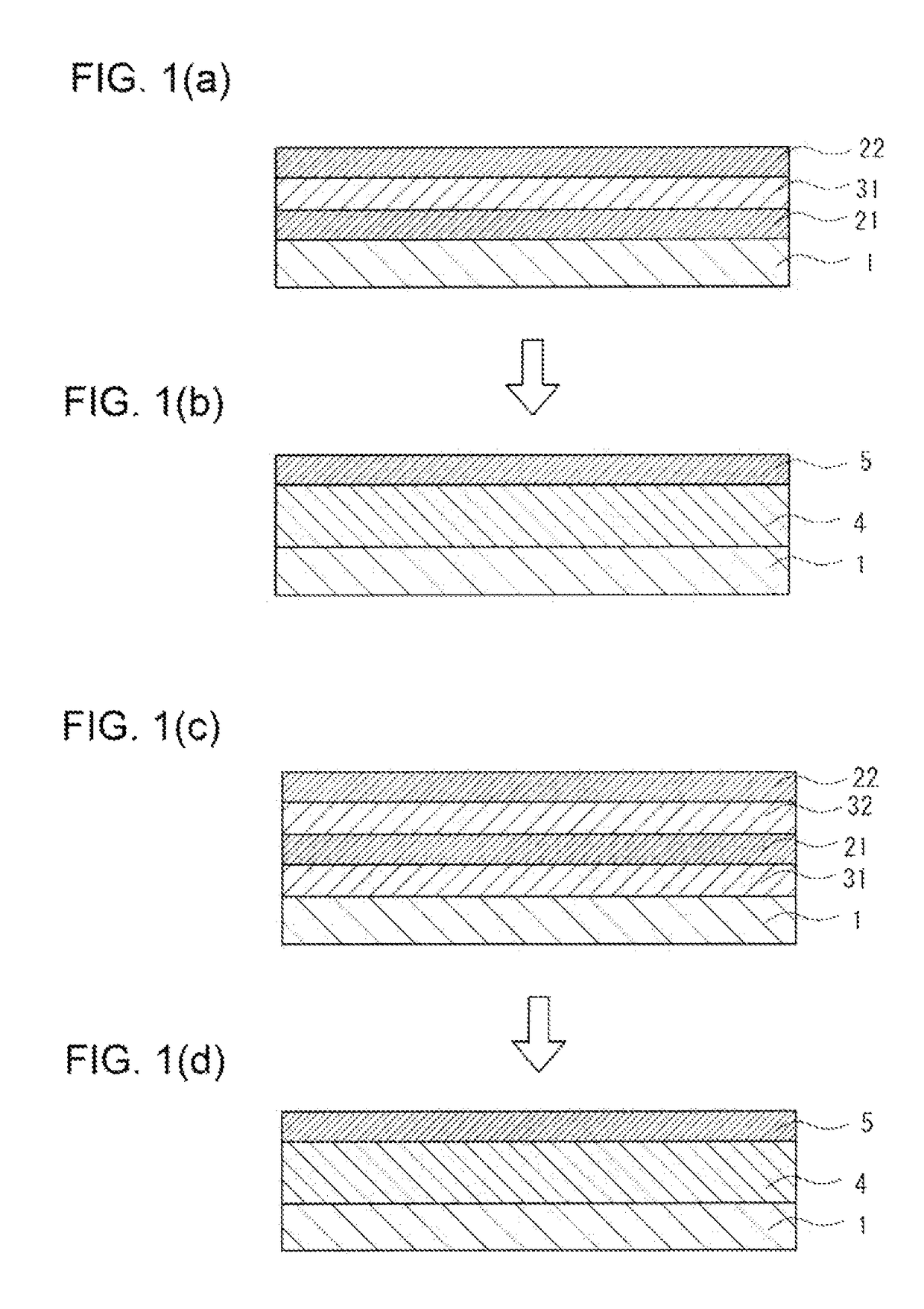
Figure 2 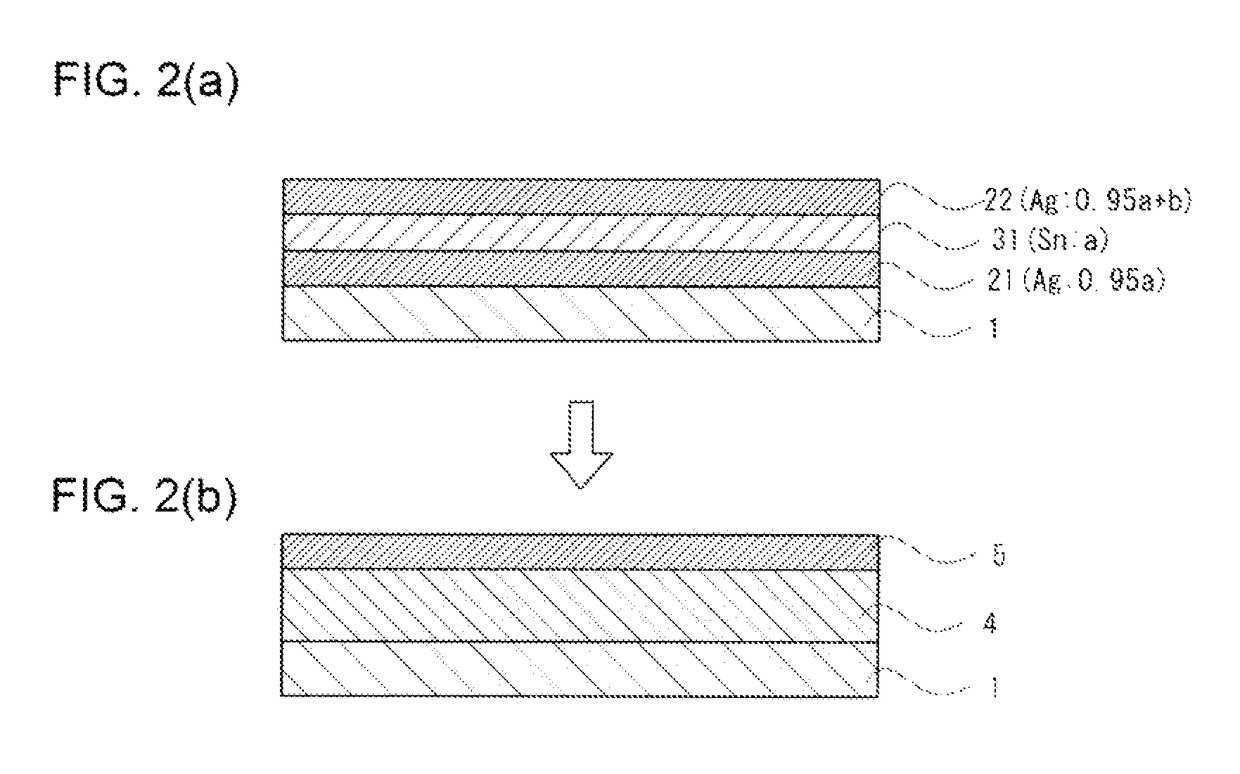
Figure 3
Abstract
Description
BACKGROUND OF THE INVENTION
[0001] 1. Field of the Invention
[0002] The present invention relates to a plated member, a plated terminal for connector, a method for producing a plated member and a method for producing a plated terminal for connector and more particularly to a plated member and a plated terminal for connector containing silver and tin in a plating layer and methods for producing them.
[0003] 2. Description of the Related Art
[0004] In recent years, high-output motors have been used in hybrid vehicles, electric vehicles and the like. Since a large current flows in a connector terminal such as a terminal for high-output motor to which a large current is applied, the amount of heat generation in a terminal portion increases. Further, since the terminal becomes larger in conformity with a current capacity, a larger insertion force is required and damage on a terminal surface during insertion becomes larger. The terminal is inserted and withdrawn a large number of times for mainte...
Examples
example 1
[0090]A nickel under plating layer having a thickness of 0.5 μm was formed on a clean surface of a copper base plate. A soft silver plating layer having a target thickness of 1μ was formed on this nickel under plating layer. A tin plating layer having a target thickness of 1μ was formed on this soft silver plating layer, and a soft silver plating layer having a thickness of 2 μm was formed on the tin plating layer. This material was heated at 200° C. for 60 min in the atmosphere, thereby forming a plated member according to Example 1. Specific formation conditions of the soft silver plating layer and the tin plating layer were as follows.
[0091]
[0092]A plating bath having an Ag concentration of 45 g / L was used
[0093]Operating temperature: 30° C.
[0094]Current density: 5 ASD (2.5 μm / min)
[0095]Plating time: 20 to 30 sec (thickness of plating layer: 1 μm), 40 to 60 sec (thickness of plating layer: 2 μm)
[0096]
[0097]A plating bath having an Sn concentration of 60 g / L was used
[0098]Additive:...
example 2
[0102]As in Example 1, a plated member in which a soft silver plating layer having a target thickness of 1 μm, a tin plating layer having a target thickness of 1 μm and a soft silver plating layer having a target thickness of 2 μm were successively laminated on a surface of a copper base plate to which nickel plating was applied was heated at 290° C. for 1 min.
example 3
[0103]A plated member in which a soft silver plating layer having a thickness of 1.5 μm, a tin plating layer having a thickness of 1.0 μm and a soft silver plating layer having a thickness of 2.5 μm were successively laminated on a surface of a copper base plate to which nickel plating was applied was heated at 290° C. for 1 min.