
Method and device for multi-mode terminal handover
A handover, multi-mode terminal technology, applied in the field of communication, can solve the problem that the terminal cannot realize handover, etc., and achieve the effect of easy use, humanization, easy implementation, and simple algorithm
- Summary
- Abstract
- Description
- Claims
- Application Information
AI Technical Summary
Problems solved by technology
Method used
Image

Examples
Embodiment Construction
[0037] In order to clearly illustrate the solutions in the present invention, preferred embodiments are given below and detailed descriptions are given in conjunction with the accompanying drawings.
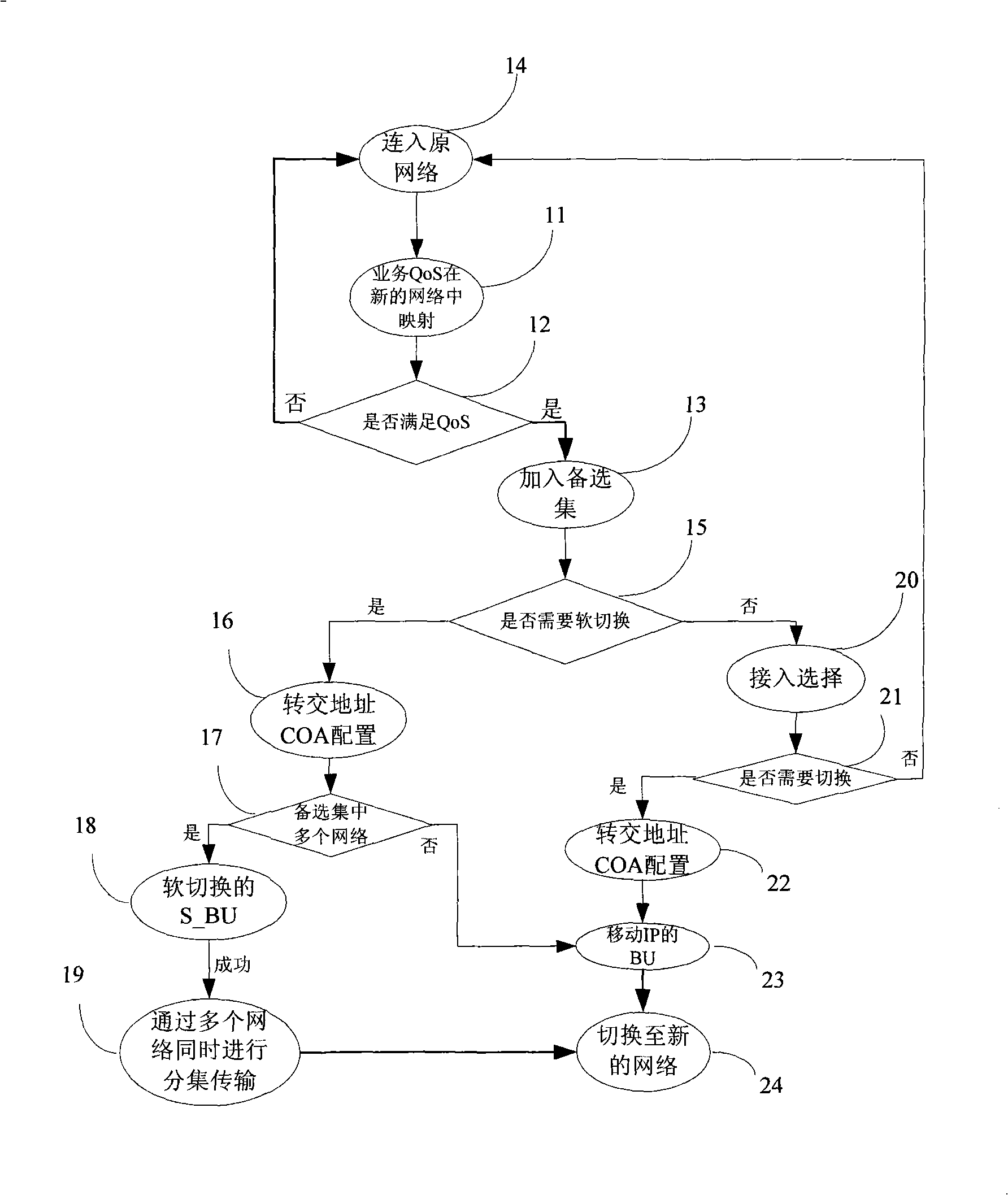
[0038] see figure 1 , the method of the present invention comprises:
[0039] Step 11: Map the current service to the detected network;
[0040] Step 12: Determine whether the QOS of the service is satisfied after mapping;
[0041] The QOS of each service has different parameter definitions, such as delay, bandwidth, reliability and other indicators. Through the predefined indicators, it can be judged whether the current network meets the QOS requirements;
[0042] If it is satisfied, go to step 13; if not, go to step 14 and keep the original network connection;
[0043] Step 13: adding the detected network to the candidate set;
[0044] Step 15: judging whether soft handover is required;
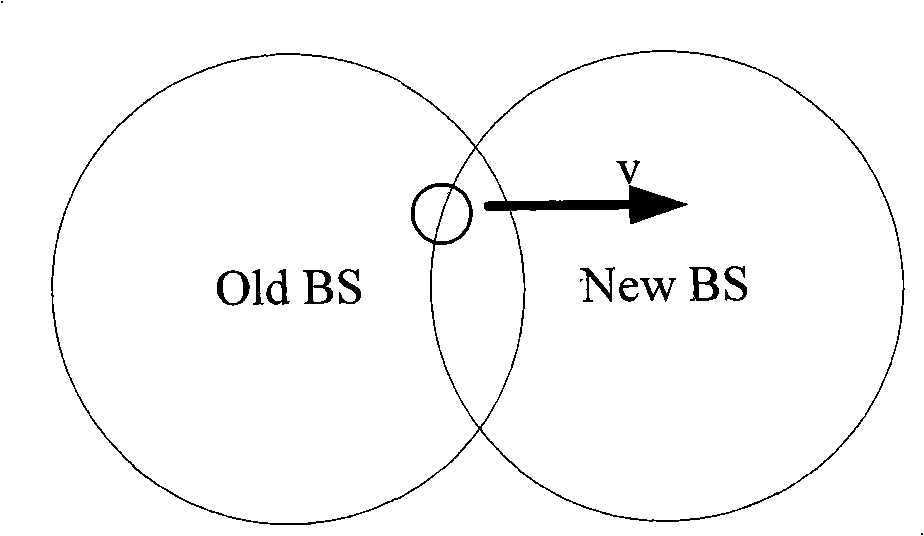
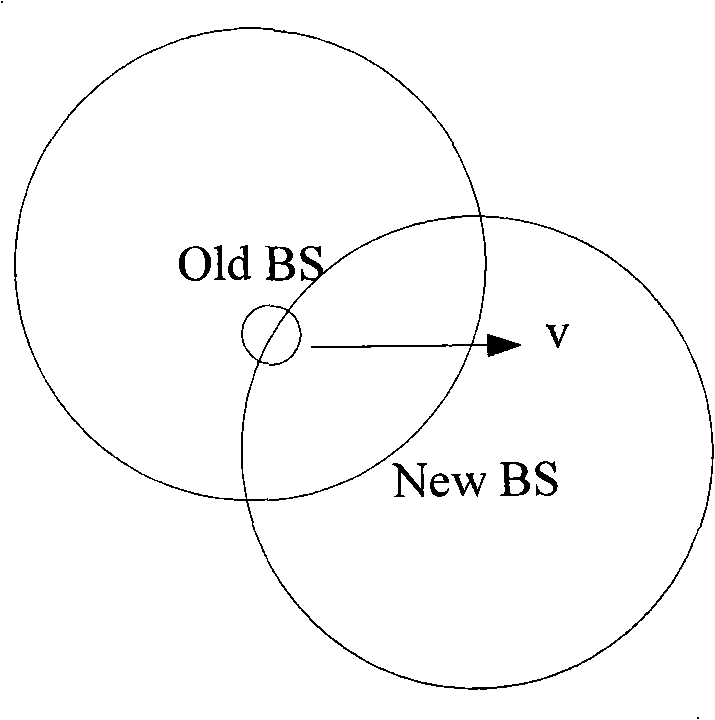
[0045] Judging whether soft handoff is required based on the user's speed and moving st...
PUM
 Login to View More
 Abstract
Description
Claims
Application Information
 Login to View More