Method for determining fatigue state according to electroencephalogram

An EEG signal, fatigue determination technology, applied in the input/output of user/computer interaction, medical science, biological neural network model, etc., can solve the problem of signal instability, poor anti-interference ability, non-stationarity and strong randomness and other issues to achieve significant creative and practical effects
CN101596101BInactive Publication Date: 2011-03-23BEIJING UNIV OF TECH

Patent Information

Authority / Receiving Office
CN · China
Patent Type
Patents(China)
Current Assignee / Owner
BEIJING UNIV OF TECH
Publication Date
2011-03-23
Estimated Expiration
Not applicable · inactive patent

Smart Images

  • Figure 1
    Figure 1
  • Figure 2
    Figure 2
  • Figure 3
    Figure 3
Patent Text Reader

Abstract

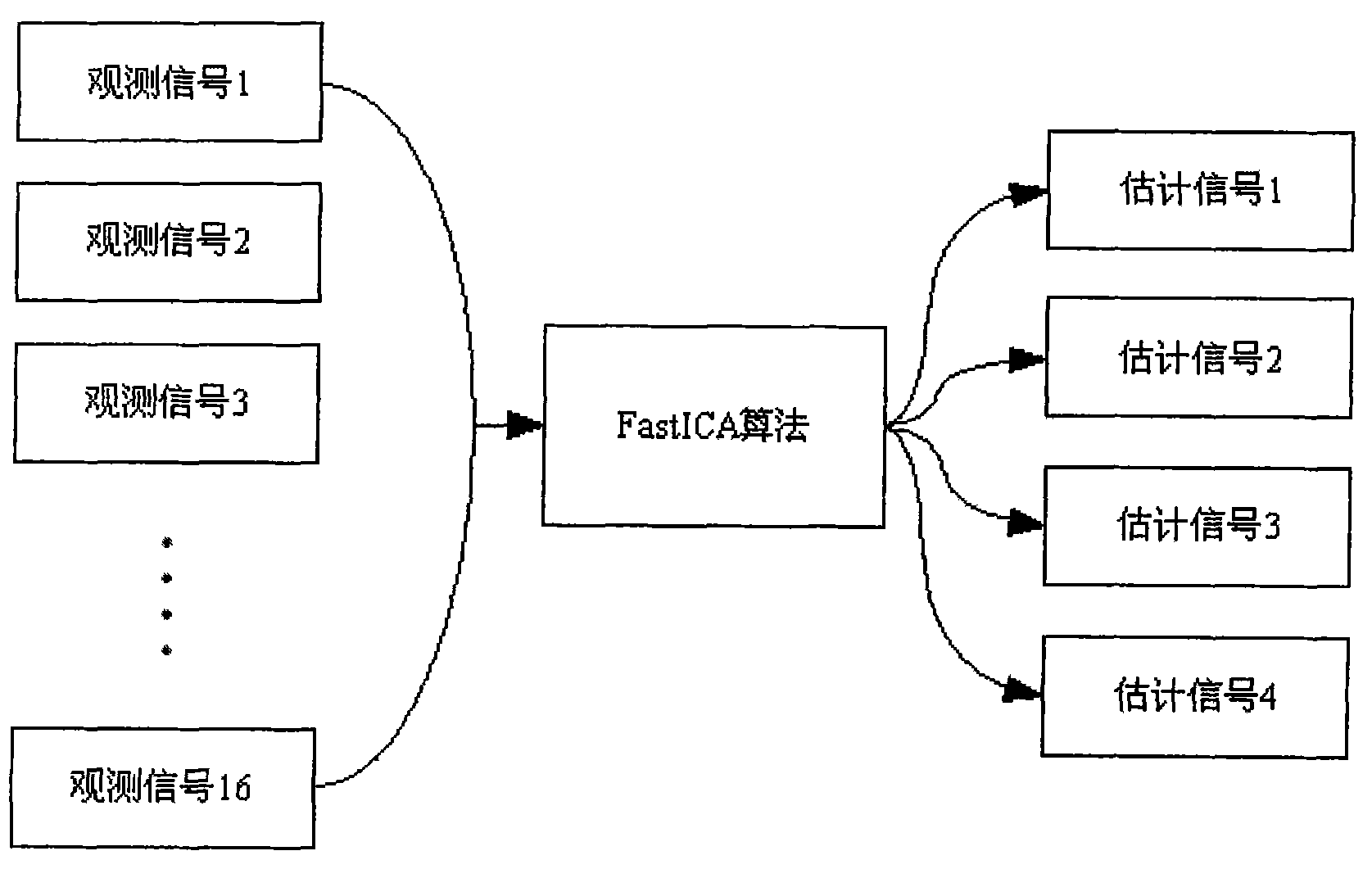
The invention provides a method for determining fatigue state according to electroencephalogram (EEG) which adopts a plurality of electroencephalographs and connecting electrodes for realizing the real time acquisition of electroencephalogram. The method comprises the following steps: running interface programs of a PC and the electroencephalographs; realizing the synchronous acquisition of data by using a VC++ to compile visual interface program of the electroencephalographs under the Windows platform, and displaying EEG waveforms acquired in real-time; pre-processing the acquired data; carrying out the low-pass filtering at 0Hz to 30Hz to the data by an FIR (Finite Impulse Response) filter, so as to eliminate the power frequency noise and external interference; decomposing the filtered EEG waveforms by the blind-source separation method, so as to acquire each component of the mixed signal comprising electro-oculogram (EOG) and left and right brain EEGs; carrying out the fast Fouriertransform (FFT) on the left and right brain EEGs, and converting the time-domain signals to the frequency-domain signals; working out the energy of alpha, beta, theta and delta waves in the EEGs and classifying the BP (back propagation) neural network of the multi-layer perceptron. The invention has the characteristics of directness and rapidness.
Need to check novelty before this filing date? Find Prior Art

Description

technical field

[0001] The present invention relates to a method for extracting energy of brain wave α, β, θ, δ components in a brain-computer interface (brain-computer interface, BCI) device, in particular to a feature extraction and classification of an independent component analysis method combined with a BP neural network method. Background technique

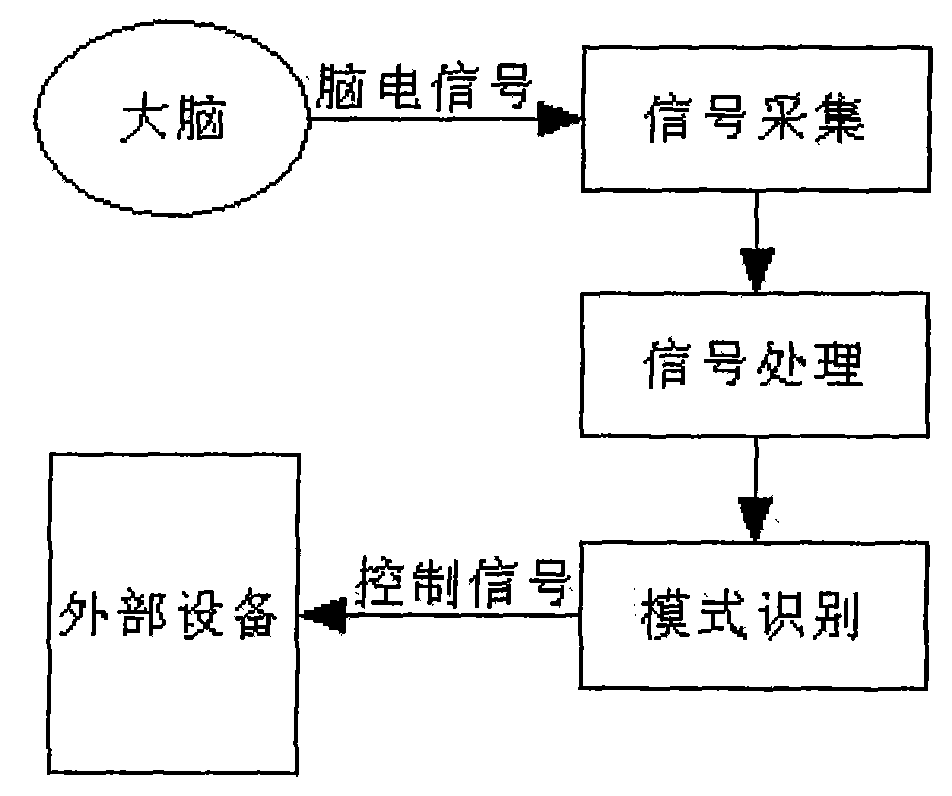
[0002] A brain-computer interface (BCI) is a direct connection pathway established between a human or animal brain (or a culture of brain cells) and an external device. In the case of a one-way BCI, the computer either accepts commands from the brain or sends signals to the brain (such as video reconstruction), but cannot send and receive signals at the same time. The two-way brain-computer interface allows two-way information exchange between the brain and external devices.

[0003] Brain-computer interface is divided into invasive brain-computer interface, partially invasive brain-computer interface and non-invasive br...

Claims

the structure of the environmentally friendly knitted fabric provided by the present invention; figure 2 Flow chart of the yarn wrapping machine for environmentally friendly knitted fabrics and storage devices; image 3 Is the parameter map of the yarn covering machine
Login to View More