
Method for detecting pseudorabies virus ge protein specific antibody in pig saliva
A pseudorabies virus, specific technology, applied in the field of detection of pseudorabies virus gE protein-specific antibodies in pig saliva, can solve the problems of low proportion of pigs, large animal stress, small number, etc., and save sampling time , convenient transportation and storage, strong resistance effect
- Summary
- Abstract
- Description
- Claims
- Application Information
AI Technical Summary
Problems solved by technology
Method used
Image


Examples
Embodiment
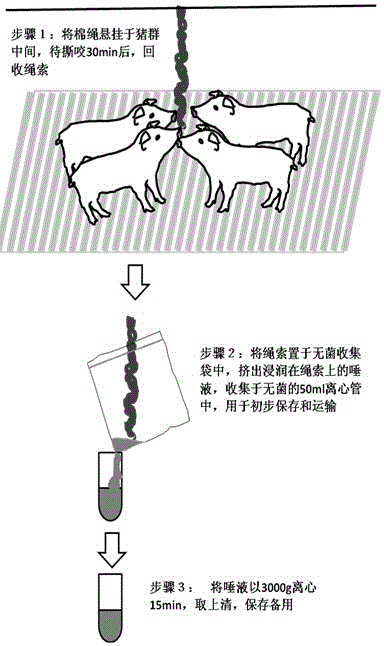
[0025] 1) Hang a custom-made cotton rope (6 strands, 3mm in diameter, 1m in length) in the middle of the pigs or on the fence, with the height of the bottom end at the same level as the shoulder of the animal, and loosen the hanging end of the rope, and wait for the pigs to bite After 30 minutes, recover the rope and put it in a sterile sample collection bag, place it outside the sample bag with both hands, twist the rope hard, squeeze out the saliva soaked in the rope, and collect it in a sterile 50ml centrifuge tube. Preliminary storage and transportation (at room temperature, within 6 hours, or at 4°C, within 72 hours to the laboratory). Centrifuge the saliva at 3000g for 15min, take the supernatant to obtain the primary antibody of saliva, and store it at 4°C ( figure 2 .
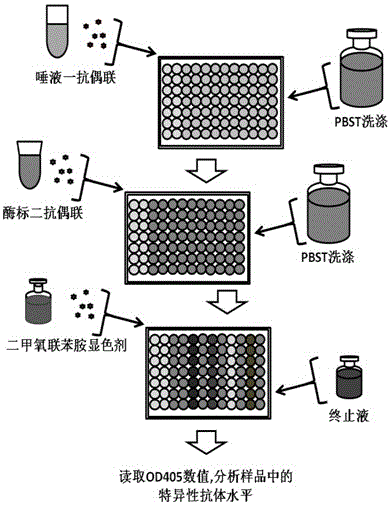
[0026] 2) Dilute the spare saliva primary antibody with PBST (1:1), and add it to the antigen-coated reaction plate according to the number (purchased from IDEXX Company in the United States, product nu...
PUM
| Property | Measurement | Unit |
|---|---|---|
| diameter | aaaaa | aaaaa |
Abstract
Description
Claims
Application Information
 Login to View More