
Application of tripterine to preparation of medicine treating degenerative retinopathy related diseases
A technology of tripterine and retinal degeneration, applied to metabolic diseases, sensory diseases, drug combinations, etc., to achieve remarkable results
- Summary
- Abstract
- Description
- Claims
- Application Information
AI Technical Summary
Problems solved by technology
Method used
Image

Examples
Embodiment 1
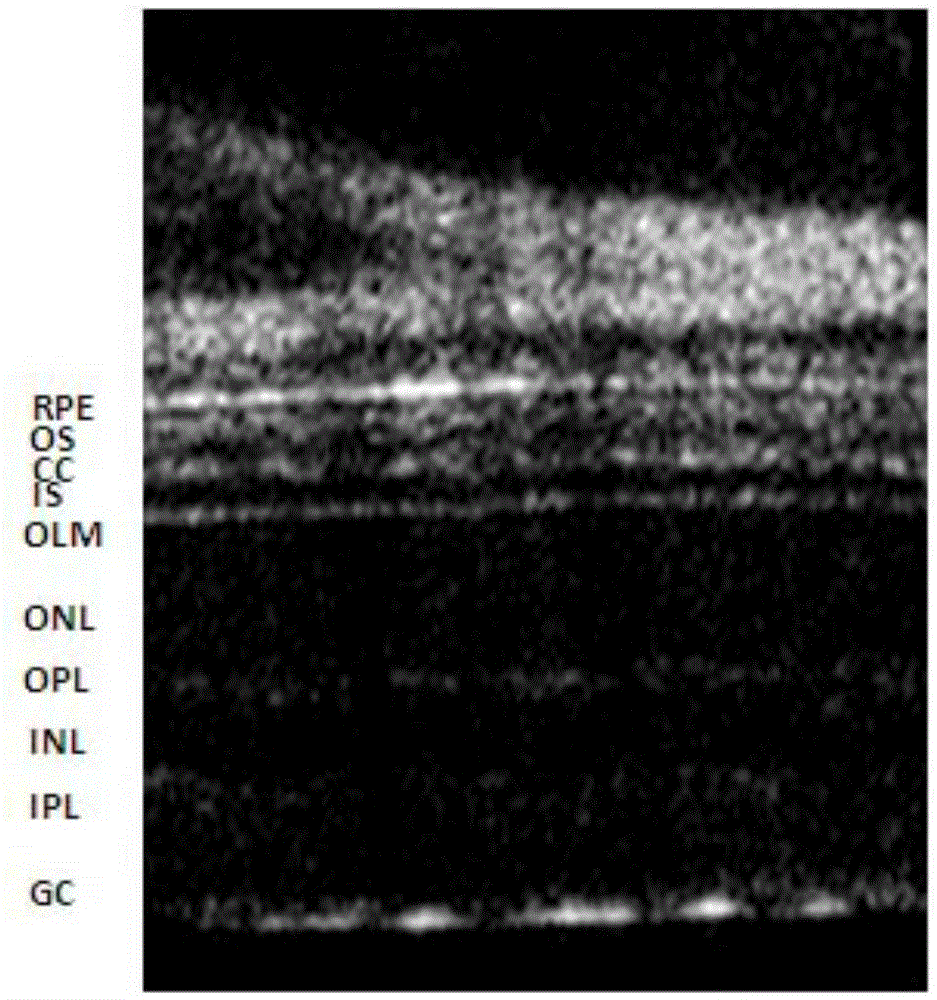
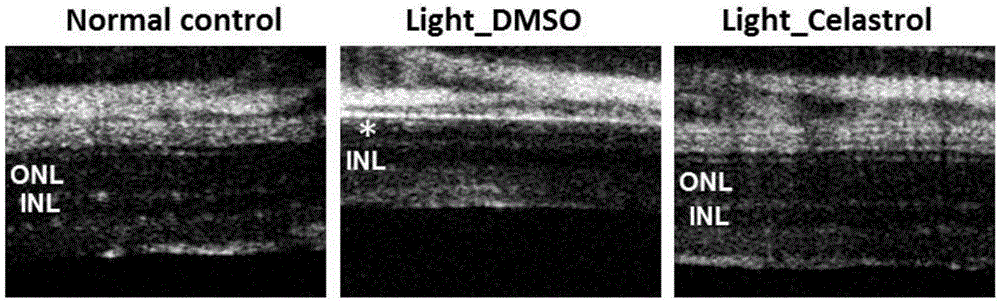
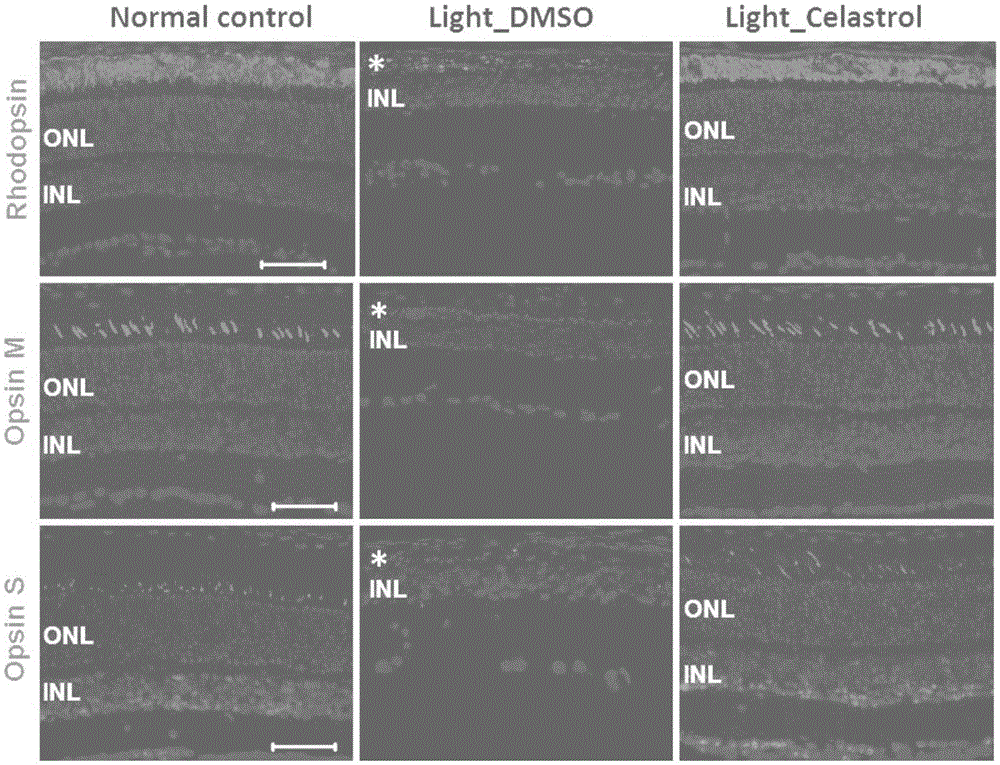
[0047] In this embodiment, we have clarified the intervention effect of tripterine on the retinal photodamage mouse model through non-invasive retinal fundus optical coherence tomography OCT technology and immunohistochemical staining. The research results show that tripterine can effectively interfere with the death of photoreceptor cells and the occurrence of retinal degeneration, and have a significant protective effect on the structure of the retina.
[0048] 1. Method
[0049] 1. Drug: tripterine, purchased from Sigma (C0869, Lot#113M4601V and Lot#042M4608V), with a purity of ≥98%.
[0050] 2. Animal model: 4-6 weeks old female Balb / c mice (Slack, Shanghai) were used for experiments. Mice were randomly divided into normal control group, photodamage model control group and Celastrol treatment group, with 8 mice in each group. The normal control group did not receive white light stimulation, but only received solvent DMSO treatment, and the other groups received 50 μl sol...
PUM
 Login to View More
 Abstract
Description
Claims
Application Information
 Login to View More