
ENB handover method in heterogeneous network and eNB
A technology of base station switching and heterogeneous network, applied in wireless communication, electrical components, etc., can solve the problems of overall network service performance degradation and limited data throughput, reduce control plane signaling, improve performance and throughput, The effect of reducing the likelihood of interruptions
- Summary
- Abstract
- Description
- Claims
- Application Information
AI Technical Summary
Problems solved by technology
Method used
Image

Examples
specific Embodiment 1
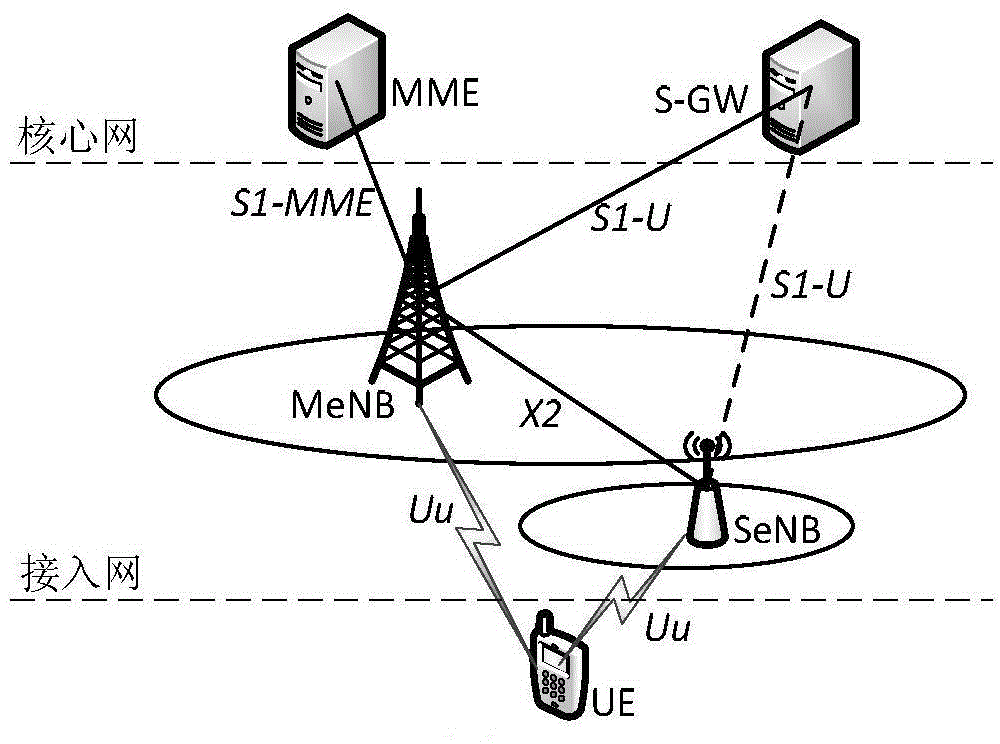
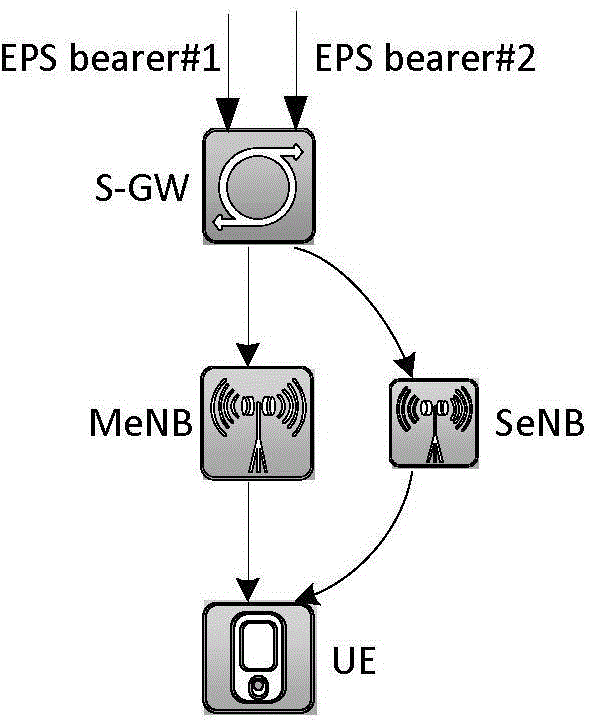
[0085] The system architecture and scenarios are the same as those described above, and the user plane architecture applies mode 1. In the preparation stage of the handover procedure between base stations, the target base station also needs to judge the connection between the UE and the second base station while judging whether to allow the UE to access. For example, the resources corresponding to the offload bearer need to be reconfigured. Compared with the prior art, the link reconfiguration between the UE and the second base station in this embodiment is non-handover type, random access may not be required, and data transmission resumes faster. The specific process is as Figure 4 shown, including the following steps:
[0086] Step 1001: The first base station makes a handover decision according to the message 101 (measurement report) of the UE (or the results obtained by other radio resource management functions, such as overloading), such as deciding to handover the prim...
specific Embodiment 2
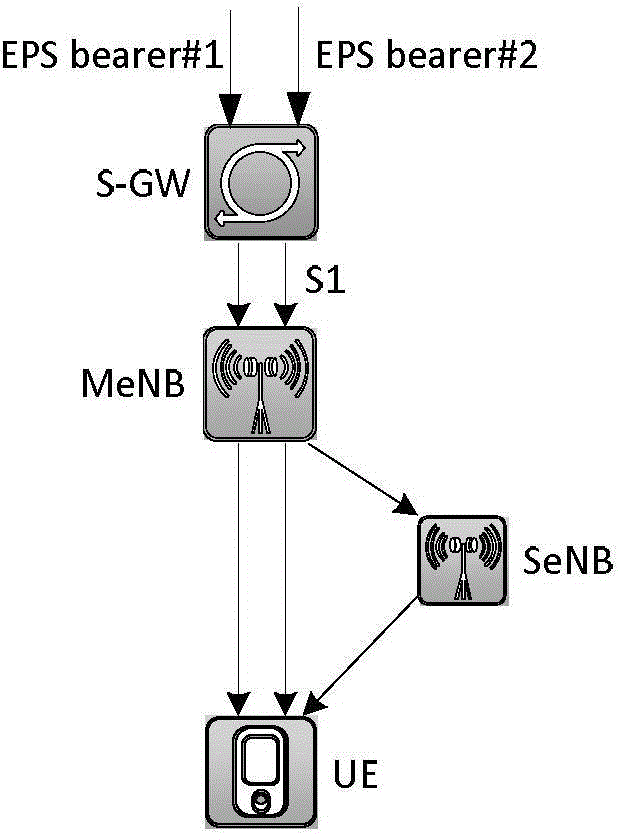
[0102] The system architecture and scenarios are the same as those described above, and the user plane architecture application mode 2. In the preparation stage of the handover procedure between base stations, while judging whether to allow UE access, the target base station also needs to judge the connection between the UE and the second base station, for example, resources corresponding to the offload bearer remain unchanged. The specific process is as Figure 5 shown, including the following steps:
[0103] Steps 2001 to 2002 are the same as steps 1001 to 1002 in the first embodiment.
[0104] Step 2003: When the judgment result obtained by the target base station is to continue to use the resources of the second base station and keep the configuration unchanged, the target base station sends a message 203 to the second base station;
[0105] The function of the message 203 is to request to establish, with the second base station, a cooperative interface between a control...
specific Embodiment 3
[0132] Specific embodiment three: the system architecture and scenarios are the same as those described in the specific implementation mode and background technology, and the user plane architecture application mode 2. When the serving cell accessed by the UE at the first base station needs to be handed over (if the UE is configured with carrier aggregation at the first base station, then this embodiment is based on the scenario that the UE is in the primary cell (PCell) of the first base station ) handover), the first base station needs to perform mobility reconfiguration on the UE, which is called a case of intra-base station handover in this embodiment. In the handover decision, the first base station needs to judge the connection status and resource configuration between the UE and the second base station. The specific process is as Figure 6 shown, including the following steps:
[0133] Step 3001: According to the measurement report of the UE or the variable value of a...
PUM
 Login to View More
 Abstract
Description
Claims
Application Information
 Login to View More