
Embryo pregnancy result prediction device based on multimodality
A prediction device and multi-modal technology, applied in the field of medical artificial intelligence, to achieve the effect of improving classification accuracy
- Summary
- Abstract
- Description
- Claims
- Application Information
AI Technical Summary
Problems solved by technology
Method used
Image

Examples
Embodiment
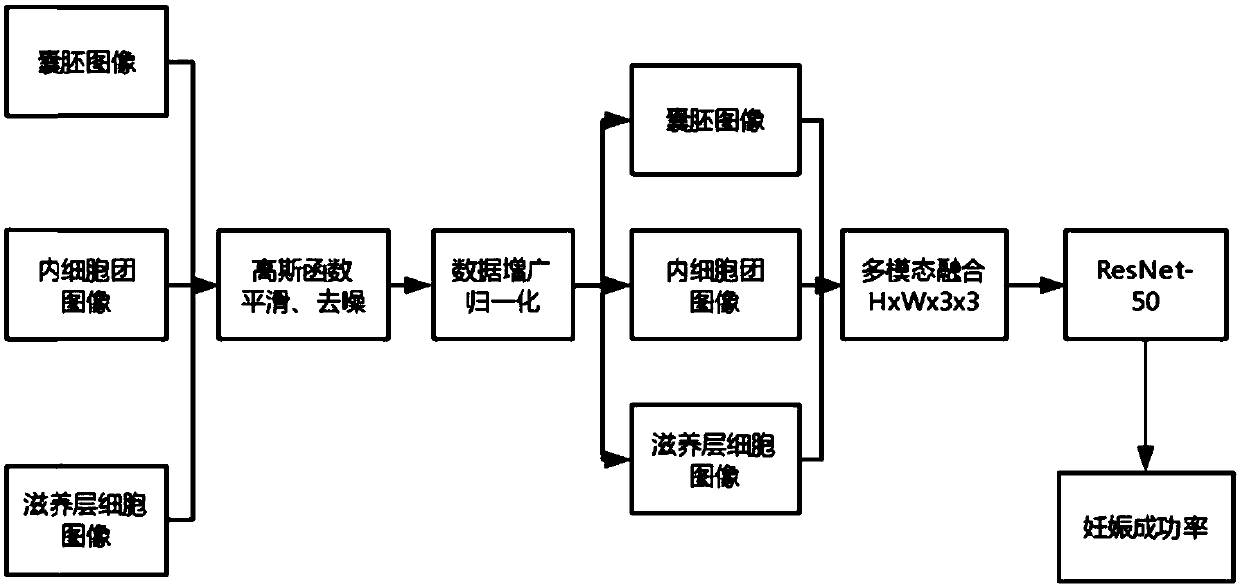
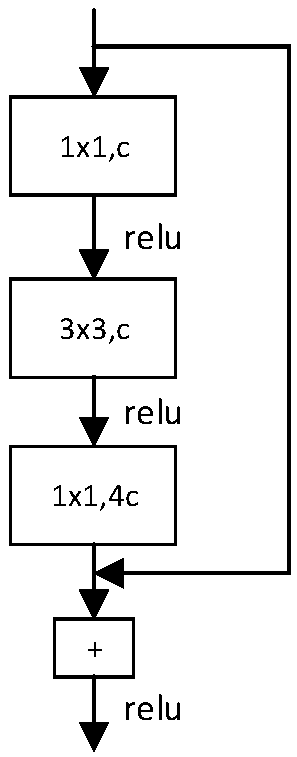
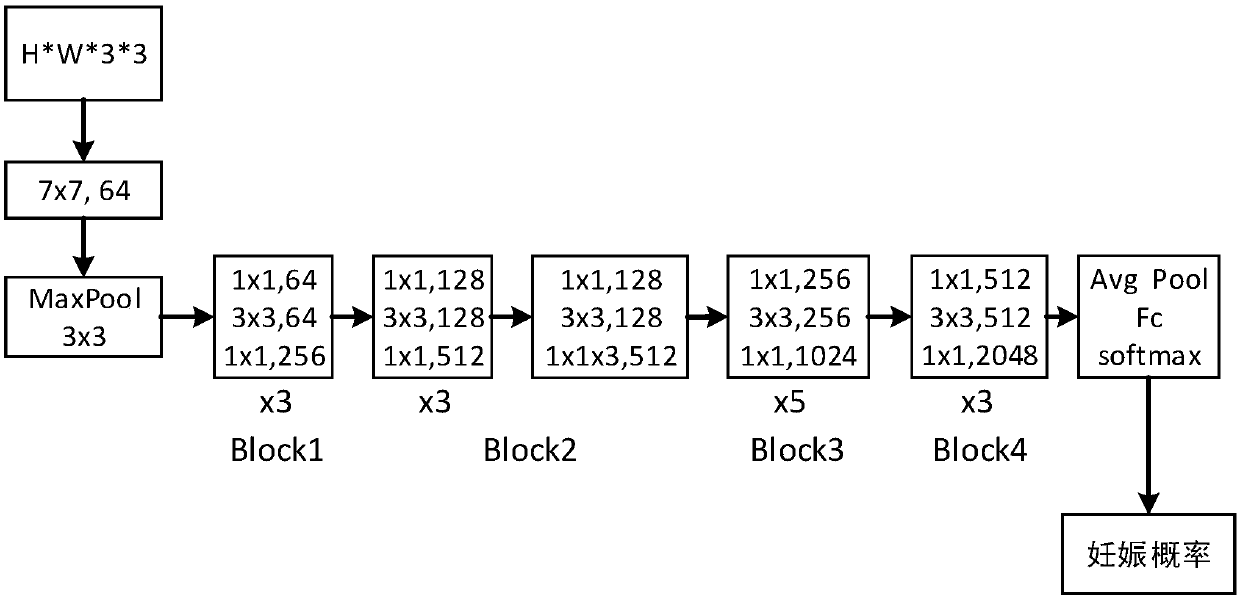
[0040] see Figure 1 to Figure 3 In this embodiment, the device for predicting pregnancy outcome based on multimodal embryos includes a memory and a processor, the memory stores computer-executable instructions, the processor communicates with the memory, and is configured to execute the computer-executable instructions stored in the memory, and the memory stores the computer-executable instructions Embryo Pregnancy Outcome Prediction Model.
[0041] The embryo pregnancy outcome prediction model is obtained through the following steps:
[0042] S101 Acquiring annotation data
[0043] Acquire three images of the same embryo developing to the blastocyst stage from reproductive records. Focus the camera on the blastocyst, inner cell mass, and trophoblast cells of the embryo respectively, and take images. This process keeps the camera position unchanged to ensure that the cell positions in the three images are the same. At the same time, after the embryo is transferred to the m...
PUM
 Login to View More
 Abstract
Description
Claims
Application Information
 Login to View More