Cloth sueding machine and use method

A technology for sanding machine and cloth, which is applied in liquid/gas/vapor removal by jet method, processing of textile materials, processing of textile material carriers, etc. To achieve the effect of simple structure principle, improve cleaning efficiency and improve grinding efficiency

CN110284288AInactive Publication Date: 2019-09-27陶媛媛
4 Cites 4 Cited by

Patent Information

Authority / Receiving Office
CN · China
Patent Type
Applications(China)
Current Assignee / Owner
Publication Date
2019-09-27
Estimated Expiration
Not applicable · inactive patent

Smart Images

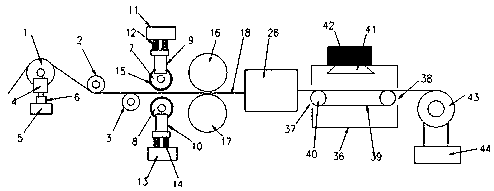
  • Figure 1
    Figure 1
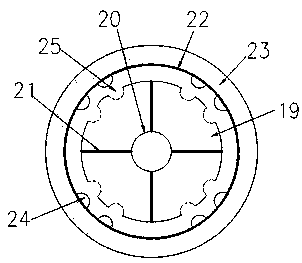
  • Figure 2
    Figure 2
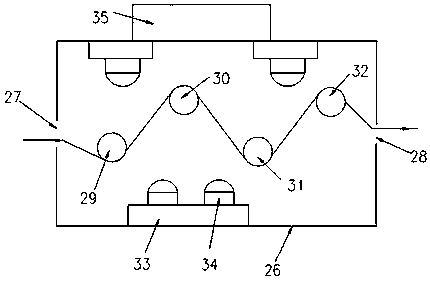
  • Figure 3
    Figure 3
Patent Text Reader

Abstract

The invention discloses a cloth sueding machine and a use method thereof. The machine comprises a tension roller, an upper conveying roller, a lower conveying roller, a cloth-pressing roller assembly, a sueding assembly and a cleaning and drying assembly; the tension roller is installed on a tension roller fixing column, a telescopic cylinder is installed between the tension roller fixing column and the mounting plate, the upper conveying roller is arranged on one side of the tension roller, the lower conveying roller is arranged on one side of the upper conveying roller, and the cloth-pressing roller assembly is arranged on one side of the lower conveying roller, the sueding assembly is arranged on the right side of the cloth-pressing roller assembly, the cleaning and drying assembly is arranged on the right side of the sueding assembly, a cloth is tensioned through the tension roller, then conveyed into the cloth-pressing roller assembly through the conveying rollers for the pressing process, and then conveyed into the sueding assembly for the sueding process, and finally cleaning, drying and collecting are conducted. Accordingly, the structure principle is simple, the cloth can be processed rapidly, the cloth quality is improved, and subsequent processing is facilitated.
Need to check novelty before this filing date? Find Prior Art

Description

technical field

[0001] The invention relates to the technical field of sanding machines, in particular to a cloth sanding machine and a use method thereof. Background technique

[0002] Sanding is a process in the textile industry. The cloth is rubbed by the sanding machine and the emery skin to form a layer of short fluff on the surface of the fabric, which not only retains the original characteristics but also gives the fabric a new style. In order to ensure warmth and softness, it is thick and soft, has a rich texture, has the characteristics of not fading, and the color will last forever. It is suitable for winter warmth products and products for personal use.

[0003] The cloth sanding machine in the prior art has single structure and function, low sanding efficiency and poor effect, therefore, it is necessary to improve it. Contents of the invention

[0004] The object of the present invention is to provide a cloth sanding machine and its usage method, so as to solv...

Examples

Embodiment Construction

[0027] The following will clearly and completely describe the technical solutions in the embodiments of the present invention with reference to the accompanying drawings in the embodiments of the present invention. Obviously, the described embodiments are only some, not all, embodiments of the present invention. Based on the embodiments of the present invention, all other embodiments obtained by persons of ordinary skill in the art without making creative efforts belong to the protection scope of the present invention.

[0028] In the description of the present invention, it should be noted that the terms "upper", "lower", "inner", "outer", "front end", "rear end", "both ends", "one end", "another end" The orientation or positional relationship indicated by etc. is based on the orientation or positional relationship shown in the drawings, and is only for the convenience of describing the present invention and simplifying the description, rather than indicating or implying that ...