
Repetitive visual stimulation to EEG neurofeedback protocols
a neurofeedback and visual stimulation technology, applied in the field of dynamic sensory brain processes, can solve the problems of reducing the accuracy of the final evoked potential estimate, difficult to measure, and averaging does not provide a suitable means of studying dynamic changes in brain activity
- Summary
- Abstract
- Description
- Claims
- Application Information
AI Technical Summary
Benefits of technology
Problems solved by technology
Method used
Image

Examples
Embodiment Construction
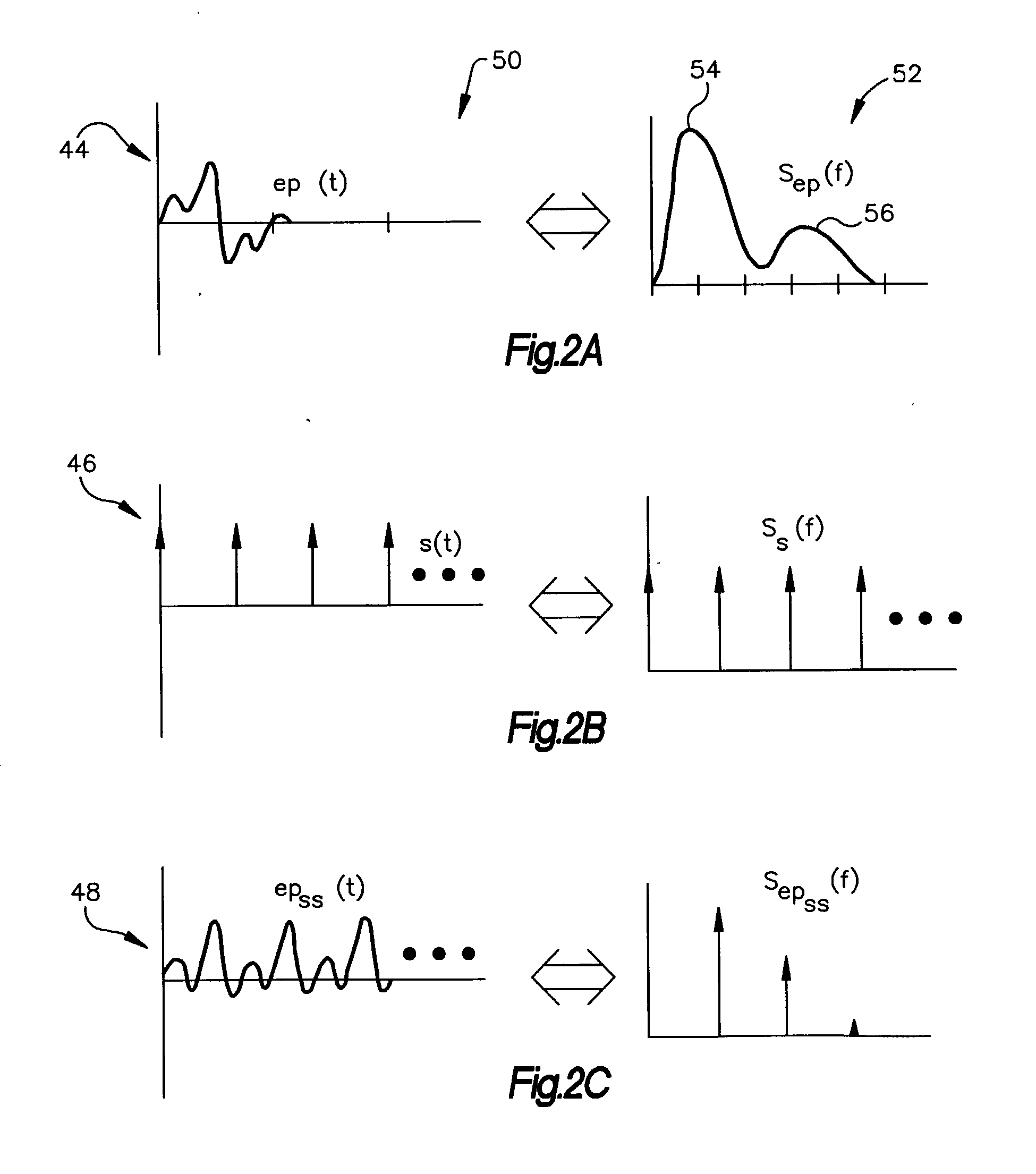
[0031] The present invention provides a method of measuring evoked potentials in response to sensory / perceptual processes. Repetitive stimulation introduces a periodic evoked response in the EEG that can be measured and fed back in real time. The EEG response to repetitive stimulation can be described as a series of successive evoked potentials (EP), giving rise to a periodic response in the cortex, referred to as the steady-state visual evoked potential (SSVEP). The method is especially advantageous in that experimental data collected shows that short-term variations in signal amplitude are shown to be sensitive to short-term shifts in attention, and to reveal moment-to-moment changes in brain responsiveness.
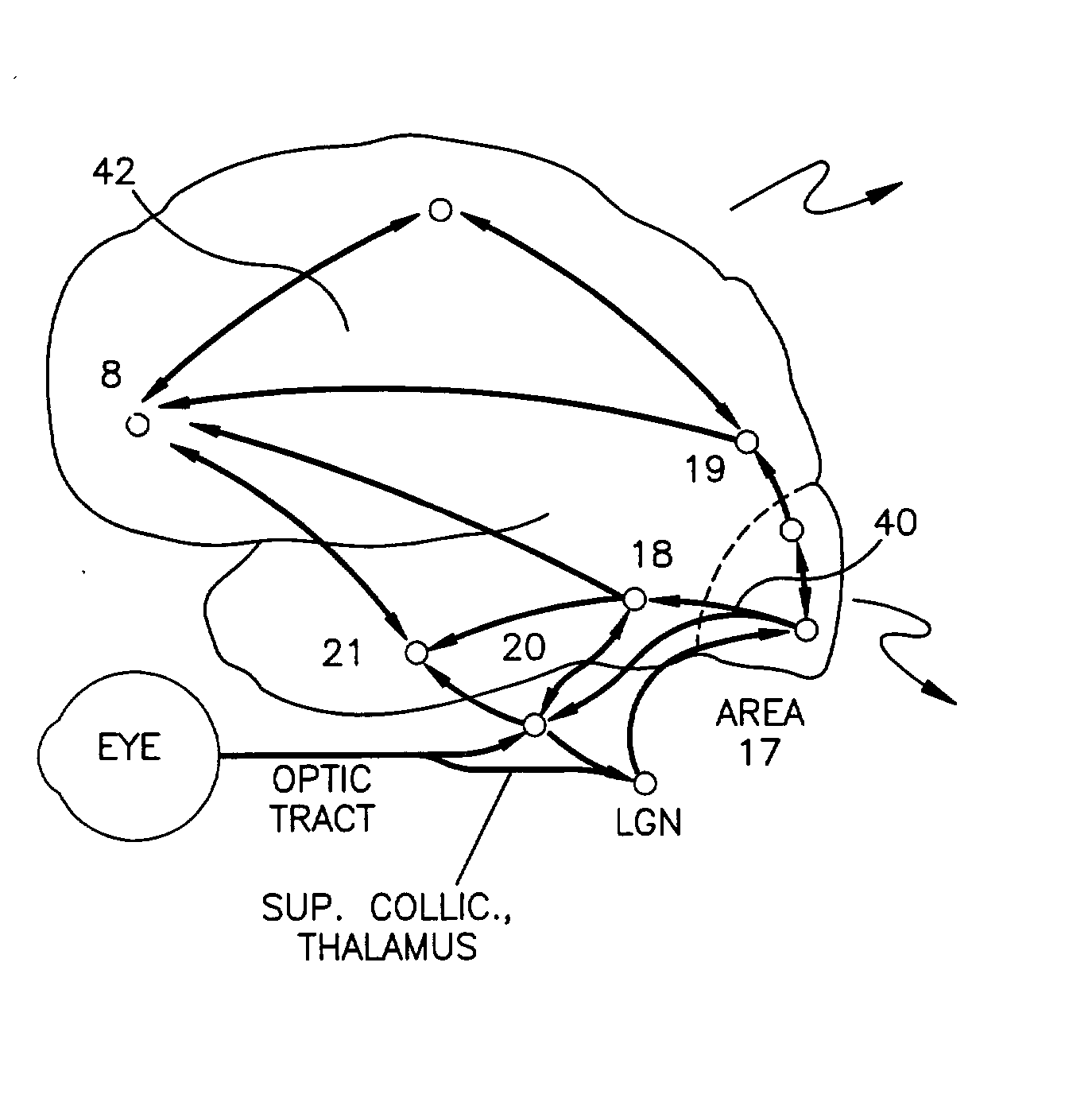
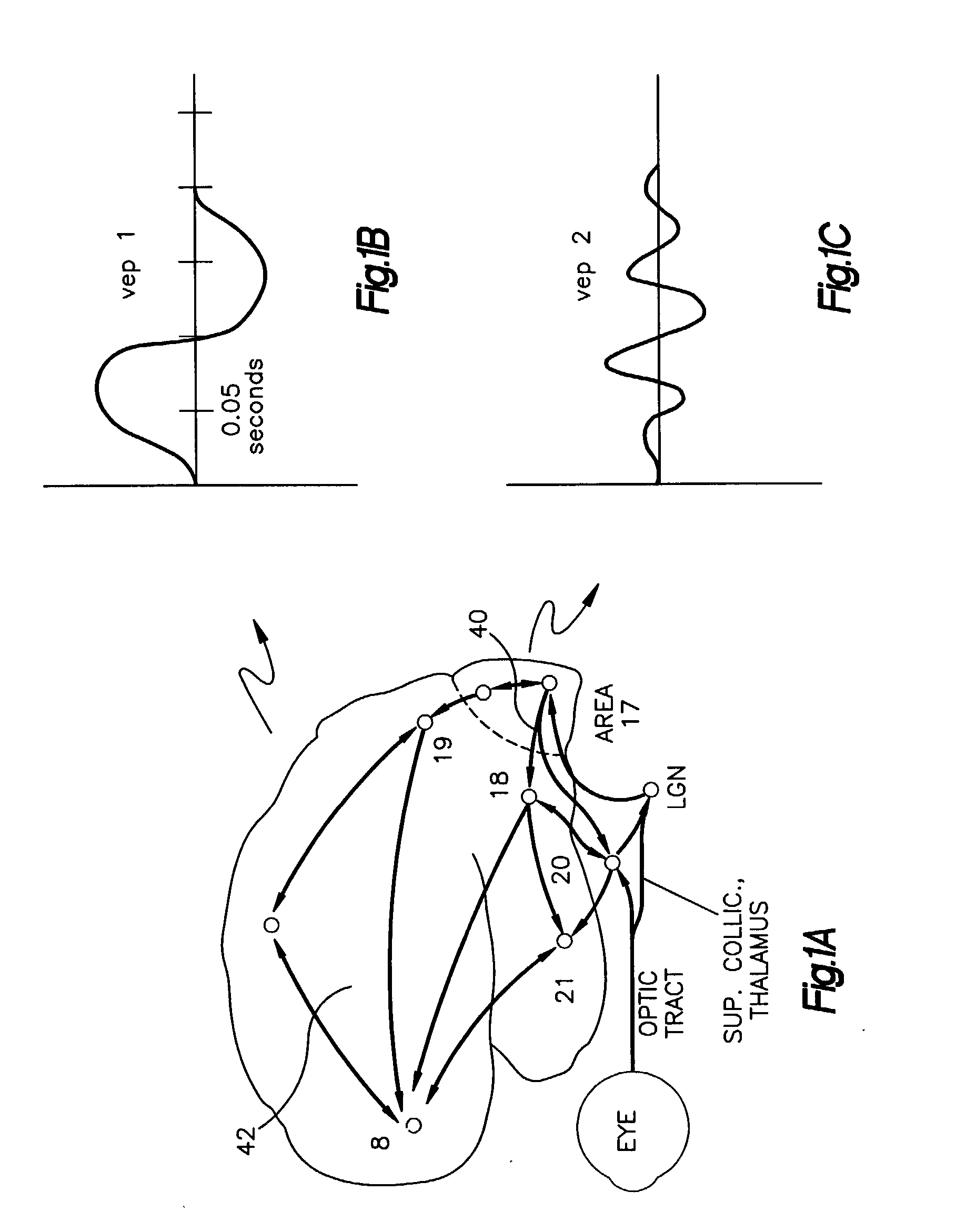
[0032] FIG. 1A depicts the neuroanatomical pathways involved in the response of the human brain to a light flash. When neural activity first reaches the visual cortex 40, the early components of the visual evoked potential are produced. As activity diffuses in the cortex and re...
PUM
 Login to View More
 Abstract
Description
Claims
Application Information
 Login to View More