
Screening system for objects in transit
a technology for transit objects and screens, applied in the field of screens for transit objects, can solve problems such as more difficult identification, and achieve the effects of low labor costs, high detection rate, and high throughpu
- Summary
- Abstract
- Description
- Claims
- Application Information
AI Technical Summary
Benefits of technology
Problems solved by technology
Method used
Image

Examples
Embodiment Construction
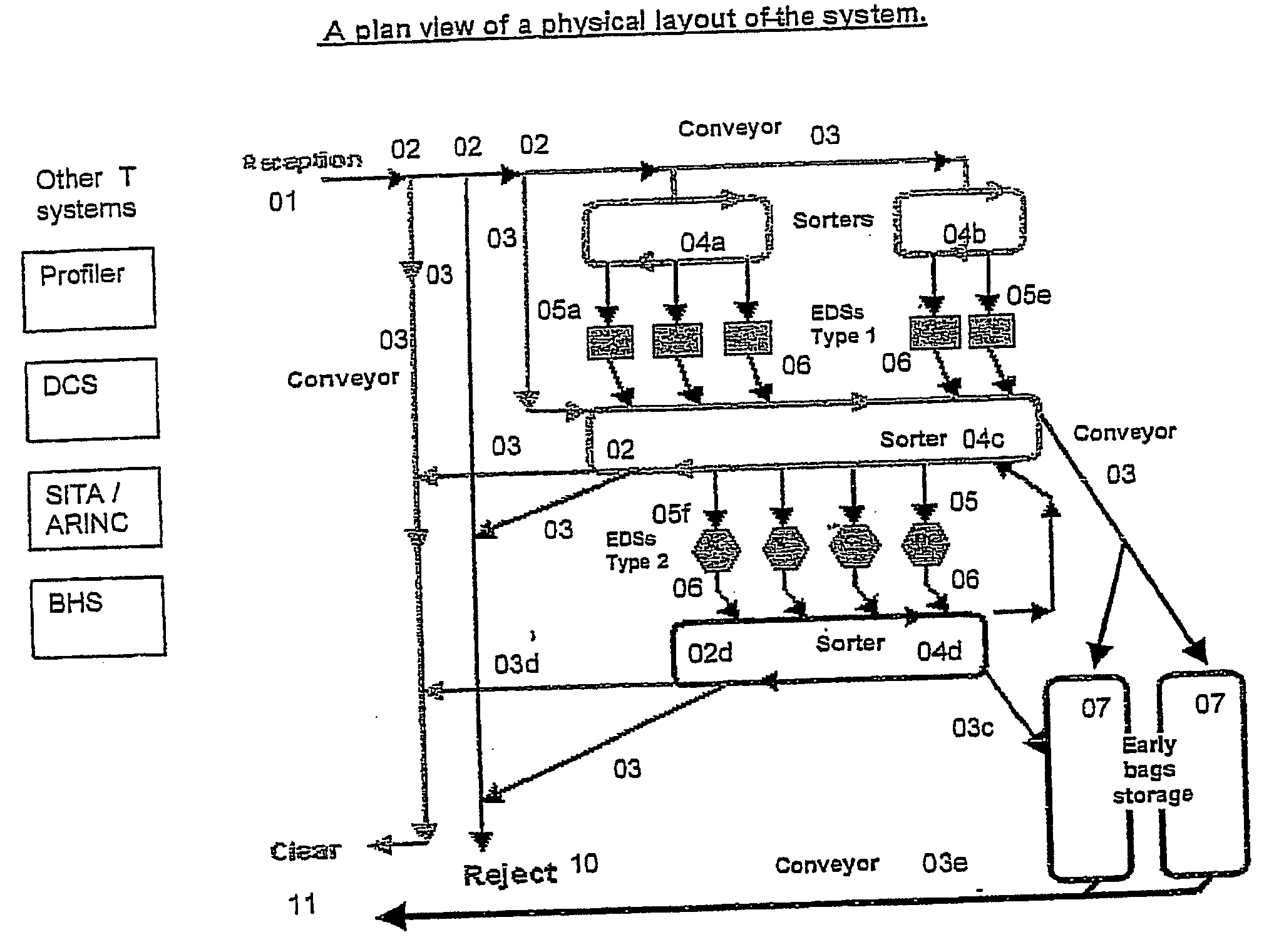
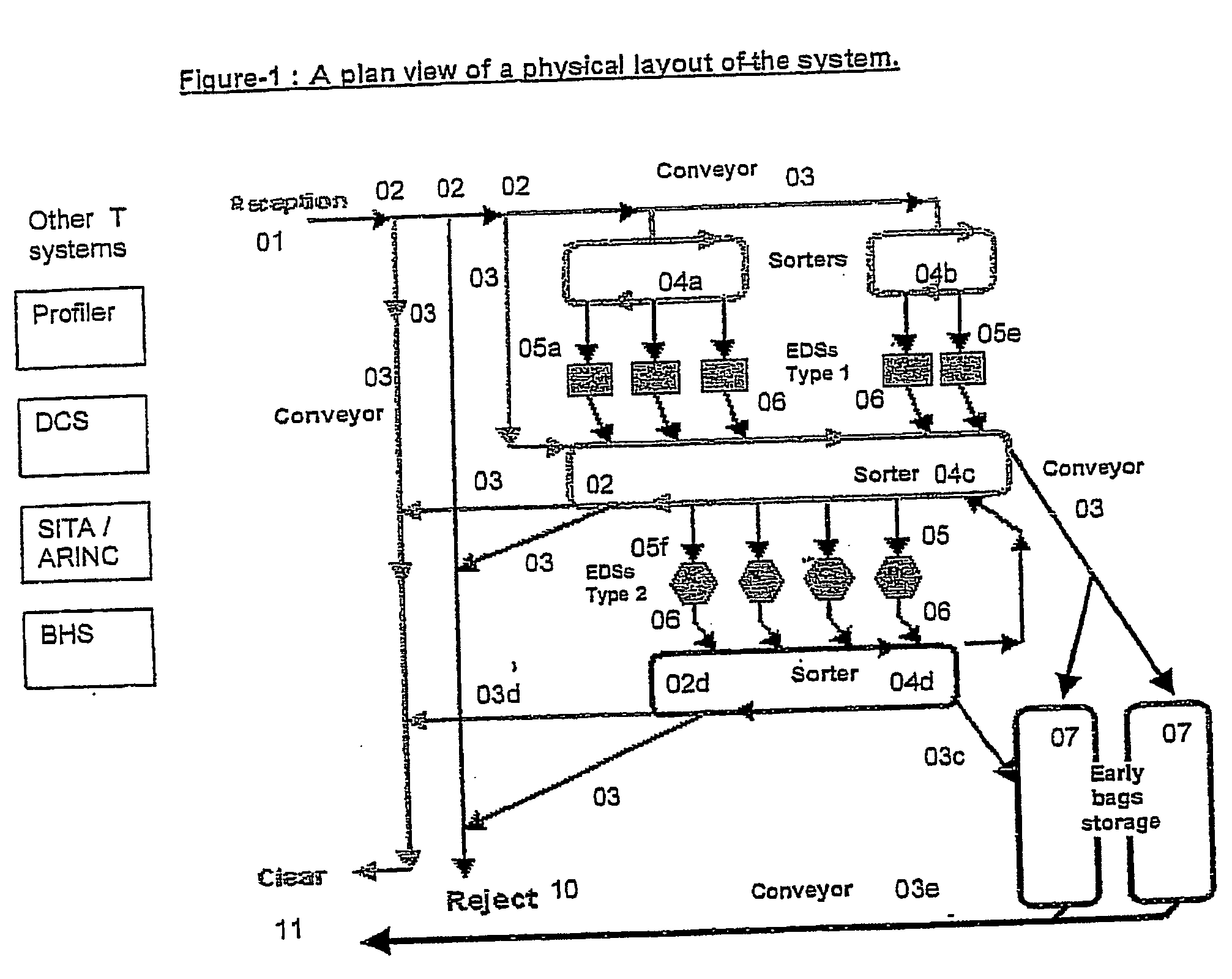
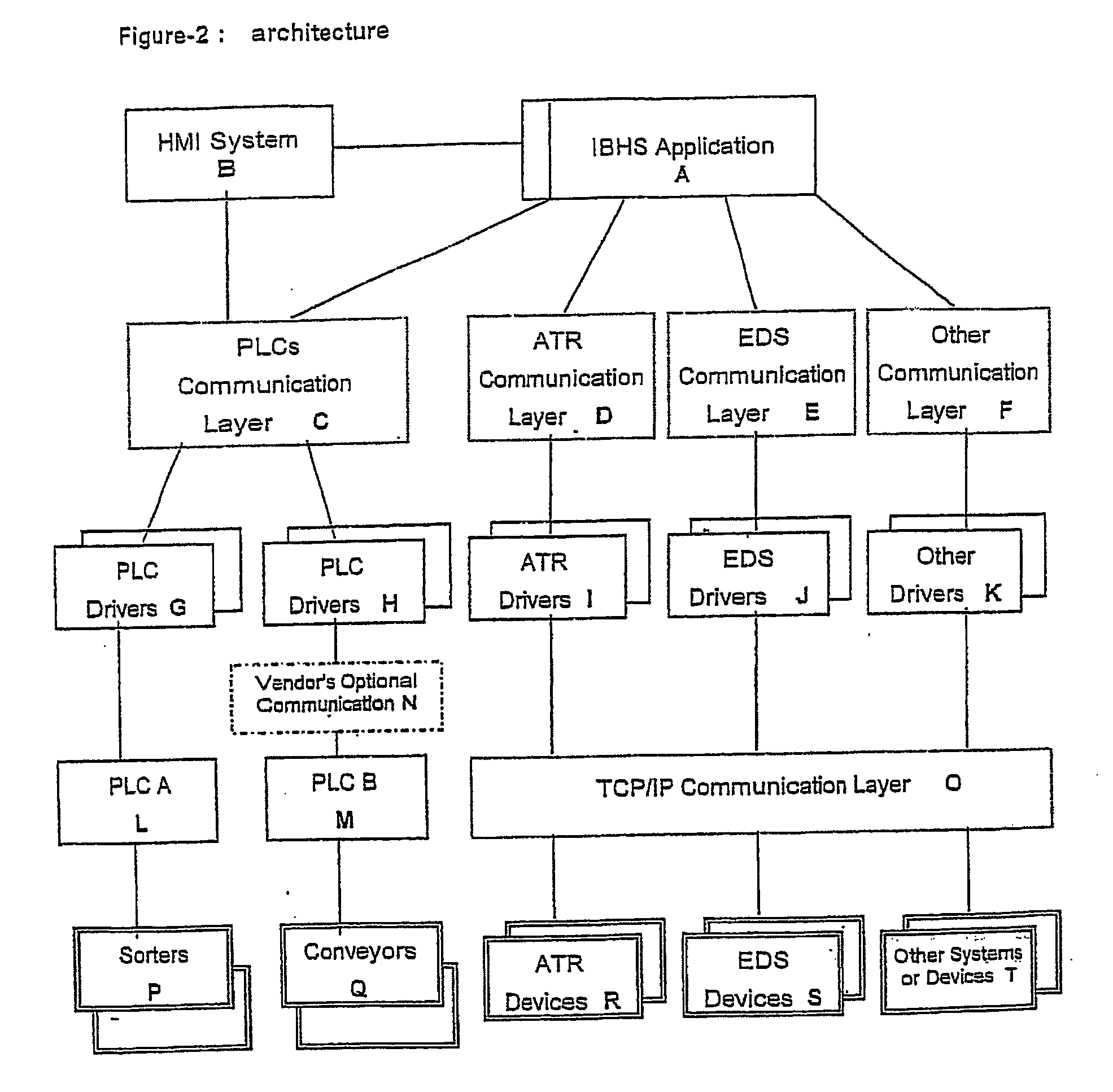
[0026] There is seen sechmaticaly in FIGS. 1 and 2 an automated security inspection and scurrying system for objects or packages. Typically such cargo comprises baggage, for example baggage belonging to passengers at the outgoing terminal of an airport.
[0027] Numeric references relate to FIG. 1, Alpha references relate to FIG. 2
Object identification
[0028] When an object is received into the system, at the reception point (01) an internal and unique ID is assigned by the application (A) in order to identify the object throughout the entire system.
[0029] The object itself may have other “external” ID's determined by other external systems for various purposes (Bar Code number, 10 digit barcode number etc.). If those external systems are available, IBHS (Baggage Handling System) may acquire the “external” ID in many ways:
[0030] Via ATR (Automatic Tag Reader) using Bar Code tag, RFID tag etc. located at the reception point (01) and / or via dedicated interfaces (T) with external info...
PUM
 Login to View More
 Abstract
Description
Claims
Application Information
 Login to View More