
System for dynamically determining vehicle rear/trunk loading for use in a vehicle control system
a technology for dynamically determining vehicle rear/trunk loading and vehicle control, which is applied in the direction of pedestrian/occupant safety arrangement, anti-theft devices, instruments, etc., can solve the problem that relatively small mass change may significantly affect the directional dynamics of the vehicl
- Summary
- Abstract
- Description
- Claims
- Application Information
AI Technical Summary
Benefits of technology
Problems solved by technology
Method used
Image

Examples
Embodiment Construction
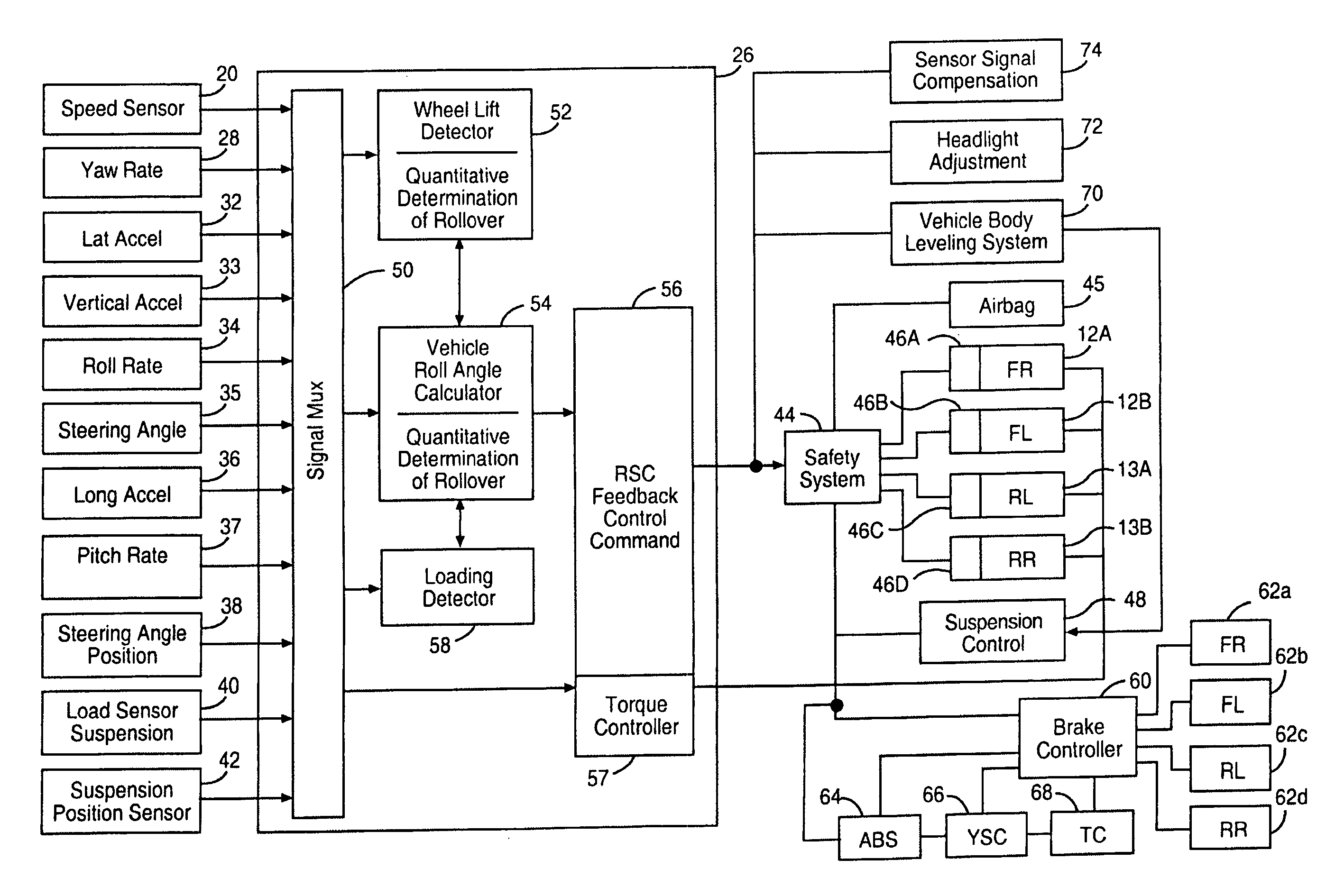
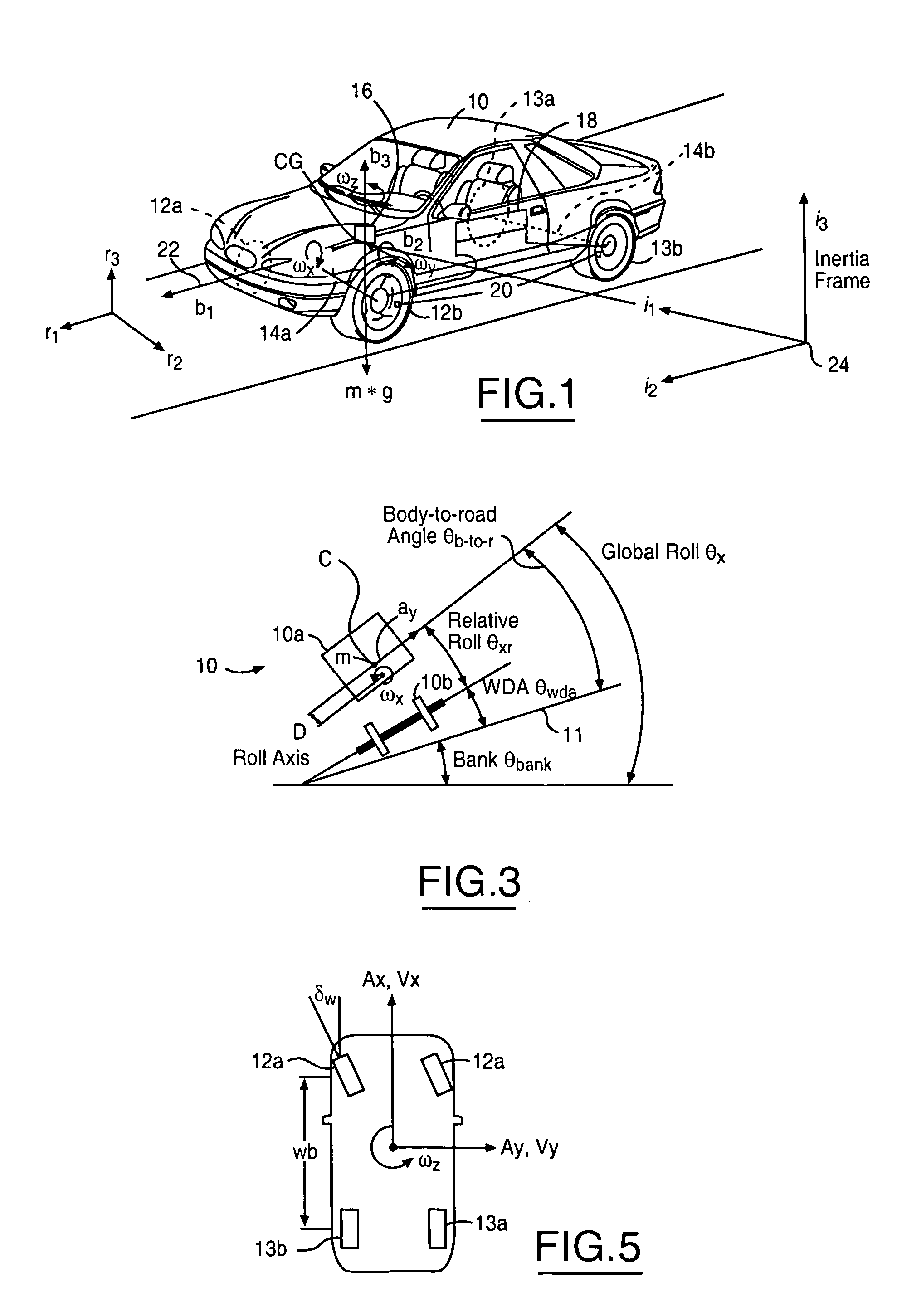
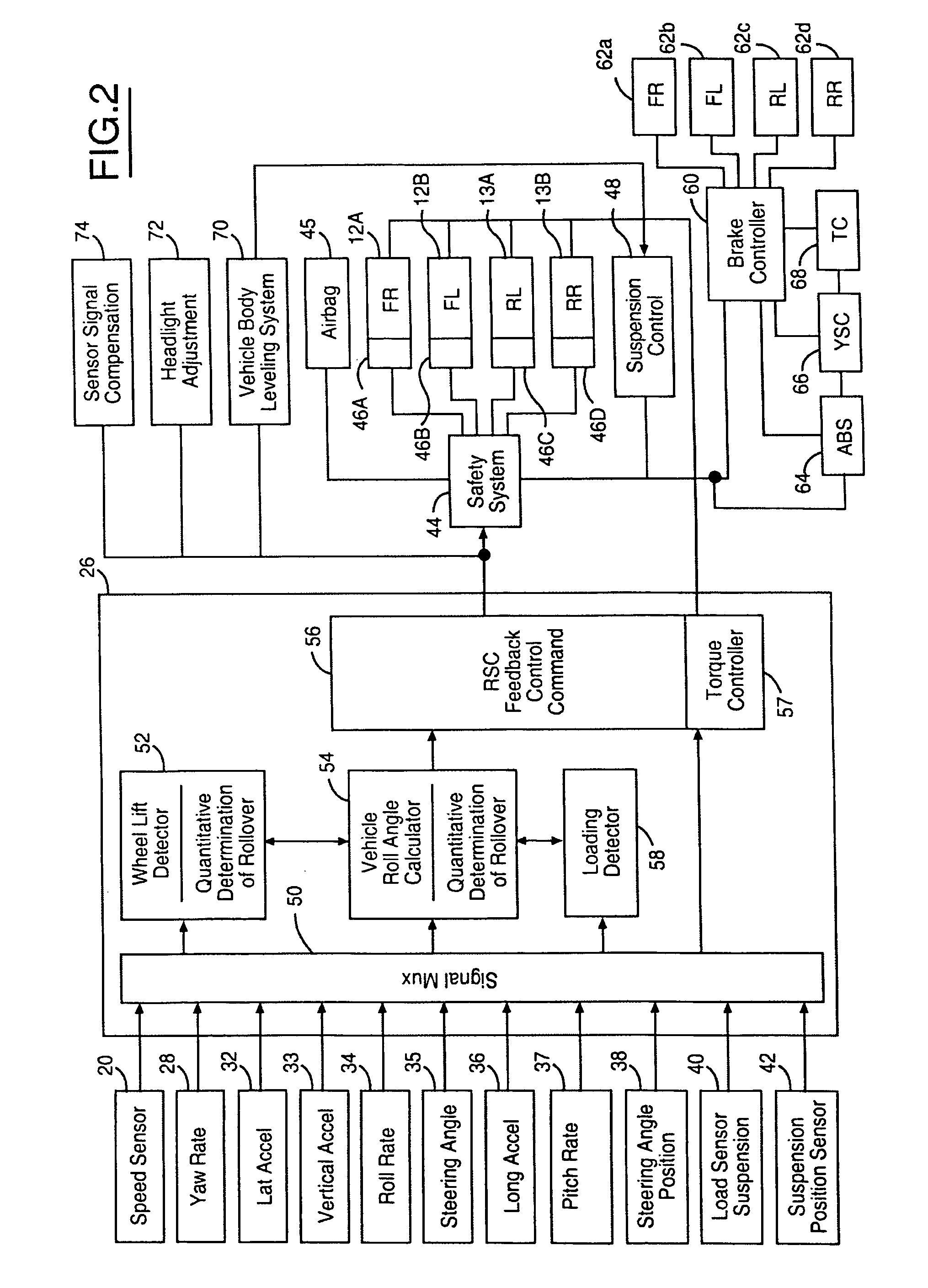
[0019] In the following figures, the same reference numerals will be used to identify the same components. The present invention may be used in conjunction with a rollover control system for a vehicle. The present invention may also be used with a deployment device such as airbag or active roll bar or pre-tensioning belts. The present invention could pass information to an adaptive cruise control system or a brake based collision avoidance system to change the brake request levels of the system. The present invention will be discussed below in terms of preferred embodiments relating to an automotive vehicle moving in a three-dimensional road terrain. The present invention is described with respect to determining an added mass and position of the added mass. However, as will be described below the added mass and position may not be directly determined, rather by adaptively updating a pitch condition parameter such as a pitch gradient value and / or a pitch acceleration coefficient, the...
PUM
 Login to View More
 Abstract
Description
Claims
Application Information
 Login to View More