
Multi channel approach to capture verification
a multi-channel, capture verification technology, applied in the field of implantable medical devices, can solve the problems of ineffective pacing, discomfort, and reduced pumping efficiency
- Summary
- Abstract
- Description
- Claims
- Application Information
AI Technical Summary
Problems solved by technology
Method used
Image

Examples
Embodiment Construction
[0031] In the following description of the illustrated embodiments, references are made to the accompanying drawings forming a part hereof, and in which are shown by way of illustration, various embodiments by which the invention may be practiced. It is to be understood that other embodiments may be utilized, and structural and functional changes may be made without departing from the scope of the present invention.
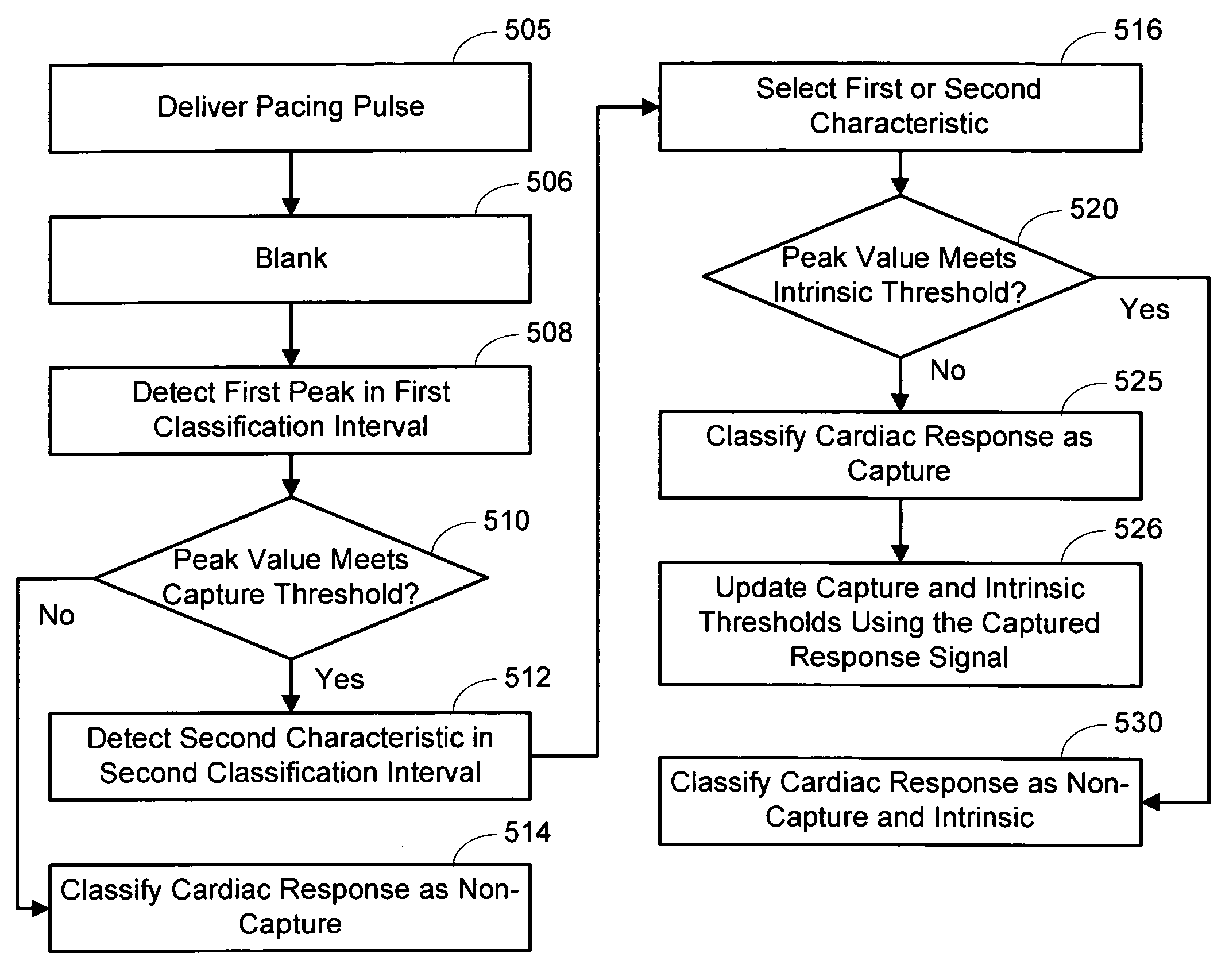
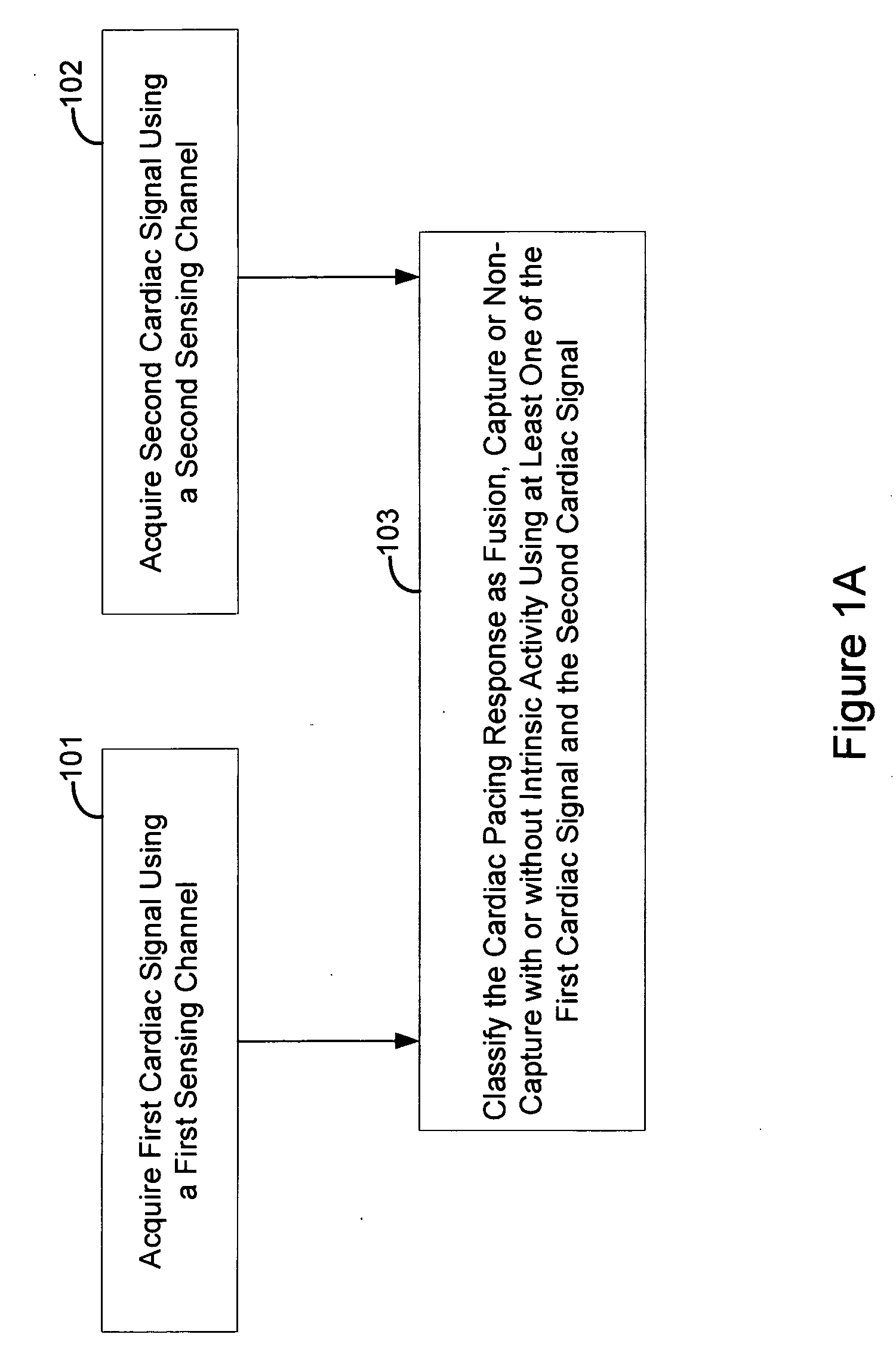
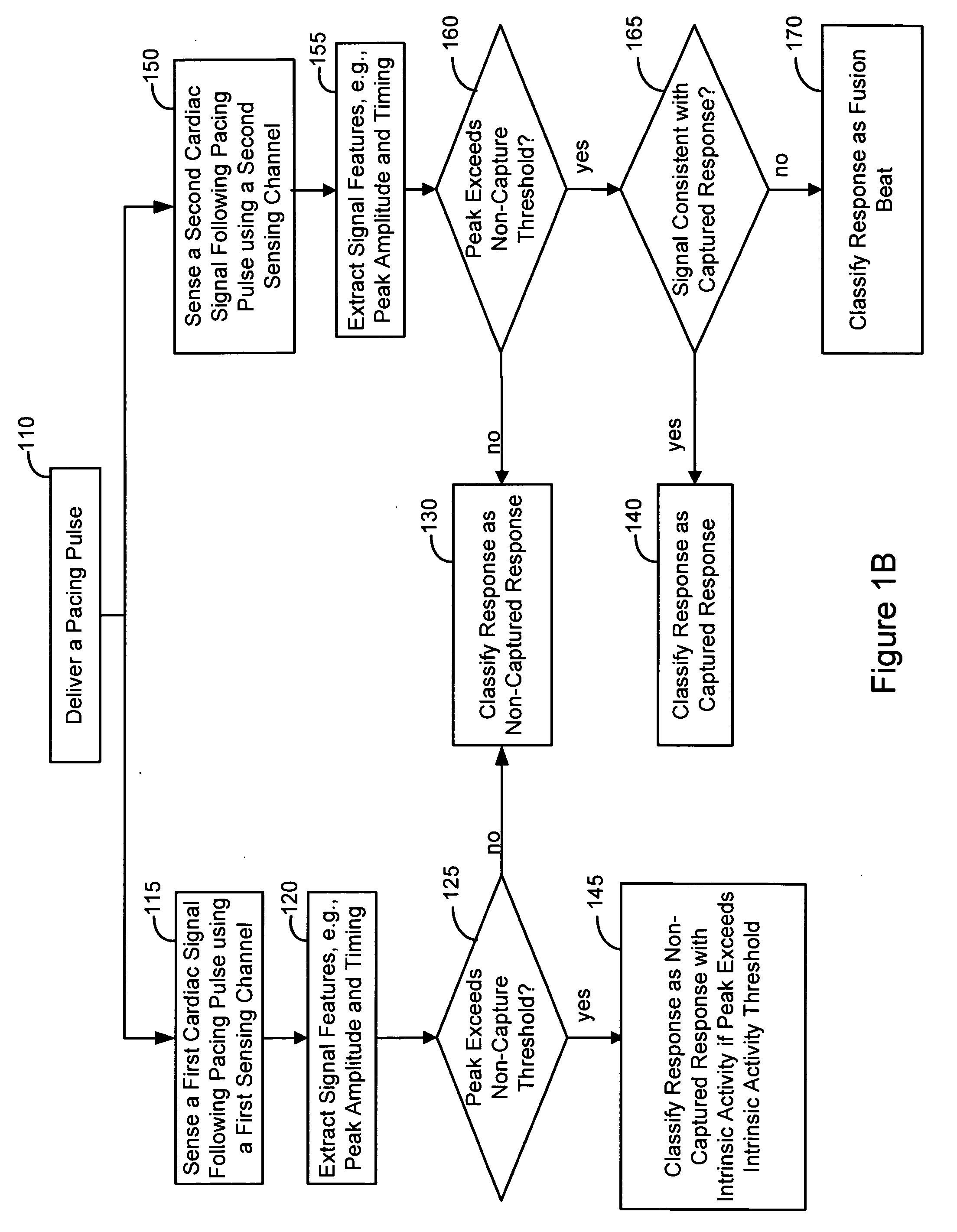
[0032] After delivery of a pacing pulse to a heart chamber, various cardiac responses to the pacing pulse are possible. In one scenario, the pacing pulse may generate a propagating wavefront of depolarization resulting in a contraction of the heart chamber. In this scenario, the pacing pulse is said to have captured the heart chamber. Capture of the heart chamber may occur if the pacing pulse has sufficient energy and is delivered during a non-refractory period. If the pacing pulse does not produce contraction of the chamber, the cardiac response is referred to as non-ca...
PUM
 Login to View More
 Abstract
Description
Claims
Application Information
 Login to View More