
Dynamic seat labeling and passenger identification system
a seat and dynamic technology, applied in the field of seat labeling, can solve the problems of seat configuration confusion for ticket holders, seat number or seat marker location not readily identifiable with the correct, and achieve the effect of quick finding the sea
- Summary
- Abstract
- Description
- Claims
- Application Information
AI Technical Summary
Benefits of technology
Problems solved by technology
Method used
Image

Examples
Embodiment Construction
[0029] In the following figures the same reference numerals will be used to identify the same components.
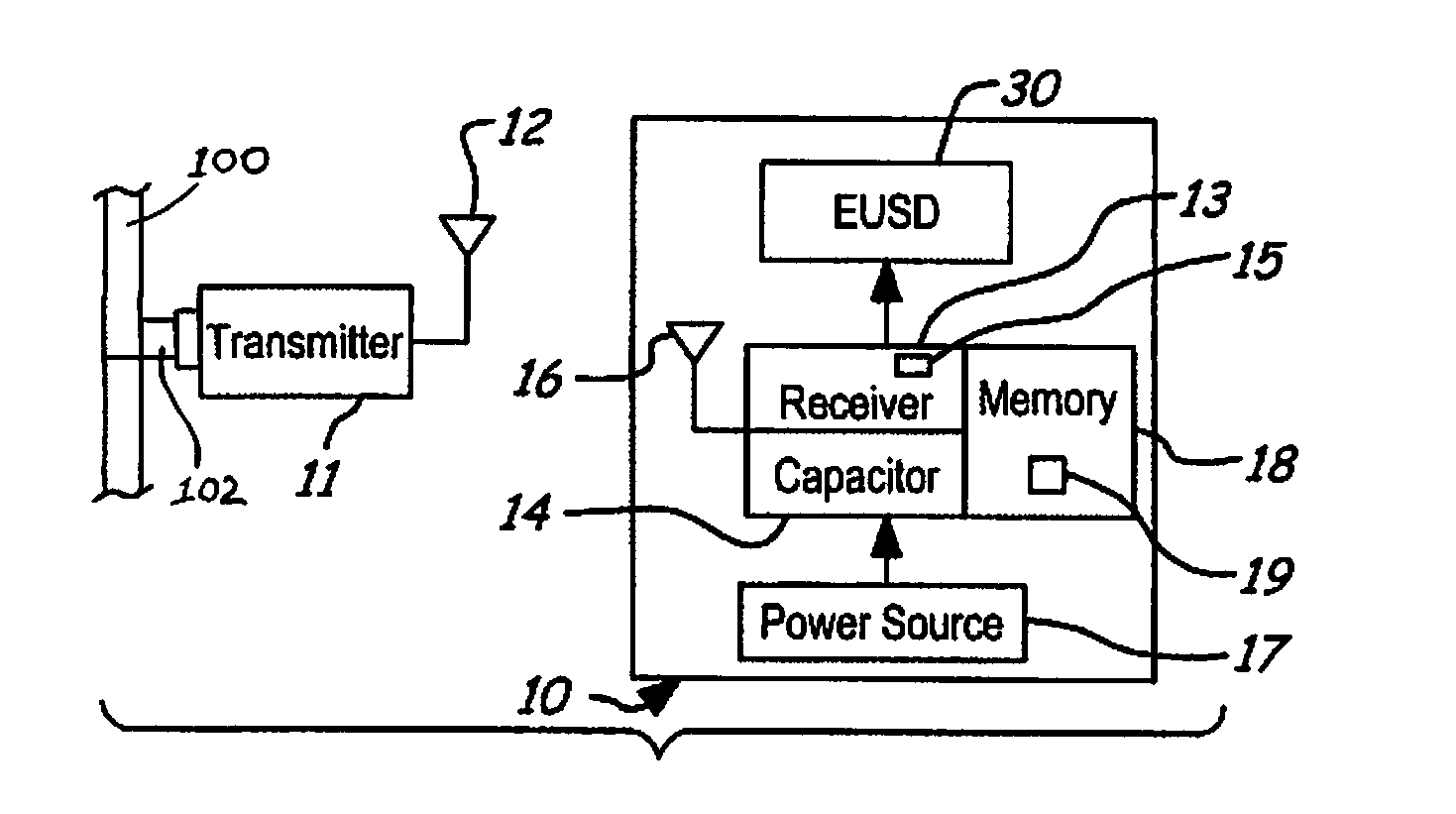
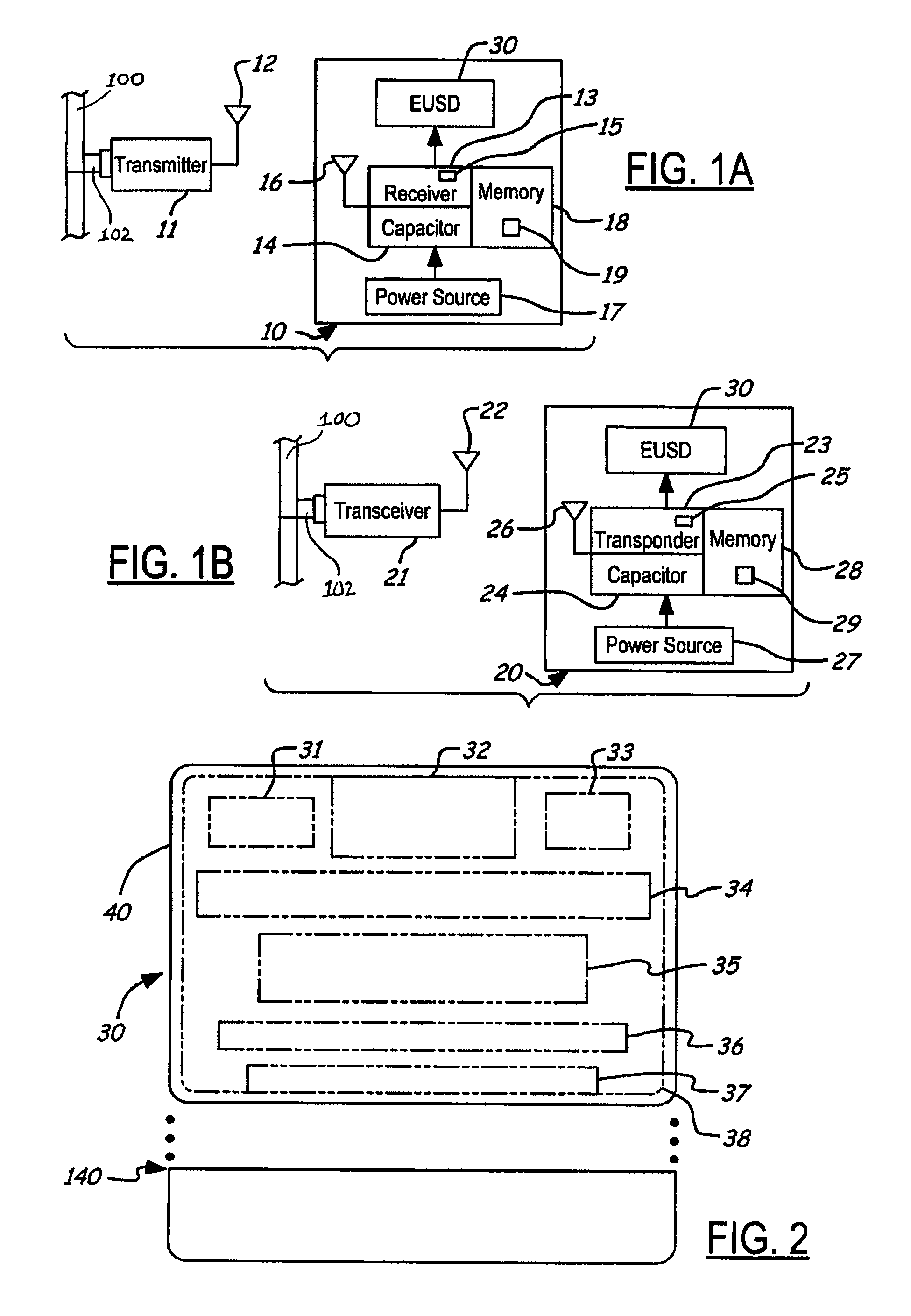
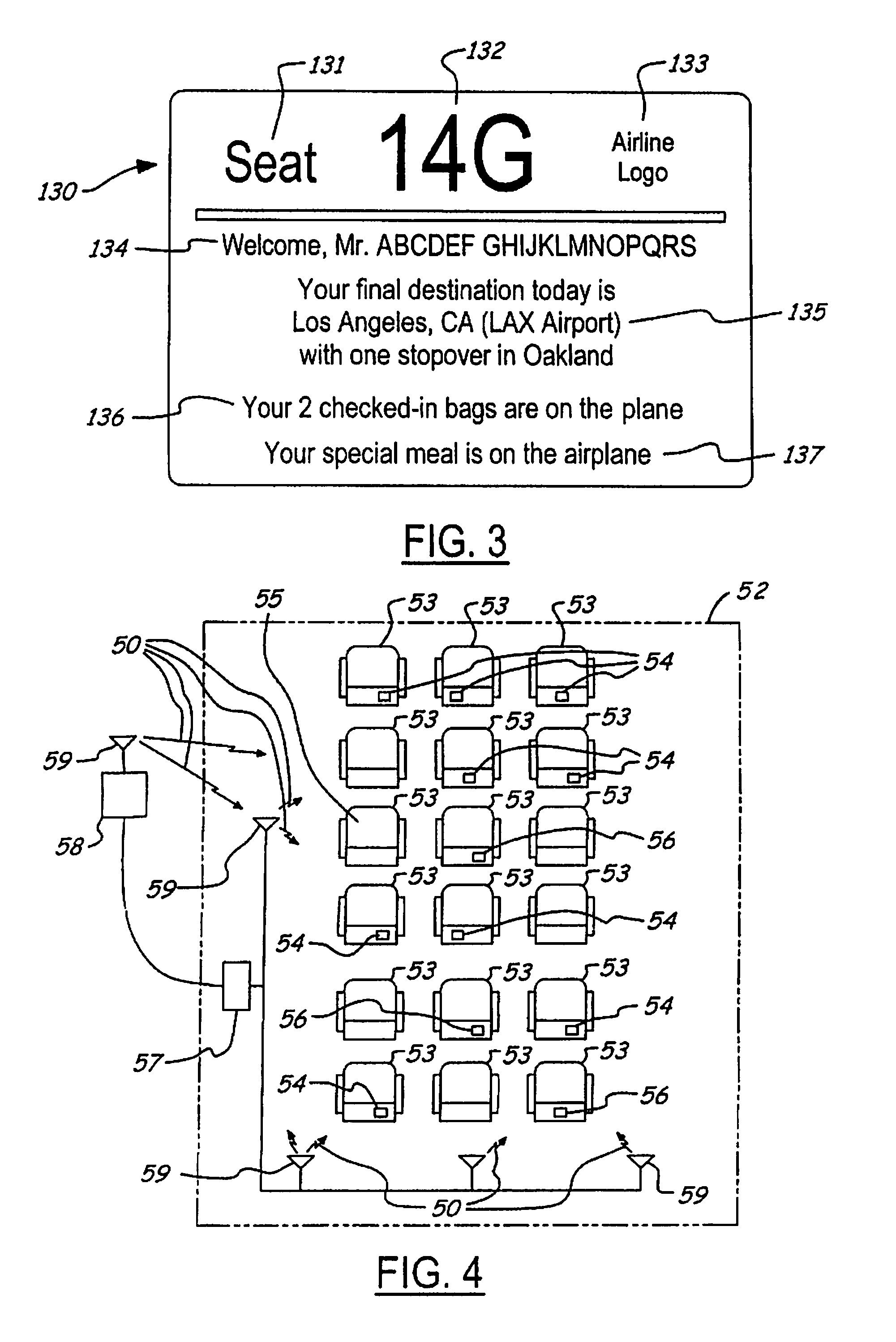
[0030] Referring now to FIG. 1A, a placard 10 and a transmitter 11 are shown in accordance with one embodiment of the present disclosure. The placard 10 is capable of receiving a signal from the transmitter 11 that transmits a signal 50 (shown in FIG. 4). Furthermore, the placard 10 is capable of harnessing the power from the signal 50 that is generated by the transmitter 11.
[0031] The placard 10 has a receiver 13, a capacitor 14, and an electronic updateable static display 30. The receiver 13 has a memory storing an identification code 15 and an antenna 16 for receiving a signal 50. The identification code 15 may have a generic device descriptive identity, a user specified identity, a unique identity, or any other type of identity known to a person skilled in the art. The identification code 15 is used in the placard 10 to awaken and execute a command as specified by the signa...
PUM
 Login to View More
 Abstract
Description
Claims
Application Information
 Login to View More