
Tissue holding implants
a technology of tissue holding and implants, which is applied in the field of tissue holding devices, can solve the problems of unsatisfactory conventional methods of joining tissues, time-consuming and labor-intensive suturing tasks, etc., and achieve the effect of convenient and quick insertion
- Summary
- Abstract
- Description
- Claims
- Application Information
AI Technical Summary
Benefits of technology
Problems solved by technology
Method used
Image

Examples
Embodiment Construction
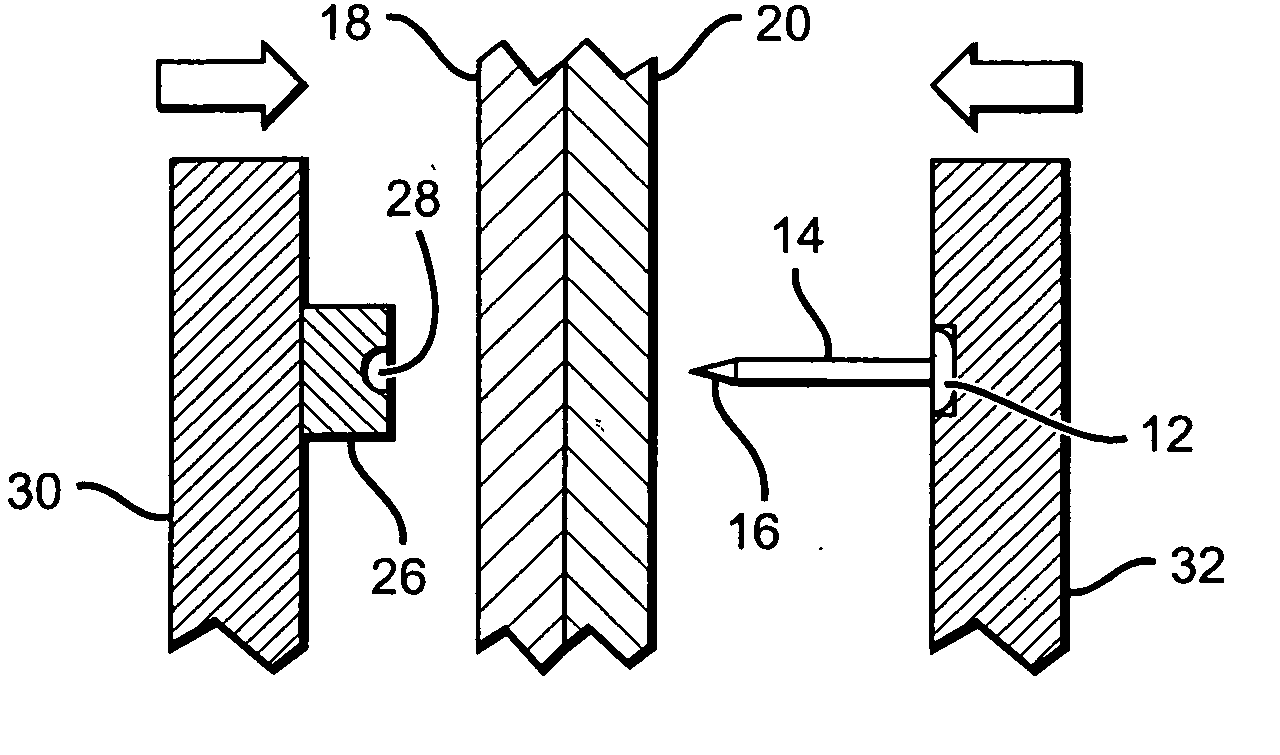
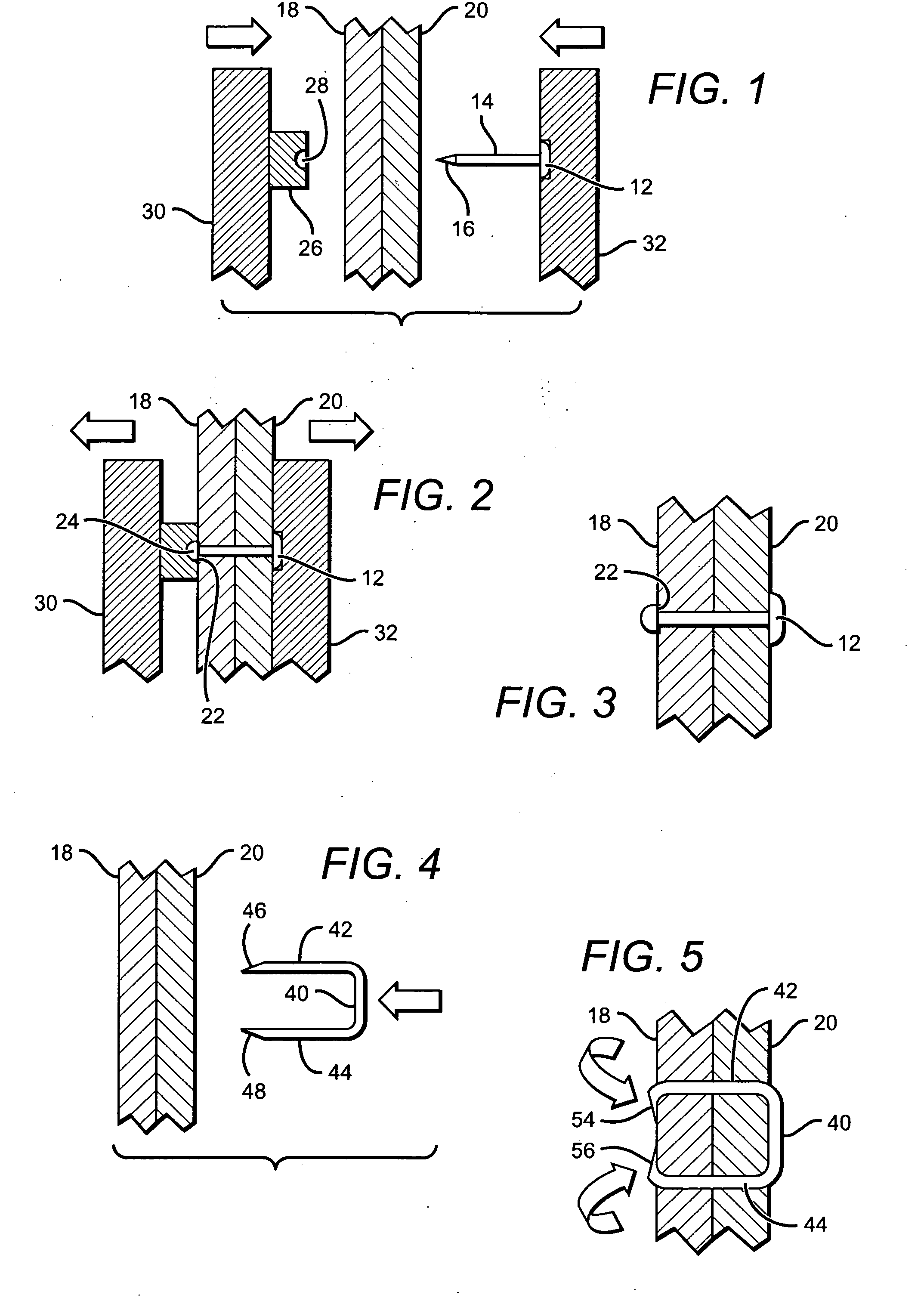
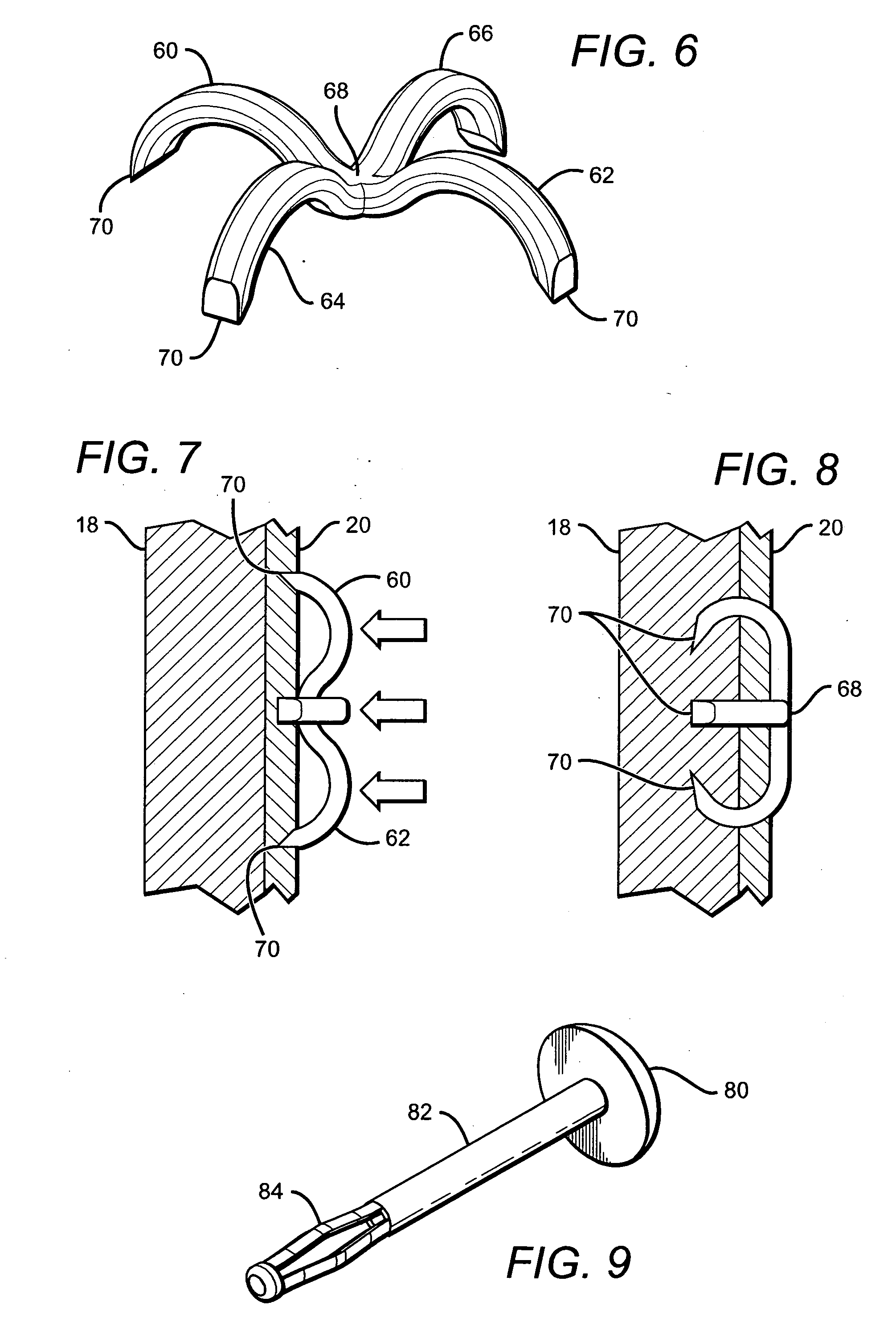
[0027]The present tissue holding devices are one or two-piece implants, made from materials that are biocompatible, and may also be biodegradable. They can be used in conjunction with many different types of procedures, including septoplastic surgery, wound closure, meniscal repair, shoulder capsulorrhaphy and various laparoscopic procedures. The following text will use septoplastic surgery as an exemplary application for the implants, but it should be noted that these devices can be used for any tissues in the body that require approximation for an extended period. Also, though the figures accompanying the examples described below show two pieces of tissue, the present implants can be used to hold more than two tissues, which may be of different types and have different dimensions. Note that the use of block arrows in the figures indicate movement or force in the direction indicated.
[0028]One embodiment of an implant for holding two or more tissues in approximation generally compri...
PUM
 Login to View More
 Abstract
Description
Claims
Application Information
 Login to View More