Mobile originated interactive menus via short messaging services

a mobile origin and messaging technology, applied in the field of wireless communication networks, can solve the problems of increasing costs, increasing costs, and further complicating a wireless network, and failing to adequately utilize the existing data channels availabl

US20090191904A1Inactive Publication Date: 2009-07-30TELECOMM SYST INC
99 Cites 15 Cited by

Patent Information

Authority / Receiving Office
US · United States
Patent Type
Applications(United States)
Current Assignee / Owner
Publication Date
2009-07-30
Estimated Expiration
Not applicable · inactive patent

Smart Images

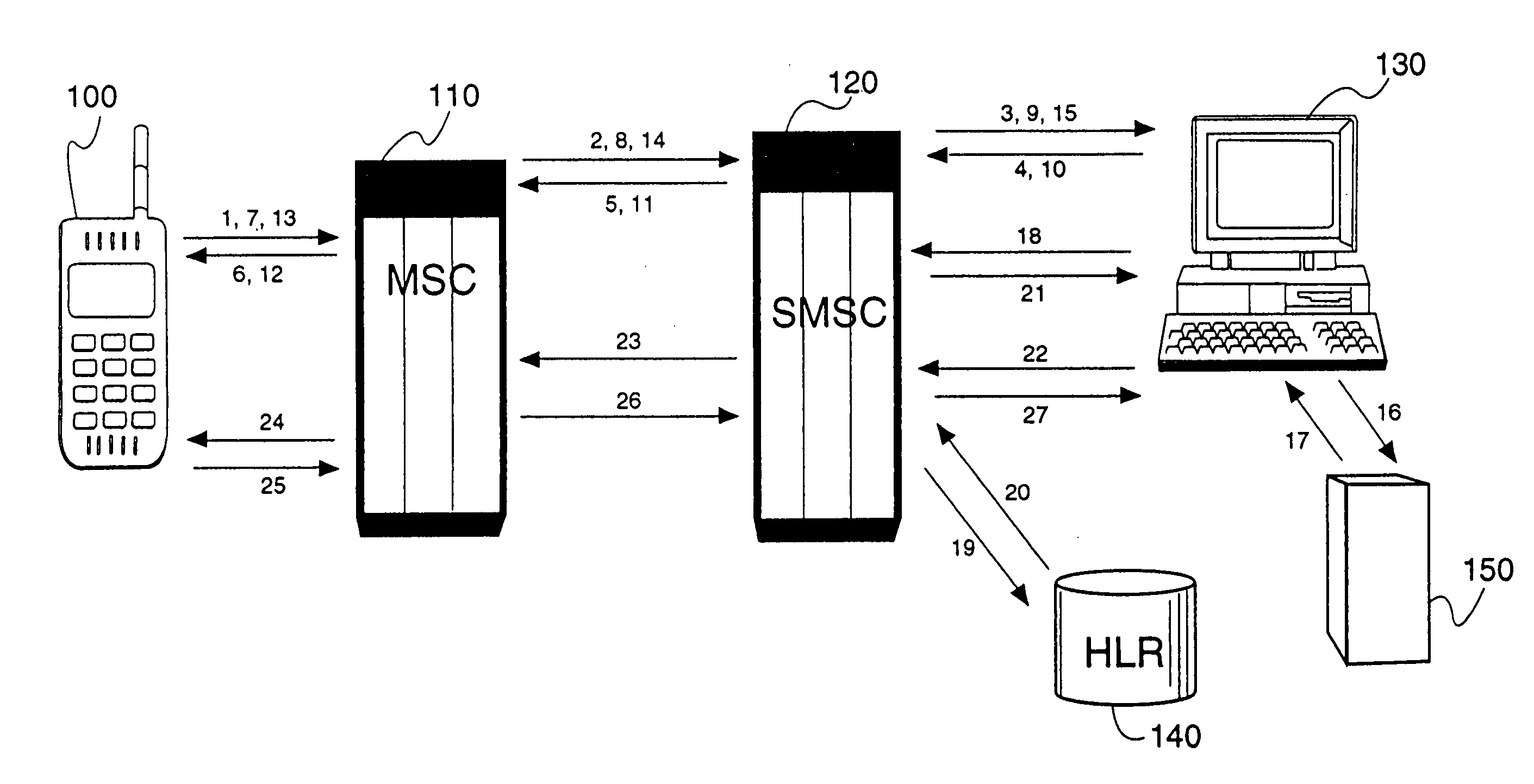
  • Figure 1
    Figure 1
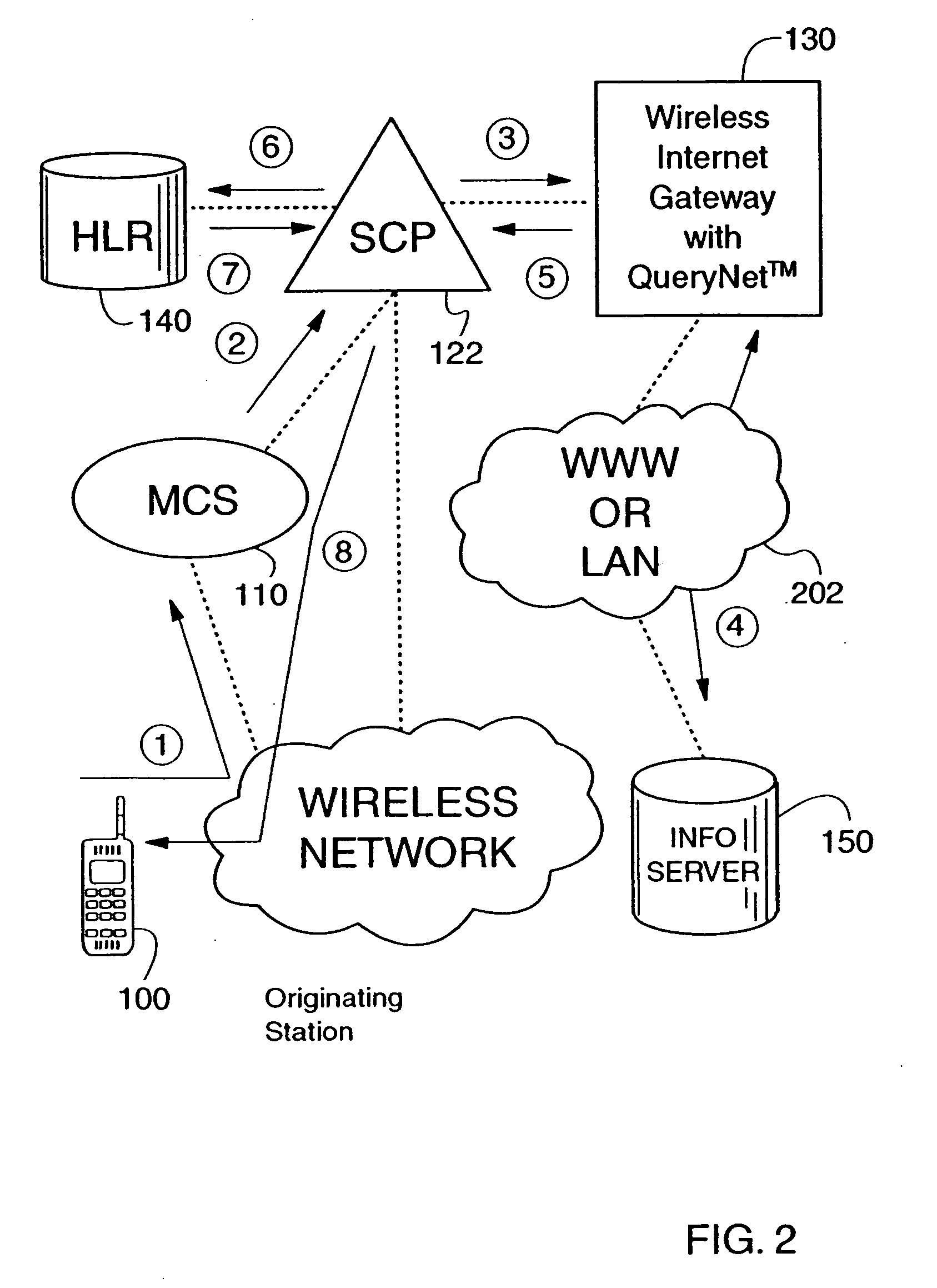
  • Figure 2
    Figure 2
  • Figure 3
    Figure 3
Patent Text Reader

Abstract

A method and apparatus for providing 2-way interactive short message system menus to a mobile device using text-based short messaging rather than WAP techniques. This provides the ability to provide WAP like services at a fraction of the cost of CSD. Mobile Originated Interactive Menus are implemented as a feature of a Short Message Service Center (SMSC). Each option guides either to the next menu level, or to a final action to be executed according to the path followed by the subscriber. Importantly, the mobile originated interactive menus use SMS communications instead of circuit switched data (CSD) (e.g., instead of WAP communications), thus leaving traffic channels available for voice calls. Interactive SMS menus allow service providers to offer their subscribers personalized messaging menus with multiple options for quick and easy access to Web-based content. Users may define the content and frequency they want, whether it is a scheduled delivery or on-demand. The interactive SMS menu options offer customers a simple-to-use technique and apparatus for checking, e.g., stock quotes, local weather, and / or other Web-based news and information when they want it. The interactive nature of the service allows the wireless network to poll the user for their next response, with multiple menued options offered, making it highly intuitive. Replacement of messages in TDMA and GSM mobile devices allow for heavy usage without filling up the user's phone buffer, i.e., prior messages may be overwritten, to assure that only the latest information is all that is being displayed and read. The flexibility of Interactive SMS Menus can allow service providers to define their own base offering of menus, depending upon their targeted customer segments.
Need to check novelty before this filing date? Find Prior Art

Description

BACKGROUND OF THE INVENTION

[0001] 1. Field of the Invention

[0002] This invention relates generally to wireless communications networks. More particularly, it relates to the communication of menus between a mobile (i.e., wireless) device and an application server via a short message service center (SMSC).

[0003] 2. Background of Related Art

[0004] Wireless communication services are in increasing demand in response to a society that is becoming increasingly mobile. In the early 1990s, as a result of the growing popularity of digital wireless technology, a standard for digital wireless networks was introduced in Europe. That standard, now known as the global standard for mobiles (GSM), included a service called short messaging service (SMS). An SMS system allows transmission of short messages, typically up to 160 characters, to and from communication devices, e.g., cellular telephone handsets, telephones or computers with appropriate modems. In North America, the SMS is currently implemente...

Examples

Embodiment Construction

[0032]The present invention provides wireless carriers with a method and apparatus for providing 2-way interactive short message system menus to a handset. The menus can be setup as required by the service provider and can provide API linkage to external sites offering access to the Internet. This provides the ability to provide WAP like services at a fraction of the cost of CSD.

[0033]Mobile Originated Interactive Menus may be implemented as a feature of a Short Message Service Center (SMSC). This feature would allow service providers to configure several levels of menus with, e.g., up to 9 options per menu. Each option guides either to the next menu level, or to a final action to be executed according to the path followed by the subscriber.

[0034]Importantly, the mobile originated interactive menus use SMS communications instead of circuit switched data (CSD) (e.g., instead of WAP communications), thus leaving traffic channels available for voice calls. Moreover, mobile originated m...