
Elastomeric closure with barrier layer and method for its manufacture
a technology of elastomeric closure and barrier layer, which is applied in the direction of packaging foodstuffs, caps, packaged goods, etc., can solve the problems of adverse effects on the performance and stability of drugs, the permeation and transmission of gases such as water vapor and oxygen, and the elastomer generally having low permeability,
- Summary
- Abstract
- Description
- Claims
- Application Information
AI Technical Summary
Benefits of technology
Problems solved by technology
Method used
Image

Examples
example 1
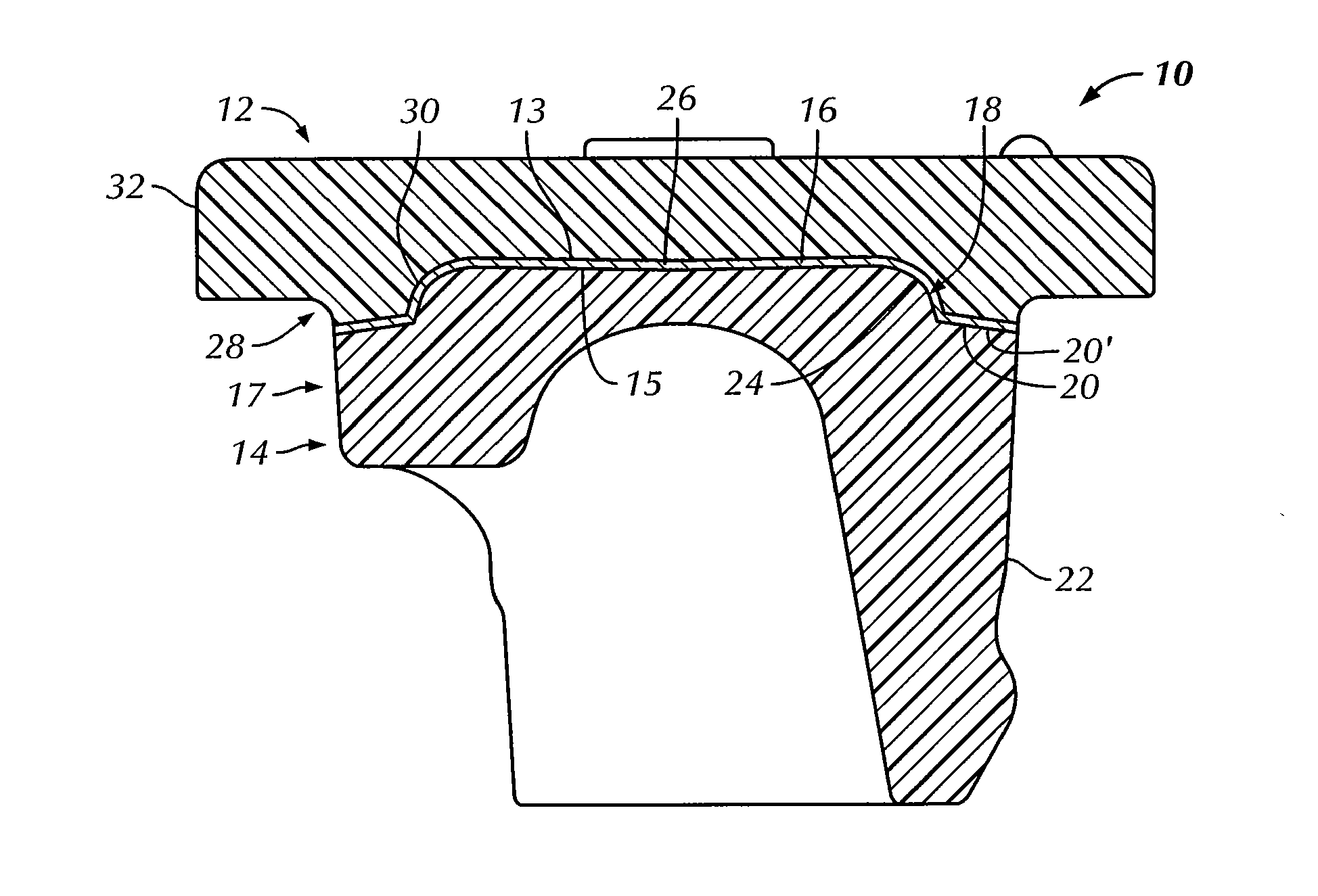
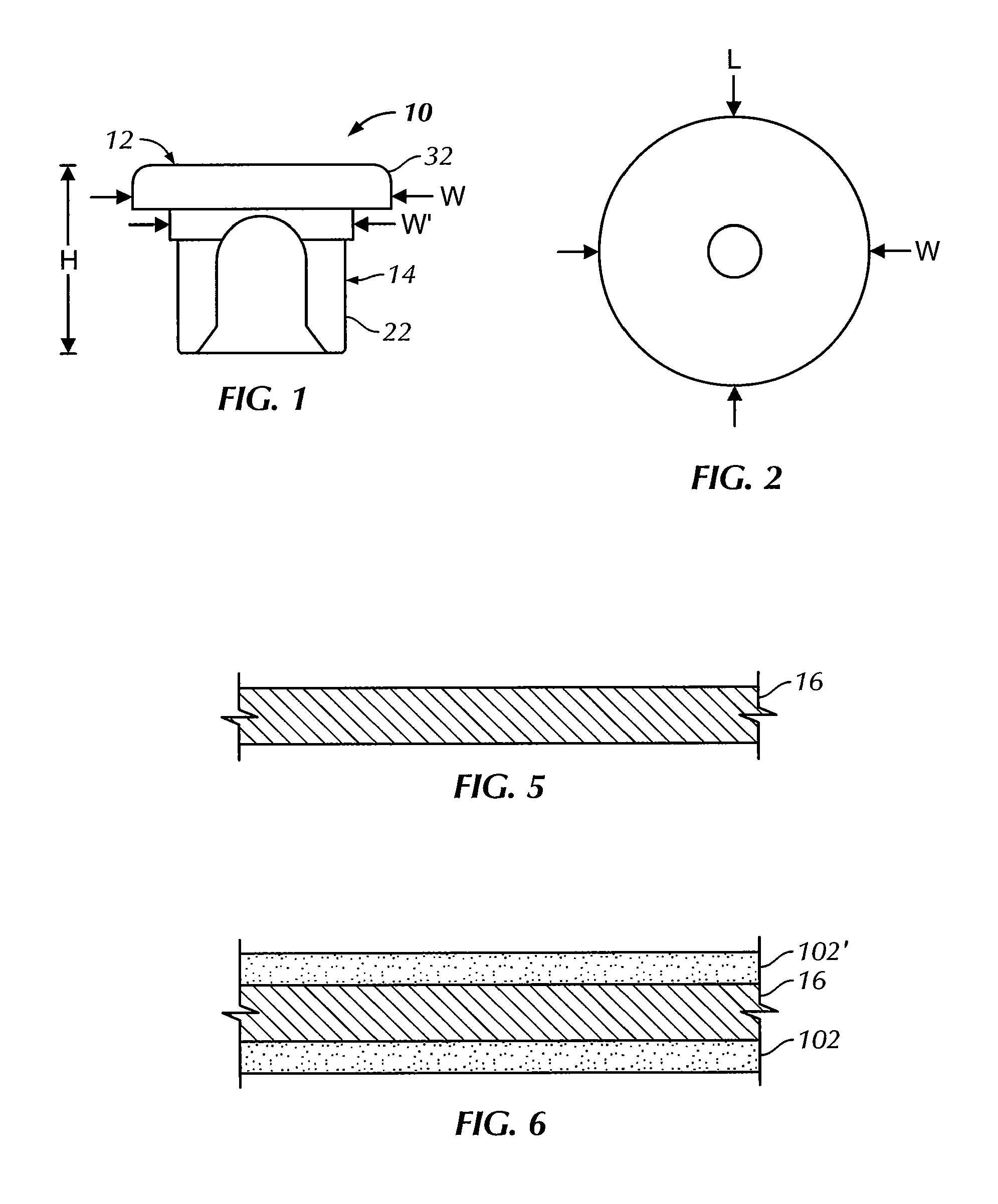
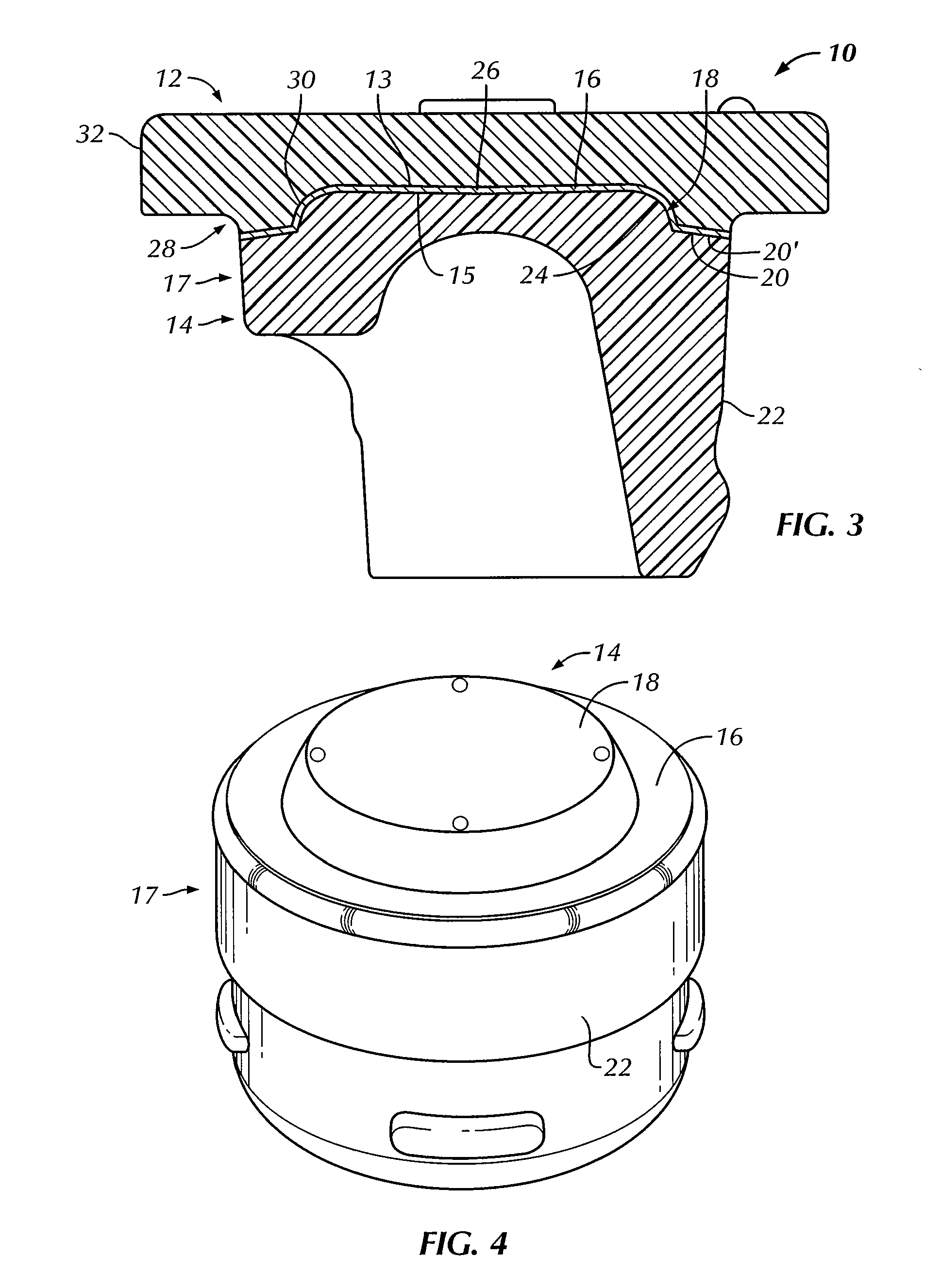
[0058]Uncured bromobutyl rubber was used as the starting material for molding the top and bottom portions of a bromobutyl elastomeric closure. The uncured bromobutyl rubber was placed within a bottom mold cavity and then a layer of aluminum foil coated with epoxy was placed on top of the uncured bromobutyl rubber. The uncured bromobutyl rubber and aluminum foil was then hot pressed at 180 degrees C. for 4 minutes. The vulcanized bottom portion and aluminum foil was then removed, trimmed and placed in another bottom mold cavity. A second layer of uncured bromobutyl rubber was then placed in a top mold cavity in facing engagement with the exposed surface of the aluminum foil. The second layer of uncured bromobutyl rubber was then hot pressed to the vulcanized bottom portion and aluminum foil to form a unitary structure defining the bromobutyl elastomeric closure, at 180 degrees C. for 6 minutes.
example 2
[0059]Uncured bromobutyl rubber was used as the starting material for molding the top and bottom portions of a bromobutyl elastomeric closure. The uncured bromobutyl rubber was placed within a bottom mold cavity and then a barrier film of polyester / Al2O3 coated with a silane compound was placed on top of the uncured bromobutyl rubber. The uncured bromobutyl rubber and polyester / Al2O3 film was then hot pressed at 180 degrees C. for 4 minutes. The vulcanized bottom portion and polyester / Al2O3 film was then removed, trimmed and placed in another bottom mold cavity. A second layer of uncured bromobutyl rubber was then placed in a top mold cavity in facing engagement with the exposed surface of the polyester / Al2O3 film. The second layer of uncured bromobutyl rubber was then hot pressed to the vulcanized bottom portion and polyester / Al2O3 film to form a unitary structure defining the bromobutyl elastomeric closure, at 180 degrees C. for 6 minutes.
example 3
[0060]Uncured silicone rubber was used as the starting material for molding the top and bottom portions of a silicone elastomeric closure. The uncured silicone rubber was placed within a bottom mold cavity and then a barrier film layer of polyester / Al2O3 coated with a silane compound was placed on top of the uncured silicone rubber. The uncured silicone rubber and polyester / Al2O3 film was then hot pressed at 140 degrees C. for 4 minutes. The vulcanized bottom portion and polyester / Al2O3 film was then removed, trimmed and placed in another bottom mold cavity. A second layer of uncured silicone rubber was then placed in a top mold cavity in facing engagement with the exposed surface of the polyester / Al2O3 film. The second layer of uncured silicone rubber was then hot pressed to the vulcanized bottom portion and polyester / Al2O3 film to form a unitary structure defining the silicone elastomeric closure, at 140 degrees C. for 6 minutes.
PUM
 Login to View More
 Abstract
Description
Claims
Application Information
 Login to View More