
Adaptive USB charging method and system
a charging method and usb technology, applied in the field of universal serial bus (usb), can solve the problems and achieve the effect of saving circuit area and associated manufacturing cos
- Summary
- Abstract
- Description
- Claims
- Application Information
AI Technical Summary
Benefits of technology
Problems solved by technology
Method used
Image

Examples
Embodiment Construction
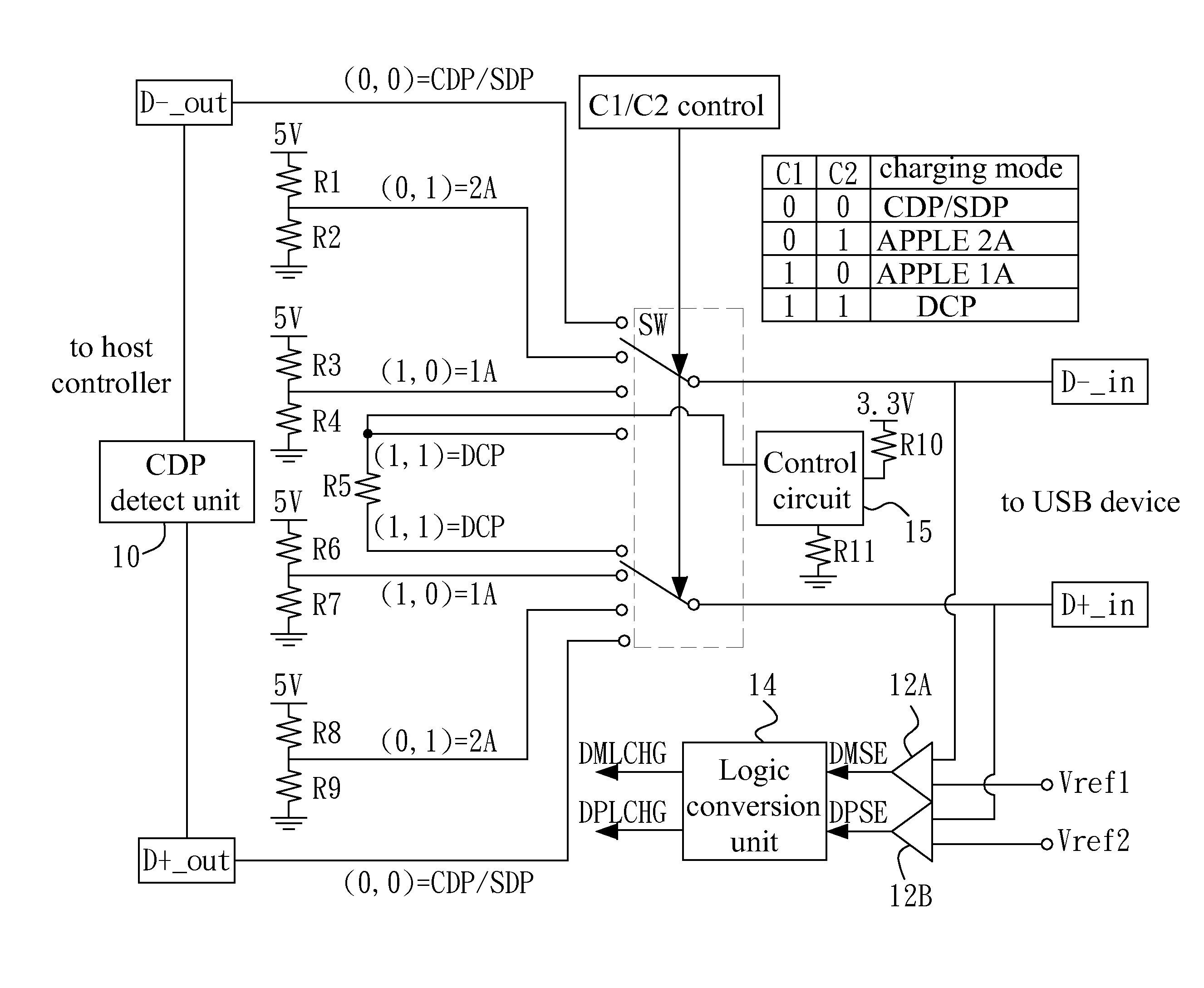
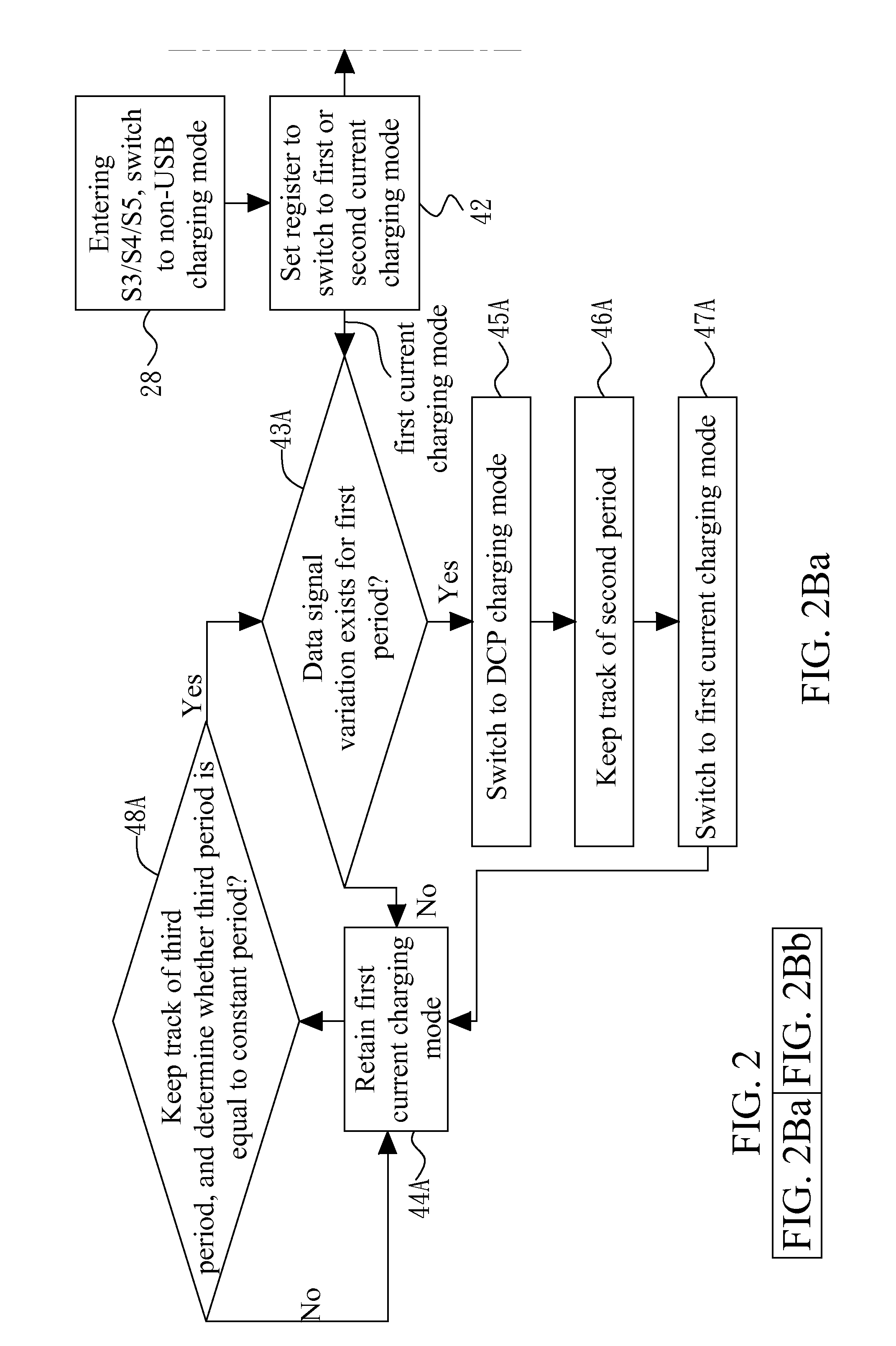
[0014]FIG. 1 shows an adaptive Universal Serial Bus (USB) charging system according to one embodiment of the present invention. FIG. 2A and FIG. 2B show flow diagrams of a USB charging method according to one embodiment of the present invention. The charging system of the embodiment may be either integrated with or independent of a host. One advantage of integrating the charging system with the host is to share a controller (not shown) with the host, thereby saving circuit area and associated manufacturing cost. The embodiment may be adapted to various USB standards such as USB 3.0. Moreover, the host mentioned in this specification may generally refer to other devices such as a hub. The power states discussed below may refer to S0, S3, S4 and S5 defined in, but not limited to, Advanced Configuration and Power Interface (ACPI), the disclosure of which is hereby incorporated by reference. Specifically, S0 indicates a working state, S3 indicates a standby state, S4 indicates a hiberna...
PUM
 Login to View More
 Abstract
Description
Claims
Application Information
 Login to View More