
Compositions and methods related to protein a (SPA) variants
a technology of protein a and variants, applied in the field of compositions and methods related to protein a variants, can solve the problem that the possibility that this surface molecule may function as a vaccine in humans has not been rigorously pursued, and achieve the effect of reducing activity
- Summary
- Abstract
- Description
- Claims
- Application Information
AI Technical Summary
Benefits of technology
Problems solved by technology
Method used
Image

Examples
example 1
Non-Toxigenic Protein a Variants as Subunit Vaccines to Prevent Staphylococcus aureus Infections
[0323]A. Results
[0324]An animal model for S. aureus infection BALB / c mice were infected by intravenous injection with 1×10⁷ CFU of the human clinical isolate S. aureus Newman (Baba et al., 2007). Within 6 hours following infection, 99.999% of staphylococci disappeared from the blood stream and were distributed via the vasculature. Staphylococcal dissemination to peripheral tissues occurred rapidly, as the bacterial load in kidney and other peripheral organ tissues reached 1×10⁵ CFU g−1 within the first three hours. The staphylococcal load in kidney tissues increased by 1.5 log CFU within twenty-four hours. Forty-eight hours following infection, mice developed disseminated abscesses in multiple organs, detectable by light microscopy of hematoxylin-eosin stained, thin-sectioned kidney tissue. The initial abscess diameter was 524 μM (±65 μM); lesions were initially marked by an influx of pol...
example 2
Non-Toxigenic Protein a Vaccine for Methicillin-Resistant Staphylococcus aureus Infection
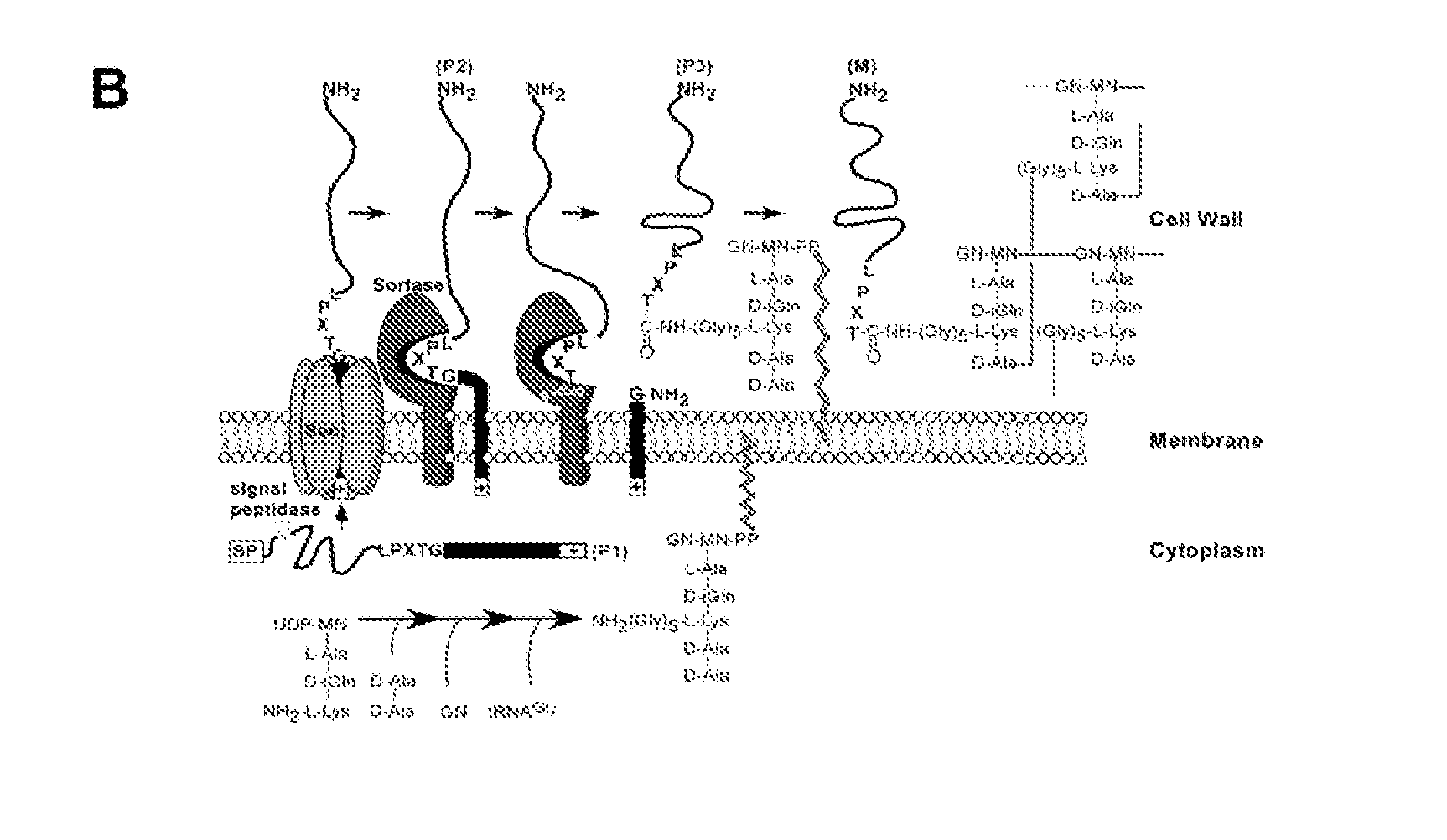
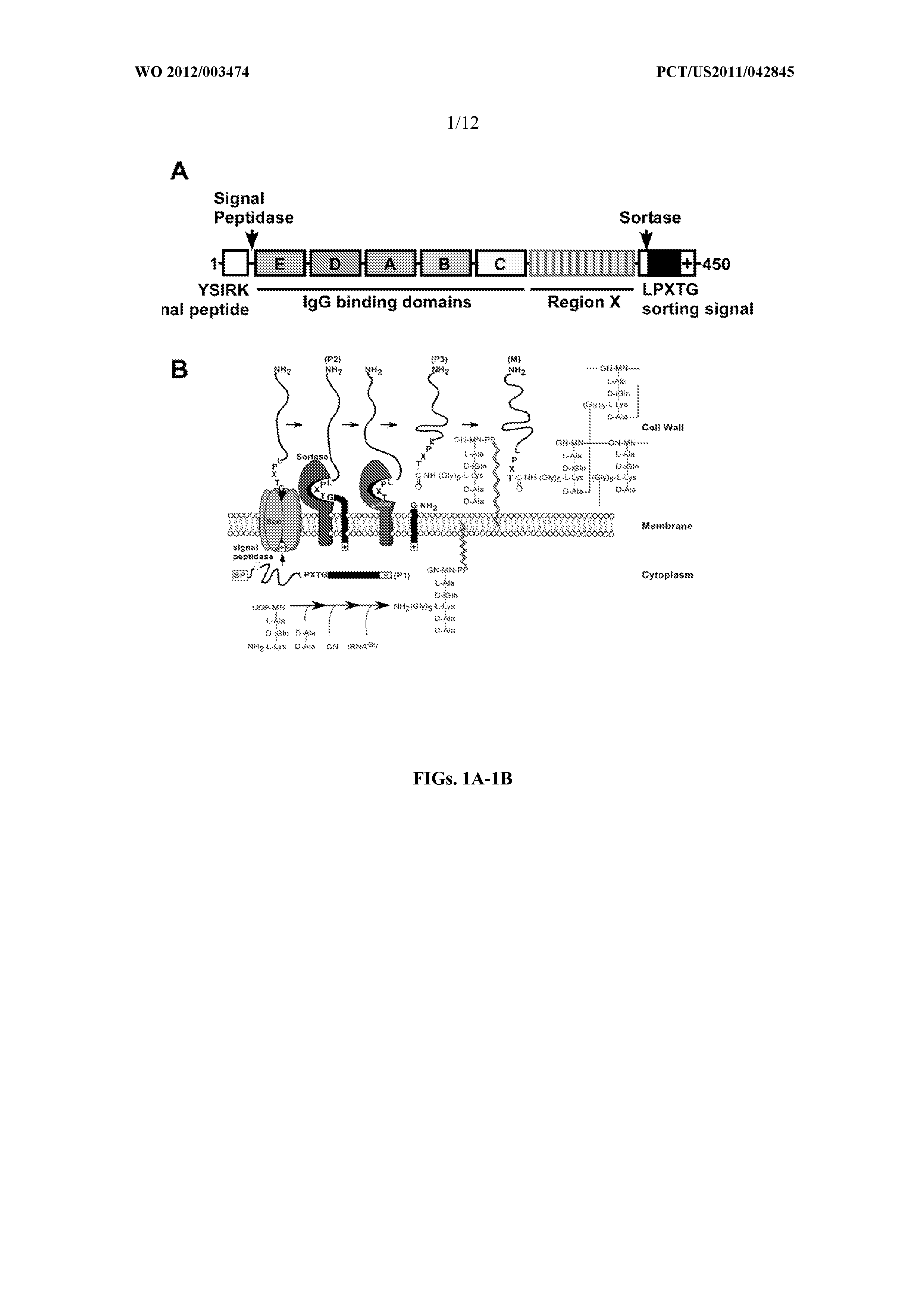
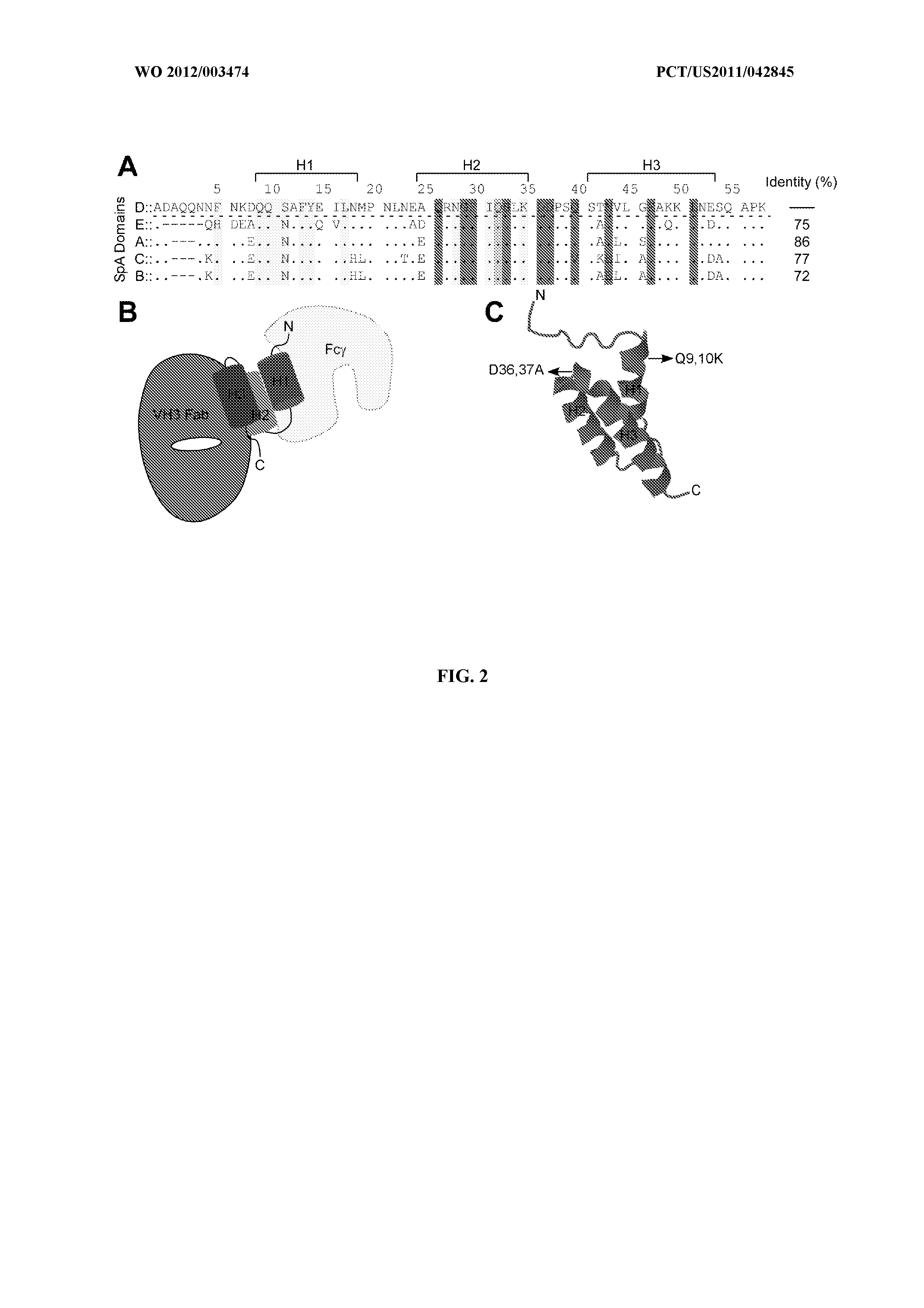
[0361]Clinical isolates of S. aureus express protein A (Shopsin et al., 1999, whose primary translational product is comprised of an N-terminal signal peptide (DeDent et al., 2008), five Ig-BDs (designated E, D, A, B and C) (Sjodahl, 1977), region X with variable repeats of an eight residue peptide (Guss et al., 1984), and C-terminal sorting signal for the cell wall anchoring of SpA (Schneewind et al., 1992; Schneewind et al., 1995) (FIG. 6). Guided by amino acid homology (Uhlen et al., 1984), the triple α-helical bundle structure of IgBDs (Deisenhofer et al., 1978; Deisenhofer et al., 1981) and their atomic interactions with Fab VH3 (Graille et al., 2000) or Fcγ (Gouda et al., 1998), glutamine 9 and 10 were selected as well as aspartate 36 and 37 as critical for the association of SpA with antibodies or B cell receptor, respectively. Substitutions Gln9Lys, Gln10Lys, Asp36Ala and Asp37Ala were i...
PUM
| Property | Measurement | Unit |
|---|---|---|
| weight | aaaaa | aaaaa |
| composition | aaaaa | aaaaa |
| pharmaceutical composition | aaaaa | aaaaa |
Abstract
Description
Claims
Application Information
 Login to View More