Combination anatomical orifice sizer and heart valve

an anatomical orifice and sizer technology, applied in the field of anatomical orifice sizers, can solve the problems of reducing the flow orifice naturally, sizing is often problematic, and the shape of the resulting annulus is less than perfect for the attachment of a sewing ring,

US6846324B2Inactive Publication Date: 2005-01-25EDWARDS LIFESCIENCES CORP
11 Cites 205 Cited by

Patent Information

Authority / Receiving Office
US · United States
Patent Type
Patents(United States)
Current Assignee / Owner
Publication Date
2005-01-25
Estimated Expiration
Not applicable · inactive patent

Smart Images

  • Figure 1
    Figure 1
  • Figure 2
    Figure 2
  • Figure 3
    Figure 3
Patent Text Reader

Abstract

Anatomical orifice sizers that are optimally proportional to an associated prosthetic device such as a heart valve, and methods of use are provided. The sizers are desirably slightly larger than the rigid mounting diameter of the corresponding heart valve. The heart valve sizer may be cylindrical and have a diameter about 0.3 mm larger than the valve mounting diameter. The sizer preferably has a length of between about 19 mm to 22 mm, and the edges are desirably rounded to a minimum 1 mm radius. The method includes providing a set of cylindrical sizers having varying diameters; sequentially inserting at least two of the sizers through the annulus; measuring the push force needed to pass each sizer through the annulus; selecting a valve corresponding to the sizer for which the measured push force is between about 150 and 300 grams.
Need to check novelty before this filing date? Find Prior Art

Description

FIELD OF THE INVENTIONThe present invention relates generally to anatomical orifice sizers and, more particularly, to an orifice sizer that is optimally proportional to an associated prosthetic device such as a heart valve, and methods of use.BACKGROUND OF THE INVENTIONSurgical heart valve replacement has been performed in human beings for many years. Most frequently, the procedures are utilized to replace mitral or aortic valves in patients who suffer from valvular heart disease.The four valves separate each ventricle from its associated atrium, or from the ascending aorta (left ventricle) or pulmonary artery (right ventricle). After the valve excision, the annulus generally comprises a ledge extending into and defining the orifice between the respective chambers. Prosthetic valves may attach on the upstream or downstream sides of the annulus ledge, but outside of the ventricles to avoid interfering with the large contractions therein. Thus, for example, in the left ventricle a pro...

Examples

Embodiment Construction

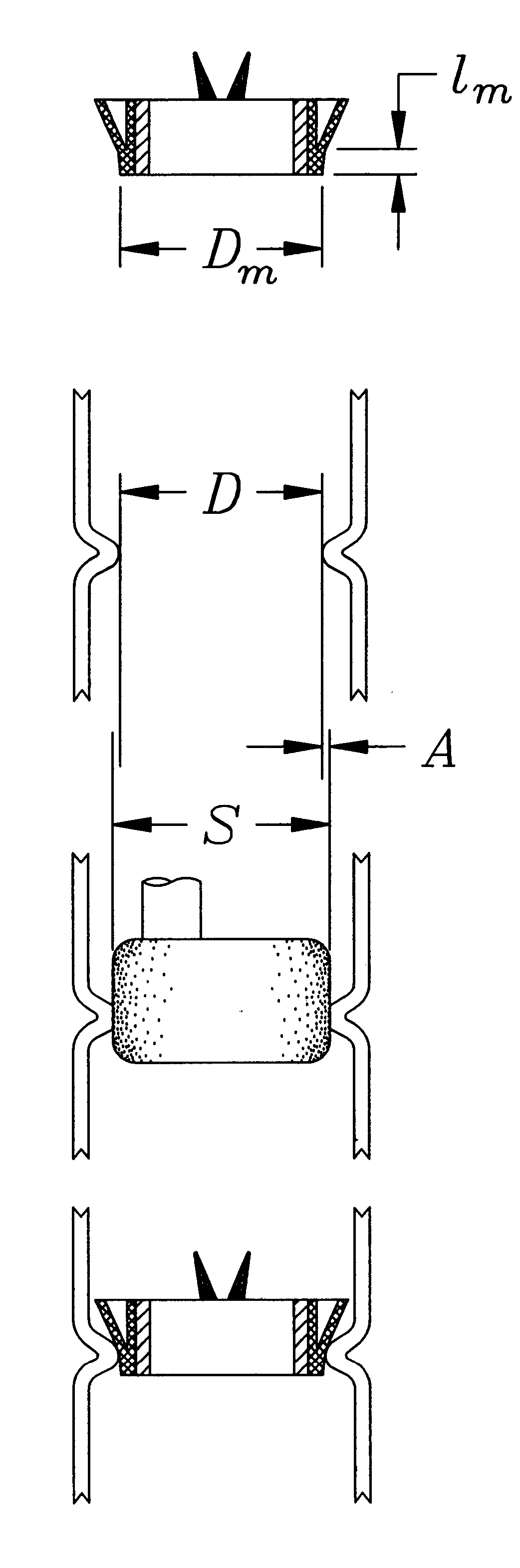
The present invention involves heart valve annulus sizer design, including the size, shape, and ergonomics. Certain parameters have been optimized and using those designs, preferred sizing and valve implantation techniques are suggested. It should be understood that the various sizes and shapes described herein are exemplary only, and modifications may be made consistent with the design considerations as detailed below.

Valve Placement

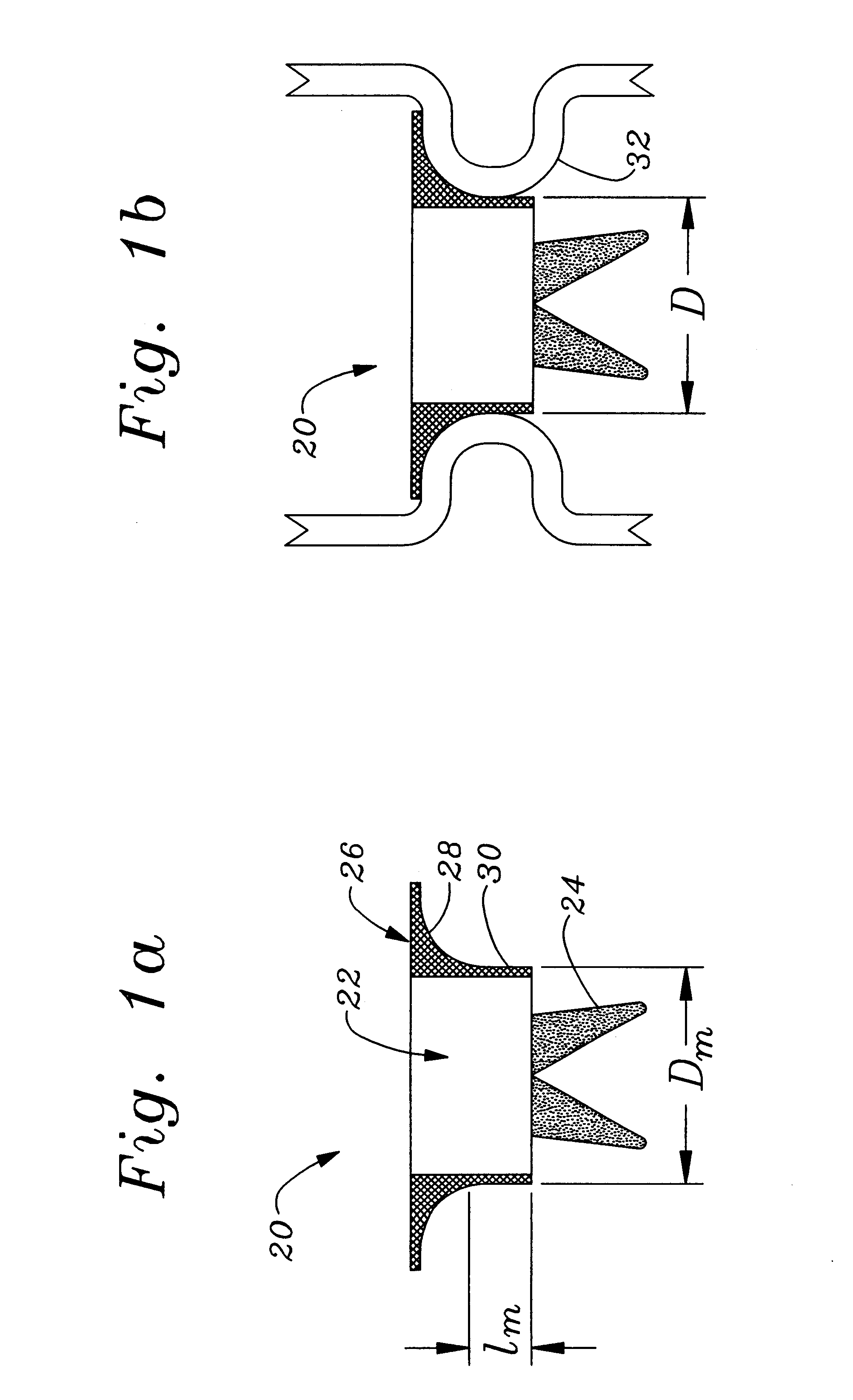
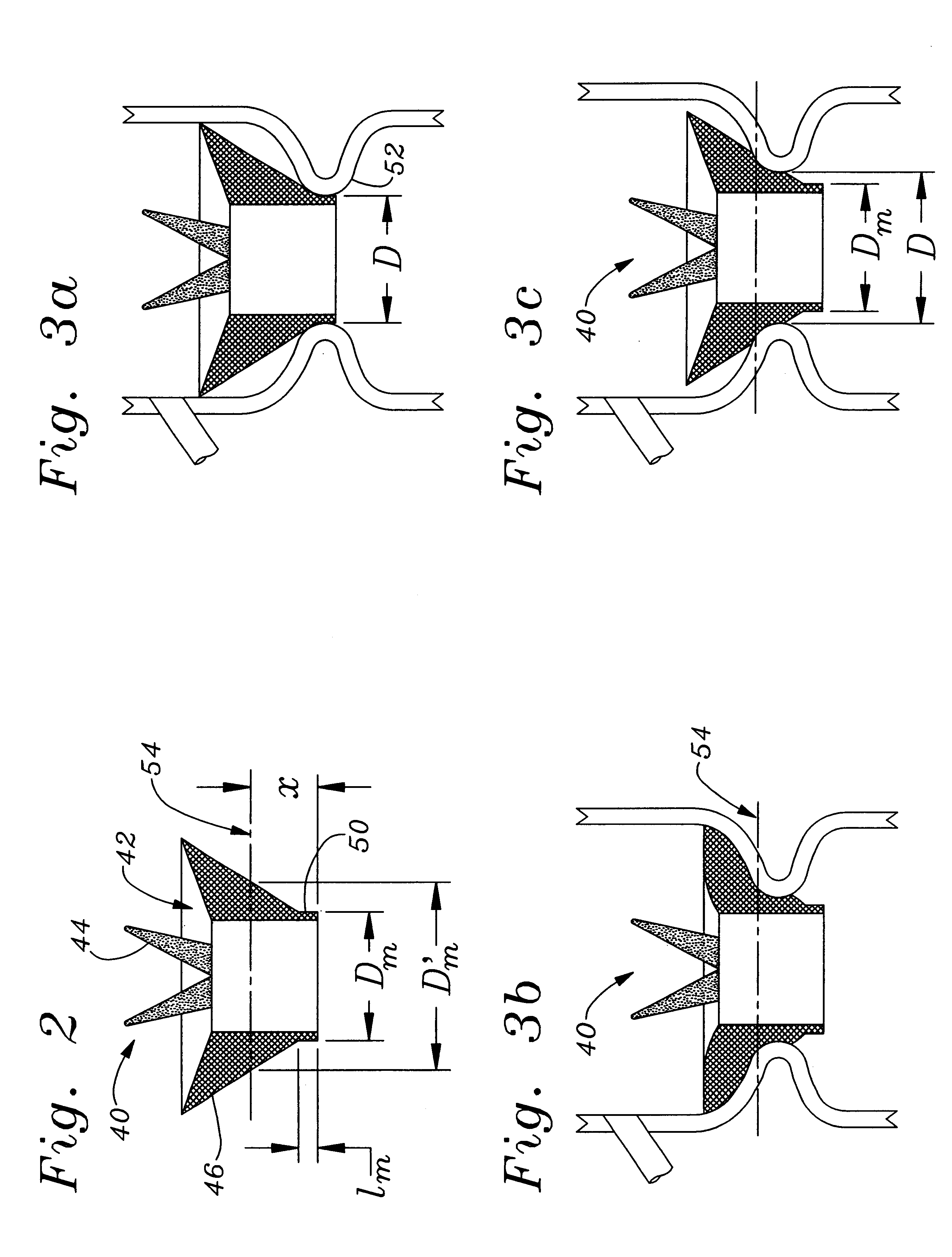
Correct valve sizing calls for a good matching fit between the tissue annulus diameter and the valve mounting diameter. However, given the discussion above with respect to uneven annuluses and time and special constraints, the relationship between the rigid mounting portion diameter of the valve and the tissue annulus diameter becomes more significant. Therefore, an understanding of typical valve structure is necessary.

The mounting portion of the aortic and mitral valve is a rigid area, typically cylindrical, and in the implant position this diameter wi...