
Method and apparatus for controlling a stand-alone 4-leg voltage source inverter
a voltage source inverter, stand-alone technology, applied in the direction of electric variable regulation, process and machine control, instruments, etc., can solve the problems of insufficient compensation of high frequency harmonic distortion, inability of inverter control system to compensate for undesirable harmonics, and adverse effects on output power quality
Patent Information
- Authority / Receiving Office
- US · United States
- Patent Type
- Patents(United States)
- Current Assignee / Owner
- Publication Date
- 2005-08-02
Smart Images
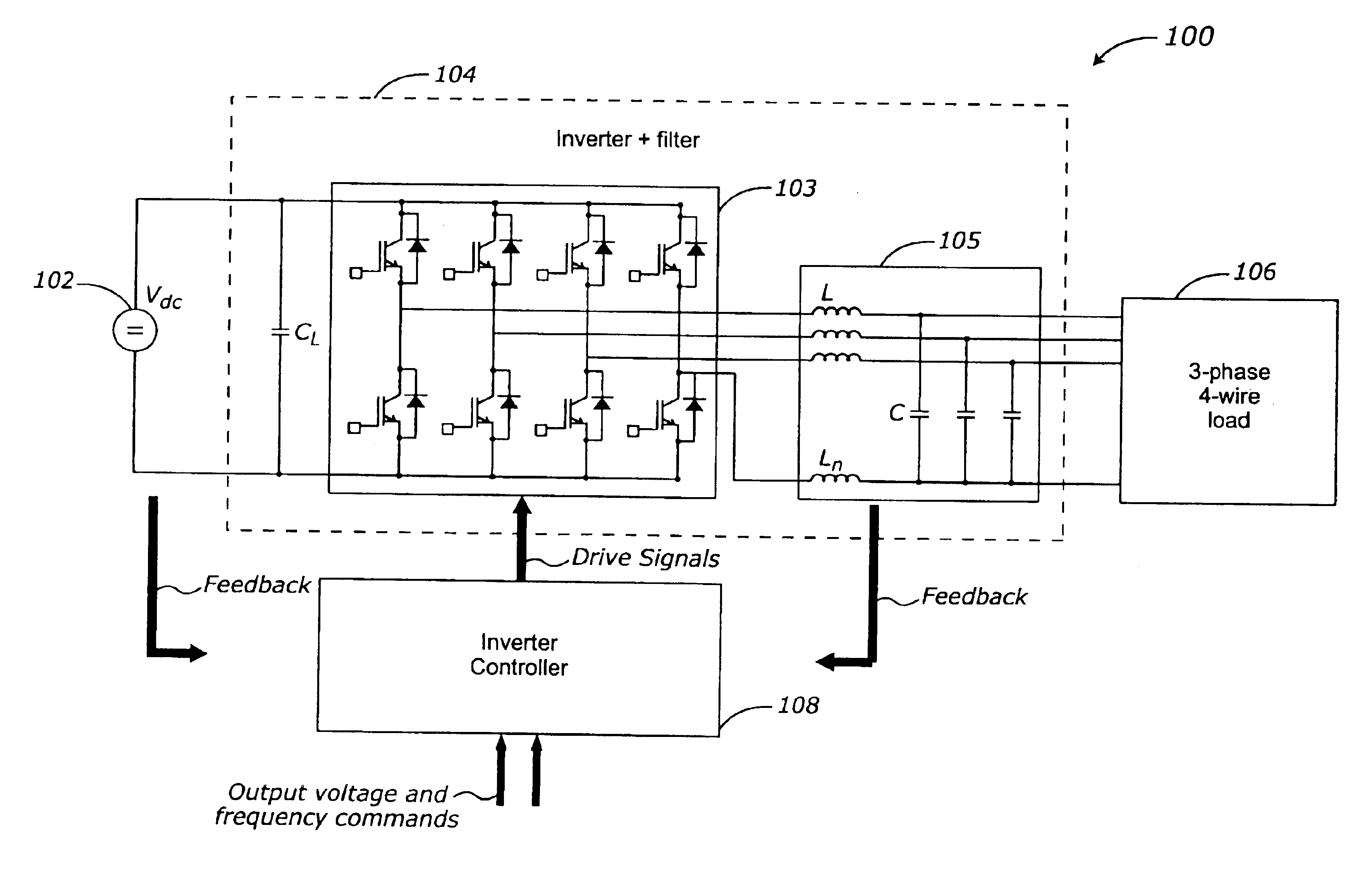
Figure 1 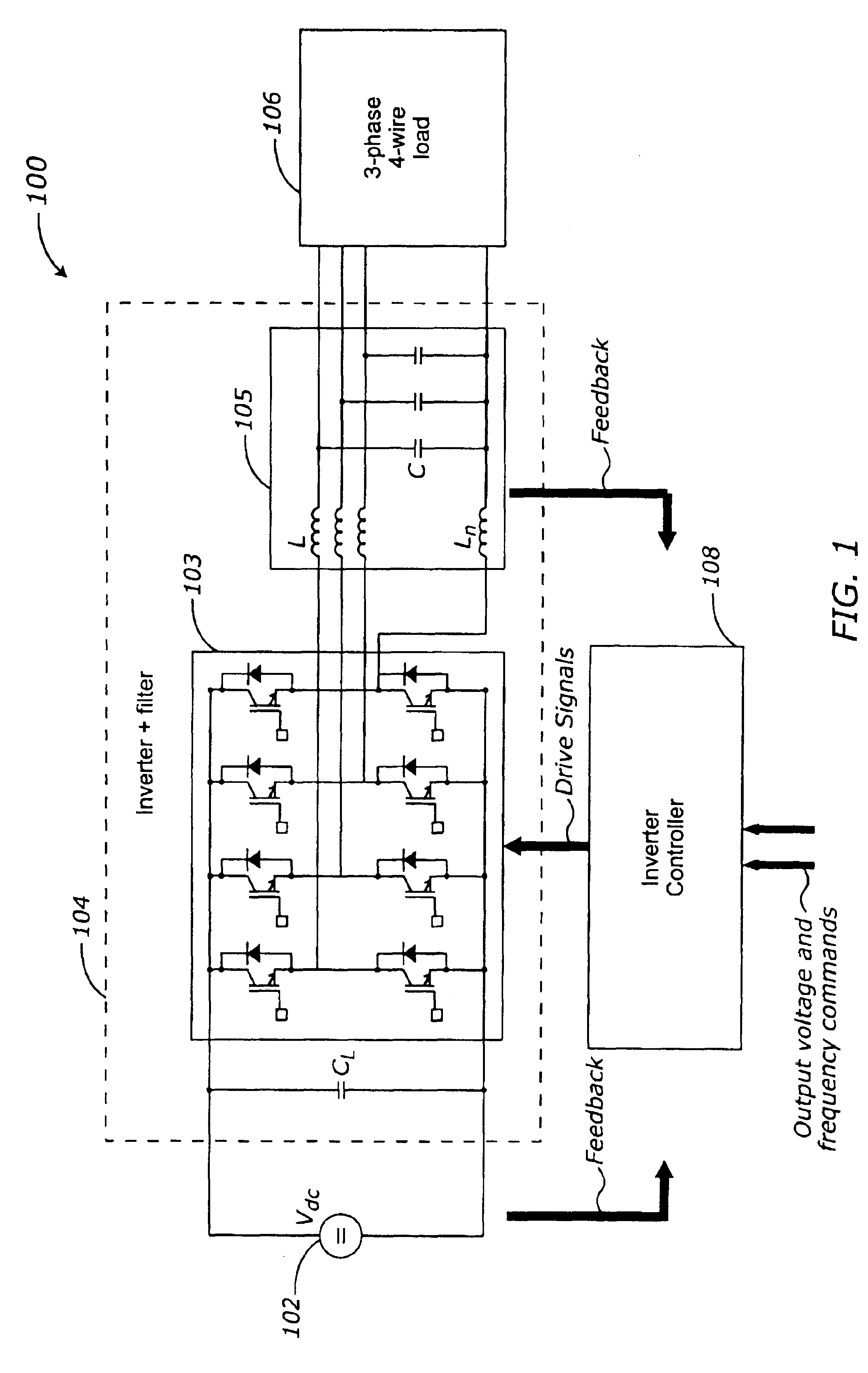
Figure 2 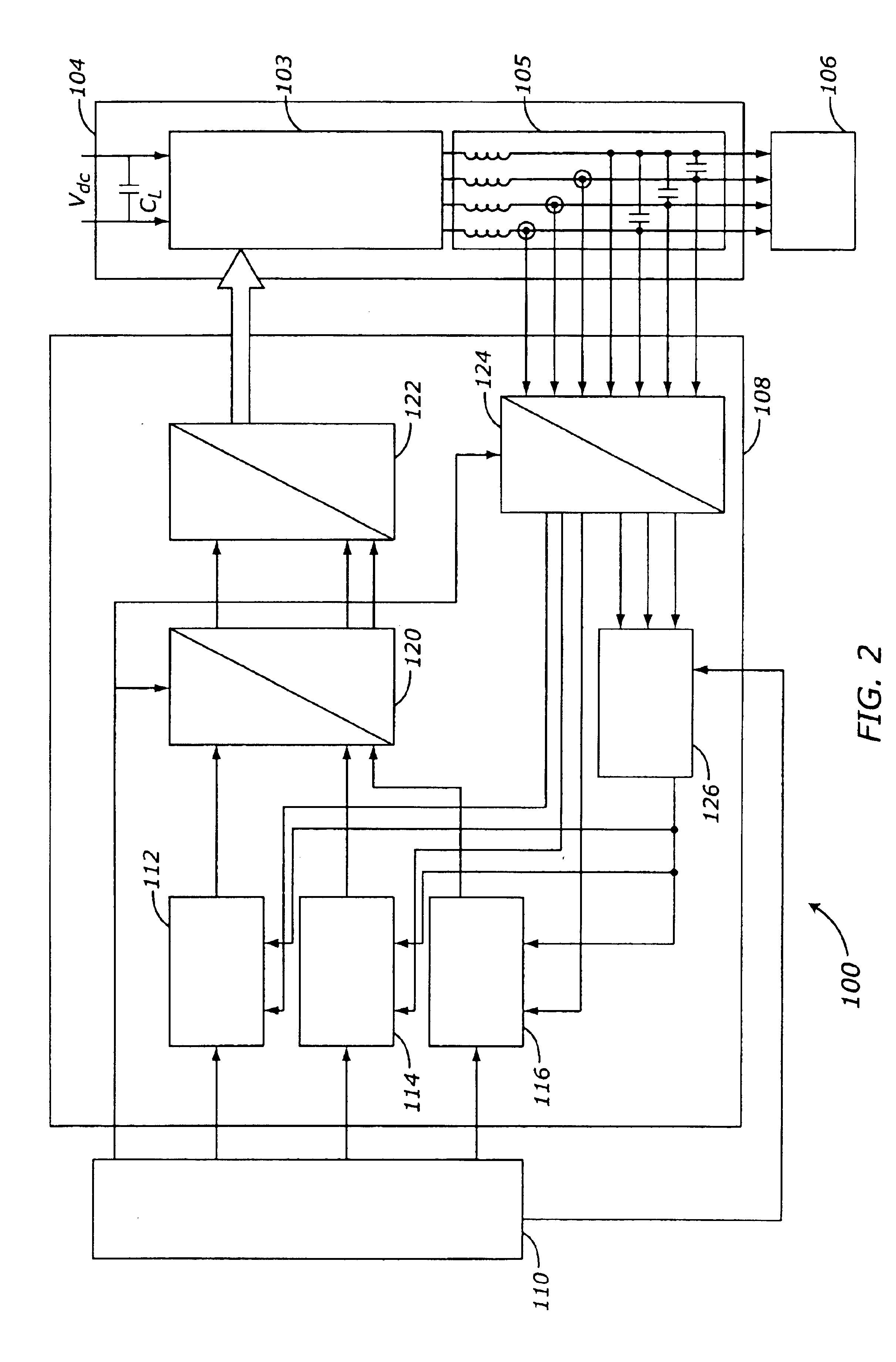
Figure 3
Abstract
Description
TECHNICAL FIELD
[0001] The present invention generally relates to three-phase voltage source inverters, and more particularly relates to the control of 4-leg three-phase voltage source inverters.BACKGROUND
[0002] Three-phase voltage source inverters (VSI's) are generally used to convert DC power into three-phase AC power. Typically, the three-phase output voltages are sinusoidal waveforms spaced 120 degrees apart, to be compatible with a wide variety of applications requiring conventional AC power. In general, the output power frequencies commonly used are 50, 60, and 400 hertz, but other frequencies could be used as well. One current example of an inverter application is the electric or hybrid automobile, where a DC power source, such as a battery, fuel cell array, or other equivalent device, is converted into an AC power supply for various internal control functions, including the propulsion system.
[0003] The quality of an inverter is generally determined by its output voltage and freq...
Examples
Embodiment Construction
[0027]The following detailed description is merely exemplary in nature and is not intended to limit the invention or the application and uses of the invention. Furthermore, there is no intention to be bound by any expressed or implied theory presented in the preceding technical field, background, brief summary or the following detailed description.
[0028]Various embodiments of the present invention pertain to the area of voltage source inverters operating in a stand-alone mode. Generally, this type of inverter is used to convert DC power available at a selected voltage into AC power with fixed voltage and frequency. Ideally, the output voltage and frequency stability of an inverter should be independent of load variations and imbalances. To provide this type of stabilization, an inverter controller may be used in a closed loop feedback configuration to provide regulating and imbalance compensating signals to the inverter. The inverter controller may be implemented in hardware or soft...