
System and method for information transfer over a network
a network and information transfer technology, applied in the field of system and method for information transfer over a network, can solve the problems of inactive or dead time at the client system, and achieve the effect of improving the operation of the web browser
- Summary
- Abstract
- Description
- Claims
- Application Information
AI Technical Summary
Benefits of technology
Problems solved by technology
Method used
Image

Examples
examples
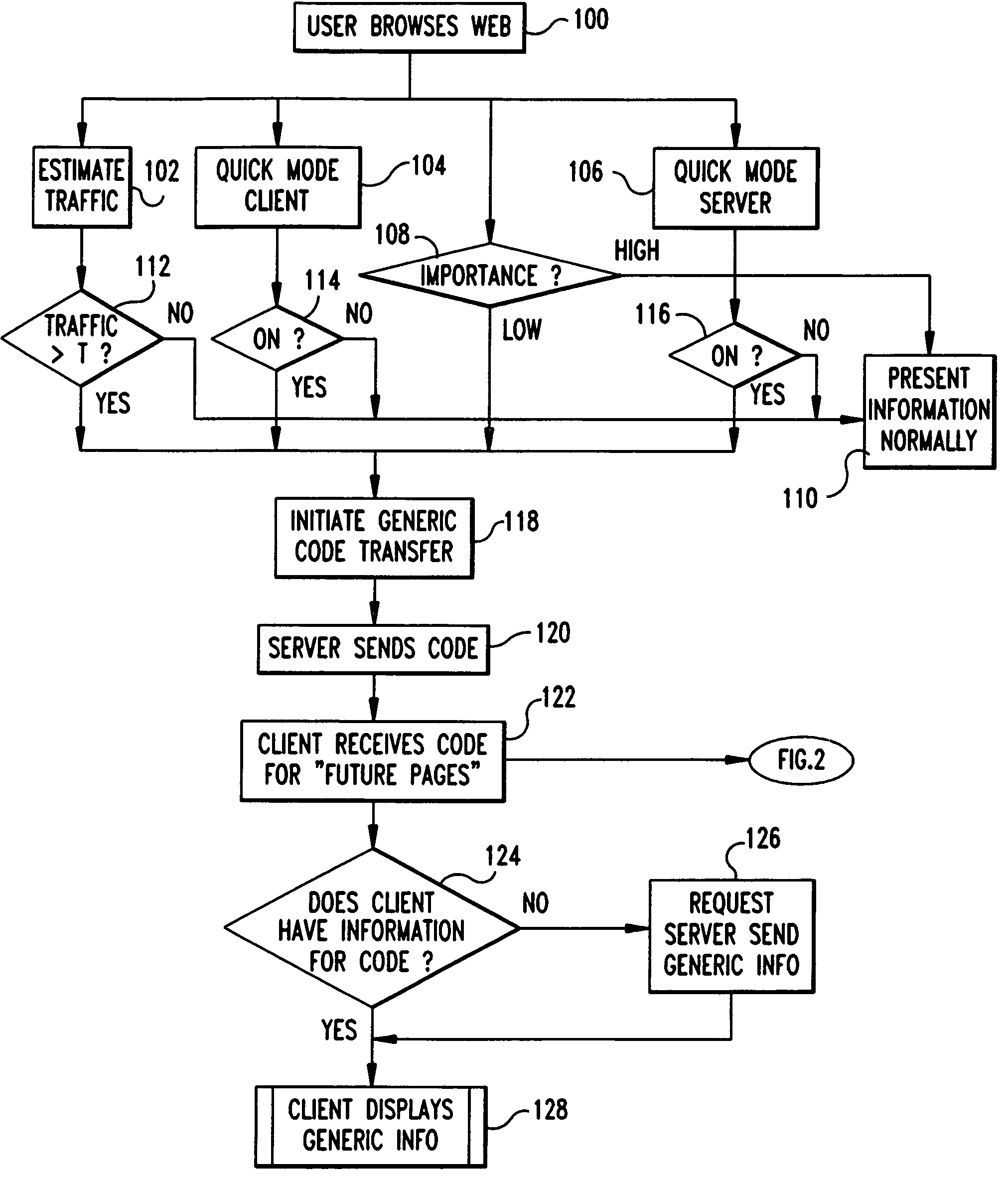
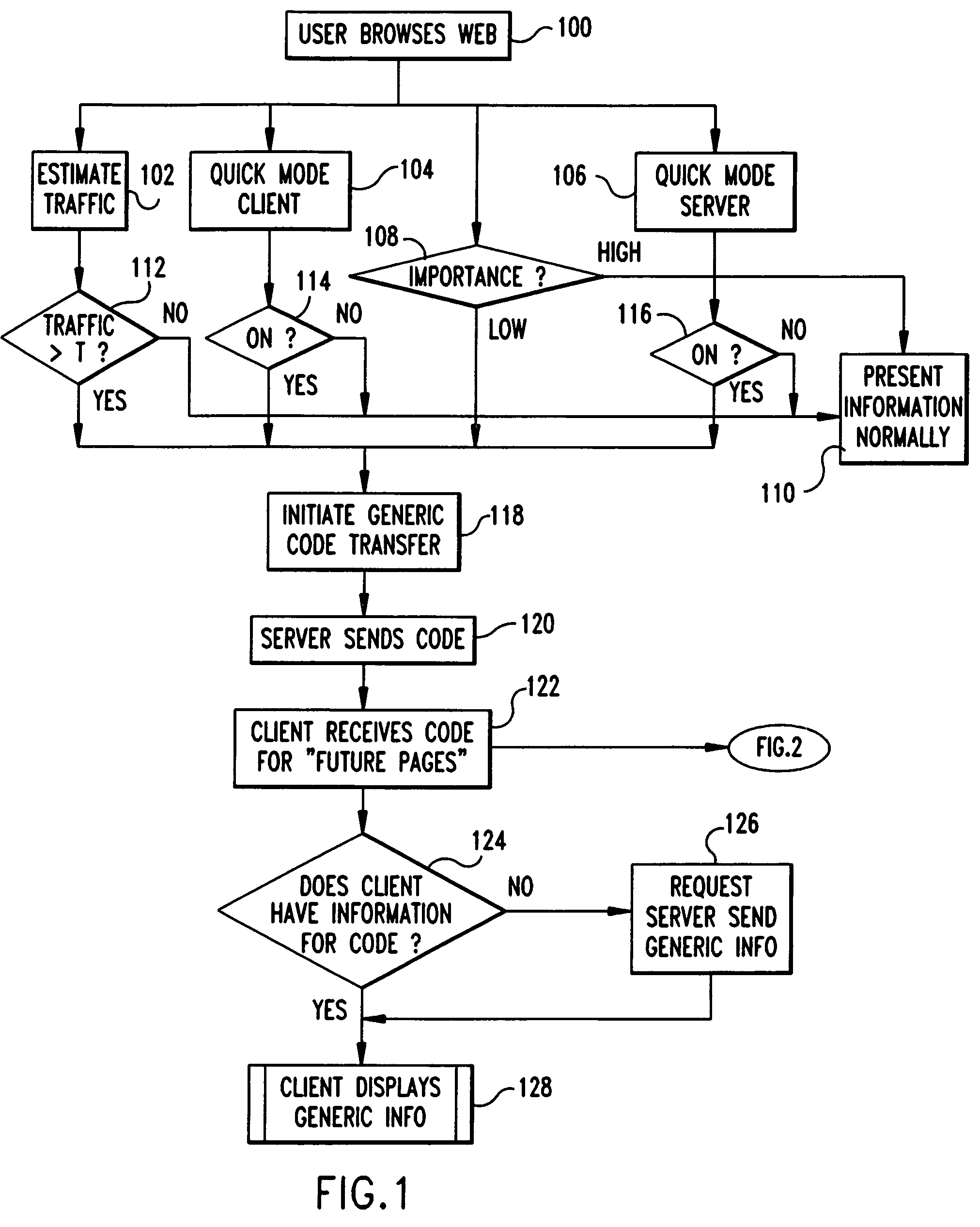
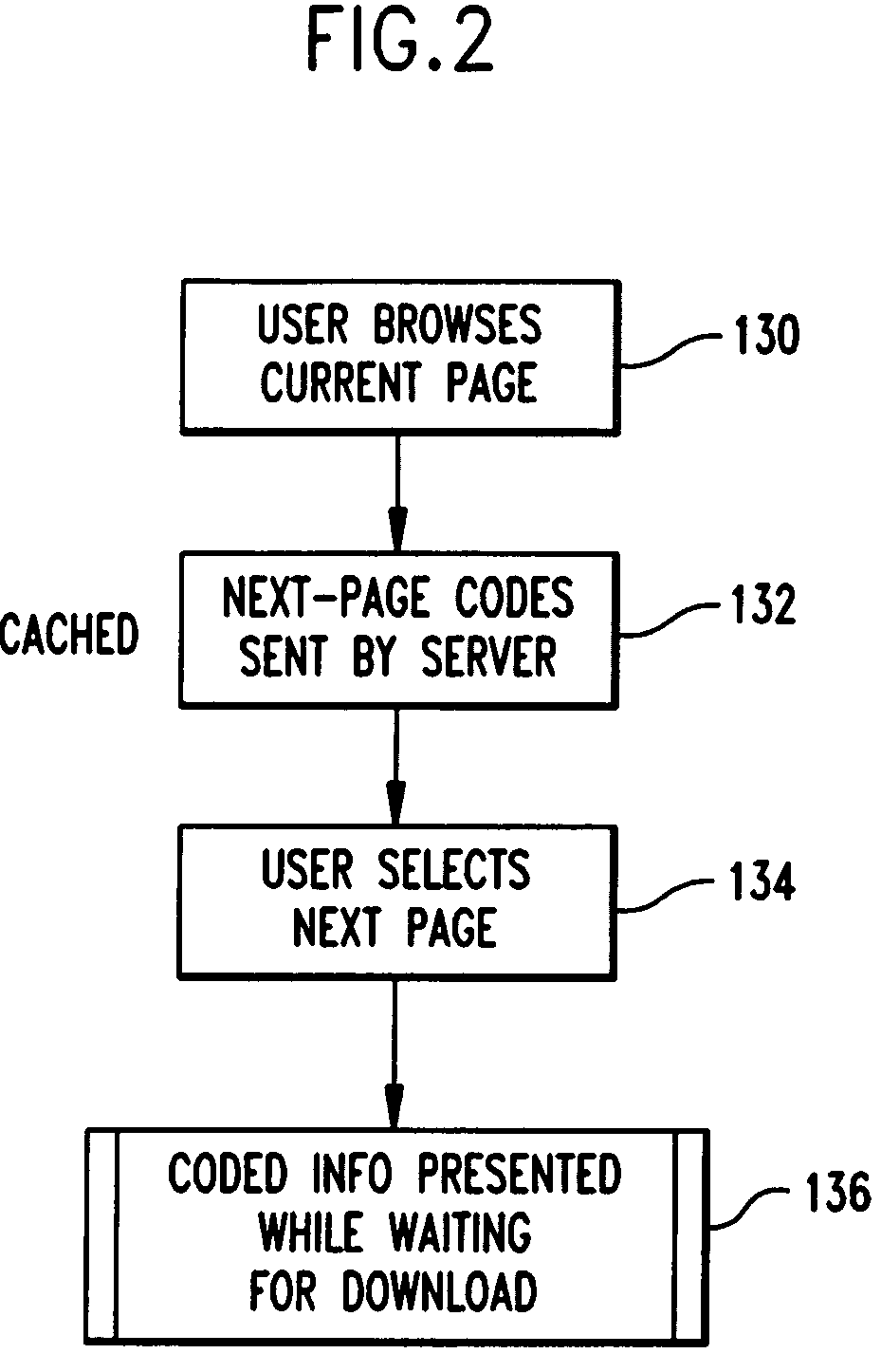
[0026]A user, attempting to browse a remote web page, enters the page's URL into a web browser. The client system determines that the network is very congested in step 102 and, rather than download actual images from the remote host, selectively downloads a Generic Code for a generic image, which is subsequently displayed. So, in this example, while specific hyper text markup language (HTML) may specify a full image of a particular dog, may specify the Code for a generic dog image, cached in a prior download or residing in the user's local database of Generic Information. The browser uses these codes to lookup generic images in the user's database and substitutes these when the web page is displayed.
[0027]In another example, a first user wishes to send a digital photo of himself standing in front of a beautiful mountain range; an advertiser wishes to send a photo of a new car in front of a starry sky. These users may specify a background scene using simple English, such as “mountai...
PUM
 Login to View More
 Abstract
Description
Claims
Application Information
 Login to View More