
Using a virus checker in one file server to check for viruses in another file server
a virus checker and file server technology, applied in error detection/correction, unauthorized memory use protection, instruments, etc., can solve problems such as network being subject to an increasing threat from viruses, affecting software, and affecting network security
- Summary
- Abstract
- Description
- Claims
- Application Information
AI Technical Summary
Benefits of technology
Problems solved by technology
Method used
Image

Examples
Embodiment Construction
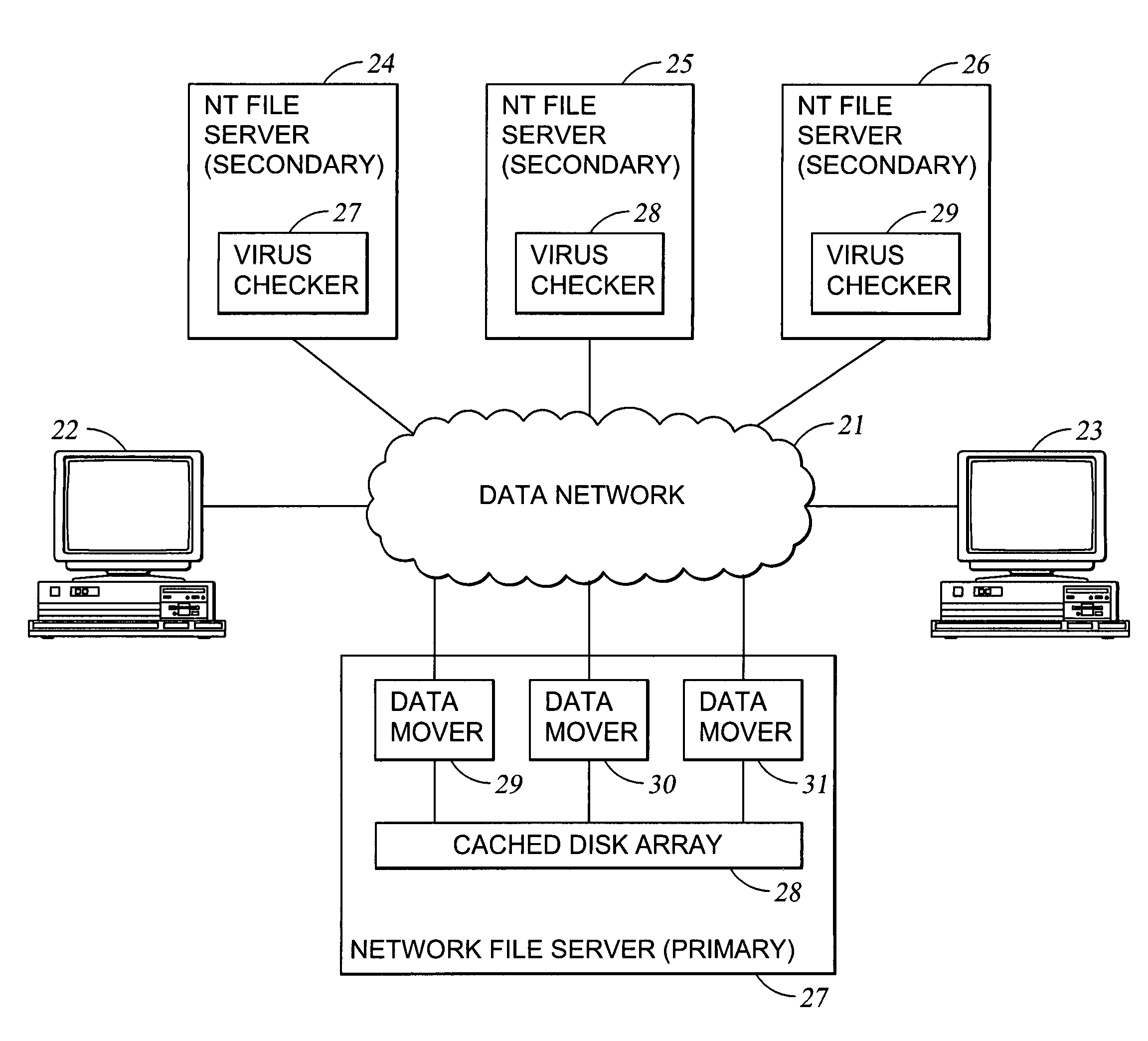
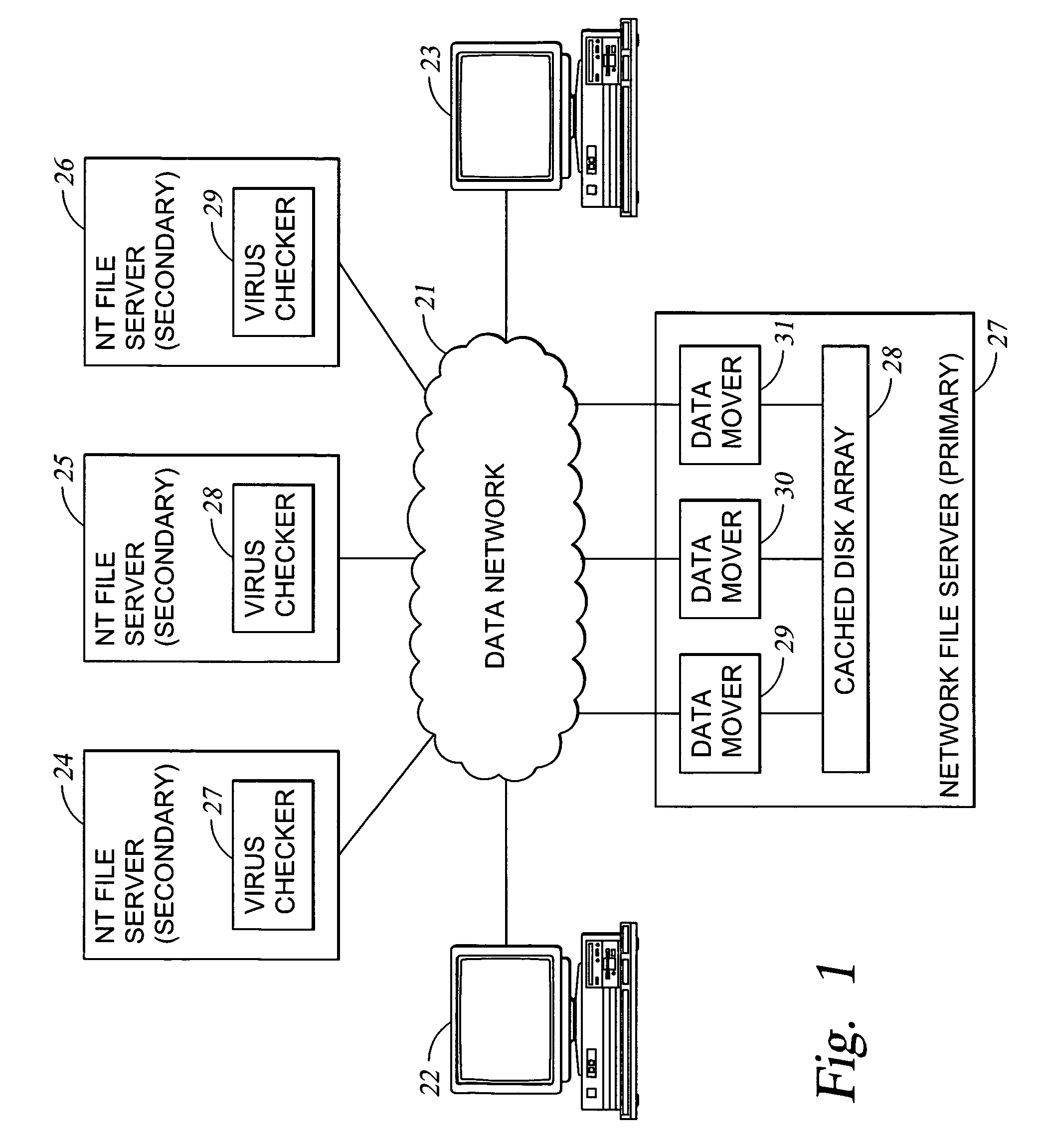
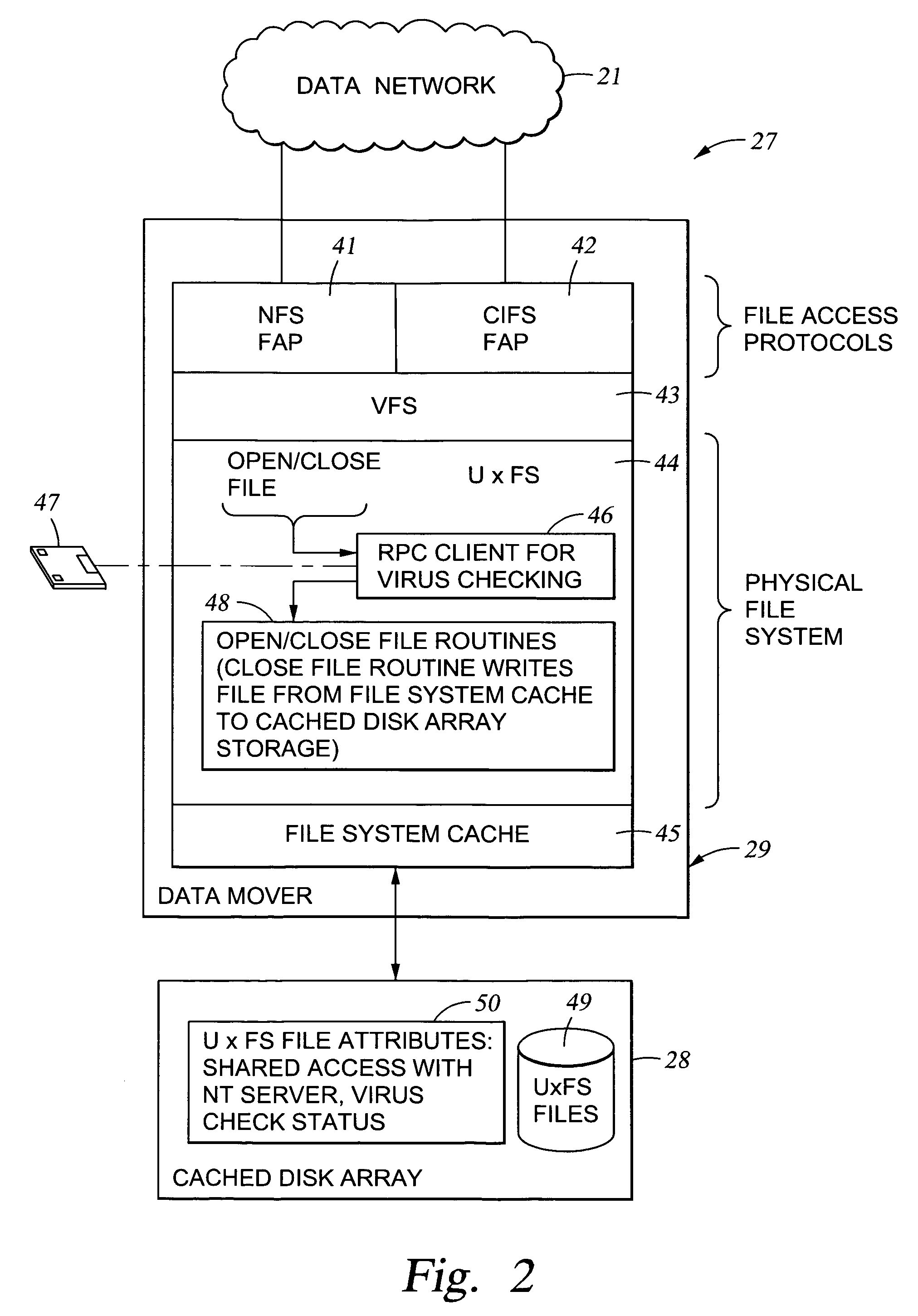
[0033]With reference to FIG. 1, there is shown a data processing system incorporating the present invention. The data processing system includes a data network 21 interconnecting a number of clients and servers. The data network 21 may include any one or more of network connection technologies, such as Ethernet or Fibre Channel, and communication protocols, such as TCP / IP or UDP. The clients include work stations 22 and 23. The work stations, for example, are personal computers. The servers include conventional Windows NT / 2000 file servers 24, 25, 26, and a very large capacity network file server 27. The network file server 27 functions as a primary server storing files in nonvolatile memory. The NT file servers 24, 25, 26 serve as secondary servers performing virus checking upon file data obtained from the network file server 27. The network file server 27 is further described in Vahalia et al., U.S. Pat. No. 5,893,140 issued Apr. 6, 1999, incorporated herein by reference. Such a v...
PUM
 Login to View More
 Abstract
Description
Claims
Application Information
 Login to View More