Method and arrangement for interpreting a subjects head and eye activity

a technology of eye activity and head, applied in the direction of digital data processing details, input/output processes of data processing, vehicle position/course/altitude control, etc., can solve the problems of difficult comparison of research results, few, if any, suitable automated tools for performing analysis, and manual analysis. , to achieve the effect of reducing human rating and robust against errors and nois

US7460940B2Active Publication Date: 2008-12-02VOLVO TECH
52 Cites 124 Cited by

Patent Information

Authority / Receiving Office
US · United States
Patent Type
Patents(United States)
Current Assignee / Owner
Publication Date
2008-12-02

Smart Images

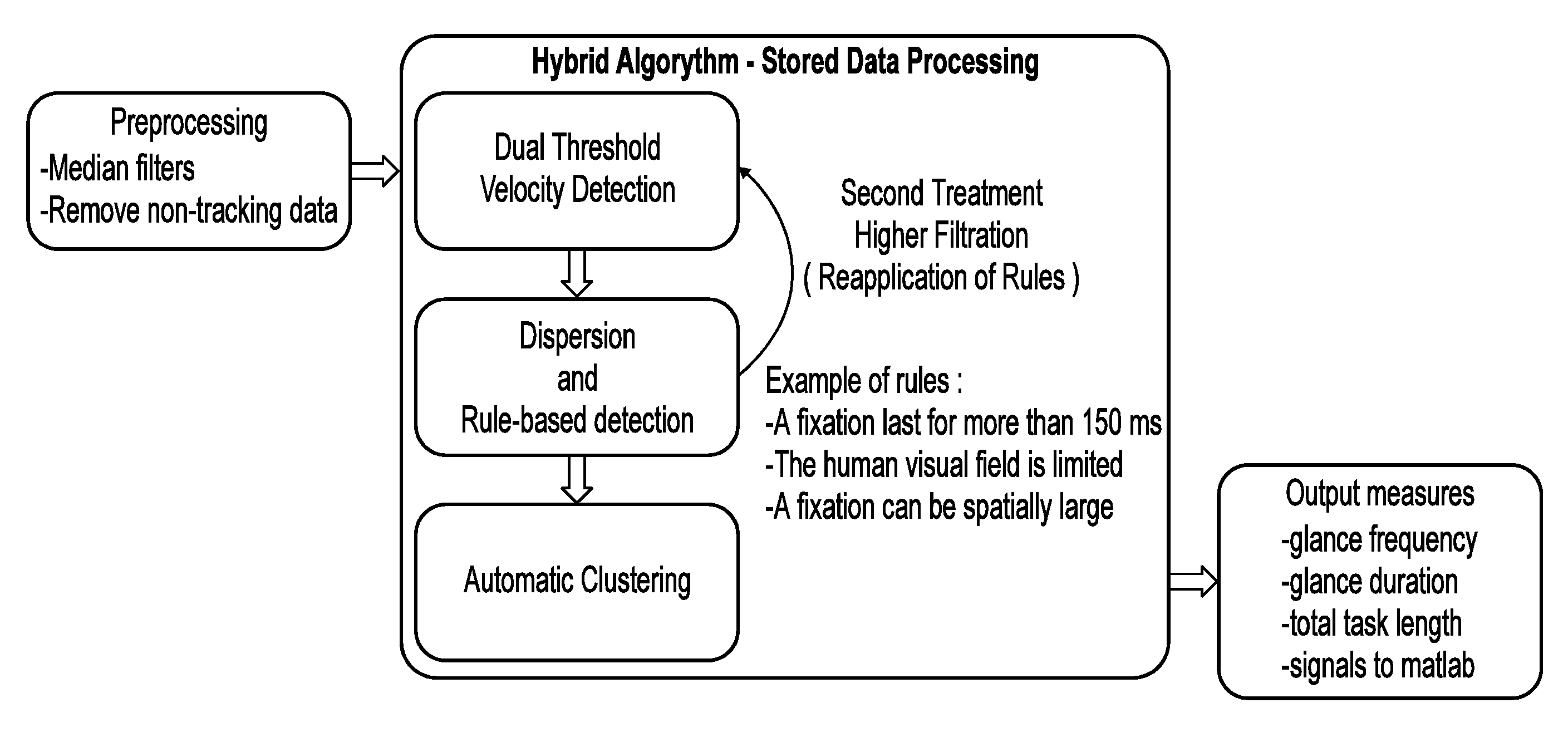
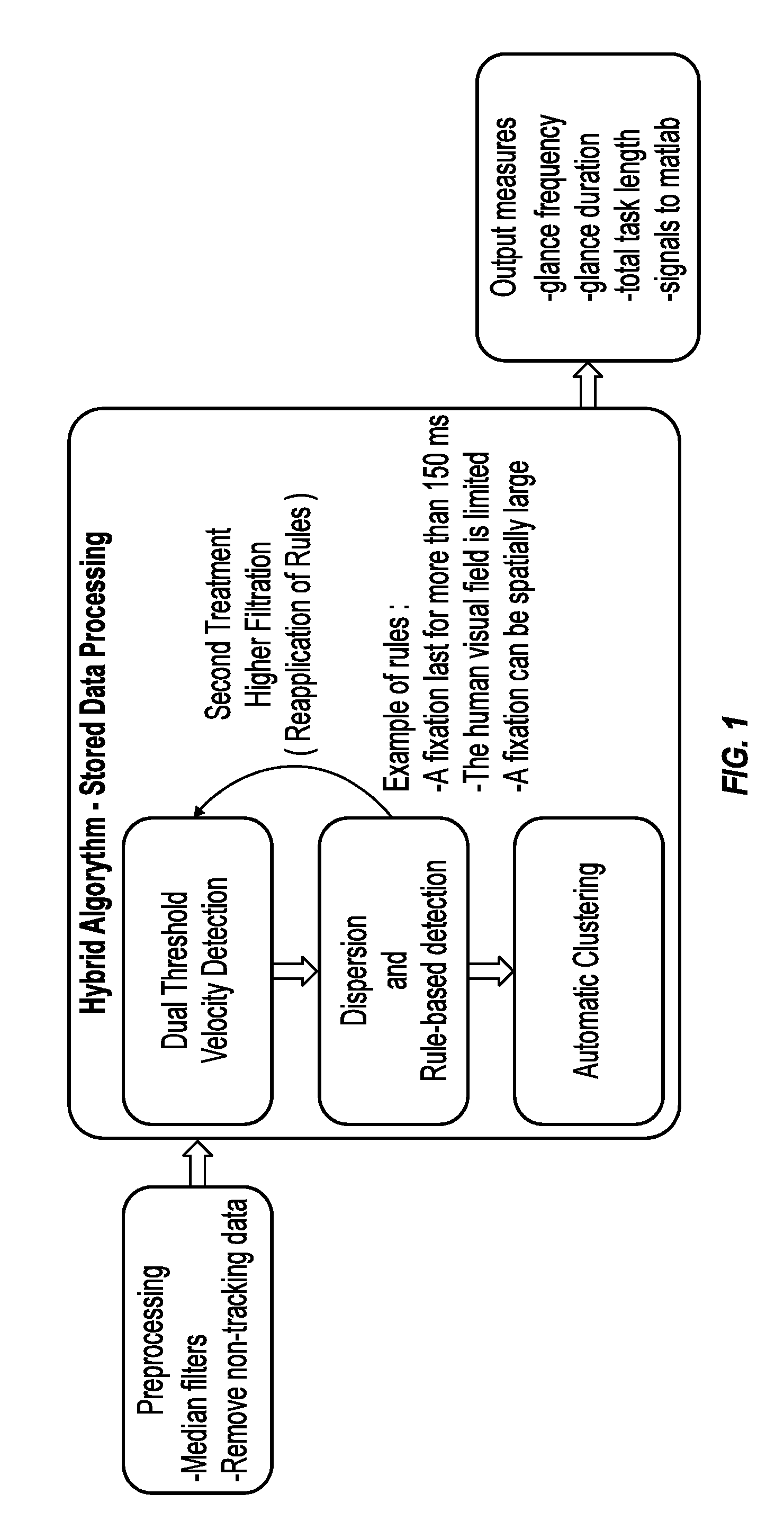
  • Figure 1
    Figure 1
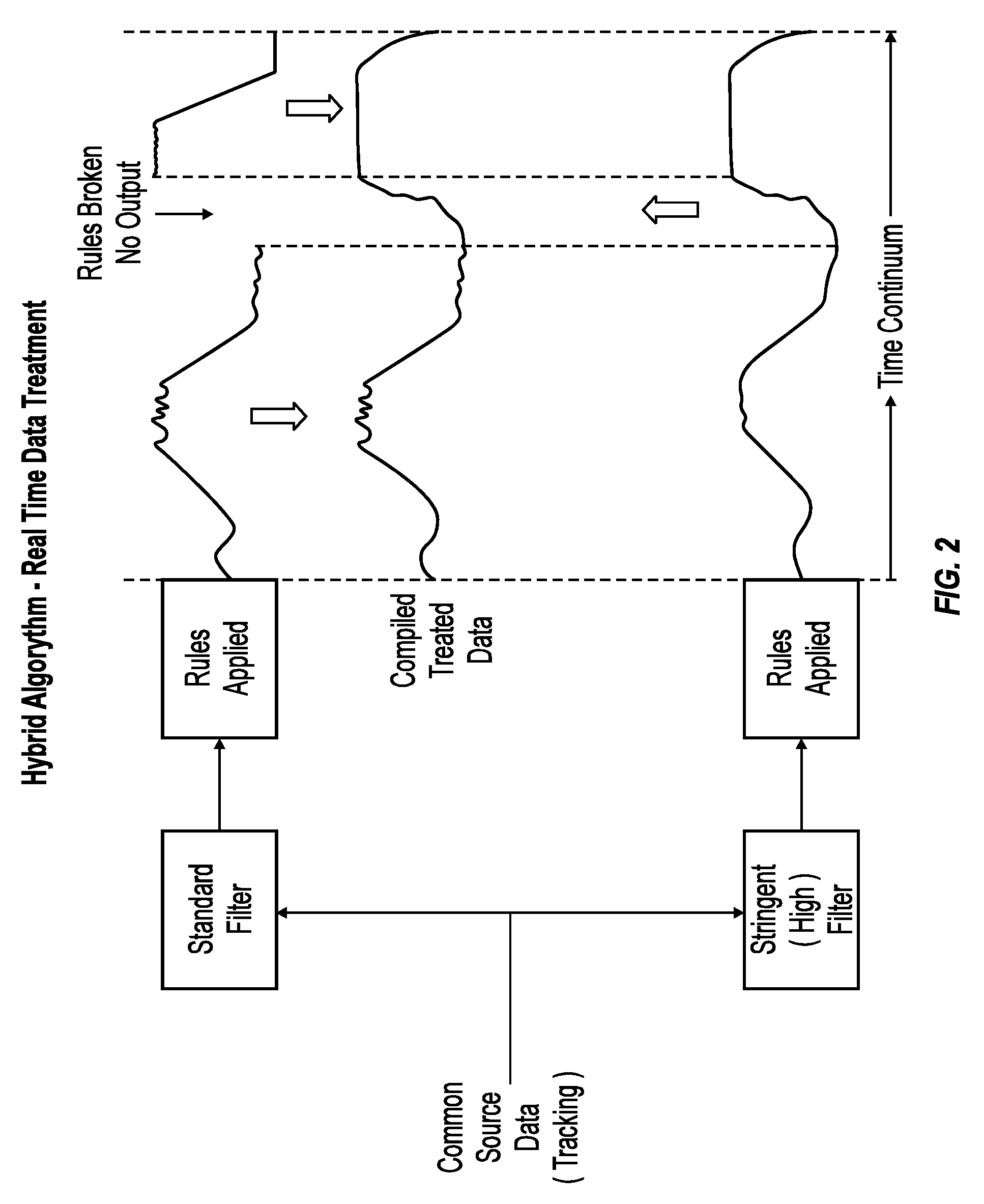
  • Figure 2
    Figure 2
  • Figure 3
    Figure 3
Patent Text Reader

Abstract

Method for analyzing ocular and / or head orientation characteristics of a subject. A detection and quantification of the position of a driver's head and / or eye movements are made relative to the environment. Tests of the data are made, and from the data, locations of experienced areas / objects-of-subject-interest are deduced. When a driver of a vehicle is the subject, these areas / objects-of-driver-interest may be inside or outside the vehicle, and may be constituted by (1) “things” such as audio controls, speedometers and other gauges, and (2) areas or positions such as “road ahead” and lane-change clearance space in adjacent lanes. In order to “standardize” the tracking data with respect to the vehicle of interest, the quantification of the position of the driver's head is normalized to the reference-base position thereby enabling deducement of location(s) where the driver has shown an interest based on sensed information regarding either, or both of (1) driver ocular orientation or (2) driver head orientation.
Need to check novelty before this filing date? Find Prior Art

Description

CROSS REFERENCE TO RELATED APPLICATIONS

[0001] The present application claims the benefit of provisional patent application No. 60 / 418,171, filed 15 Oct. 2002 and entitled METHOD AND ARRANGEMENT FOR INTERPRETING DRIVER ACTIVITY, the disclosure of which is expressly incorporated herein by reference in its entirety.BACKGROUND OF INVENTION

[0002] 1. Technical Field

[0003] The present invention relates to methods for the automated treatment of data; and more specifically, the invention relates to automated methods for analyzing and utilizing head and eye tracking data to deduce characteristics about the observed subject such as cognitive and visual distraction, as well as quantify work load levels.

[0004] 2. Background Art

[0005] There is significant ongoing research related to driver fatigue, distraction, workload and other driver-state related factors creating potentially dangerous driving situations. This is not surprising considering that approximately ninety-five percent of all traffic incid...

Examples

Embodiment Construction

[0089]Before the actual data treatment techniques that are the focus of the presently disclosed invention(s) are described, some basic information will be provided regarding rudimentary characteristics of eye movements, as well as some general information about typical tracking systems that can be used to sense, quantify, and optionally record data descriptive of head and / or eye orientation (location and movement characteristics) in an effort to facilitate those readers possessing less than ordinary skill in these arts.

[0090]With respect at least to eye movement-based systems, presently available sensing systems used for gathering eye movement data deliver “raw” eye-movement signals that are rather noisy and which includes artifacts. As will become evident from reading the balance of the present disclosure, typically, head orientation tracking data can be utilized as an approximation, and therefore often a valid substitute for eye tracking data. Since eye tracking data obviously alm...