
Method for minimizing denial of service attacks on network servers
a network server and denial of service technology, applied in the field of network security, can solve the problem of not holding ports open for an unnecessarily long period of time, and achieve the effect of optimizing the time duration of port openness and minimizing denial of service attacks
- Summary
- Abstract
- Description
- Claims
- Application Information
AI Technical Summary
Benefits of technology
Problems solved by technology
Method used
Image

Examples
Embodiment Construction
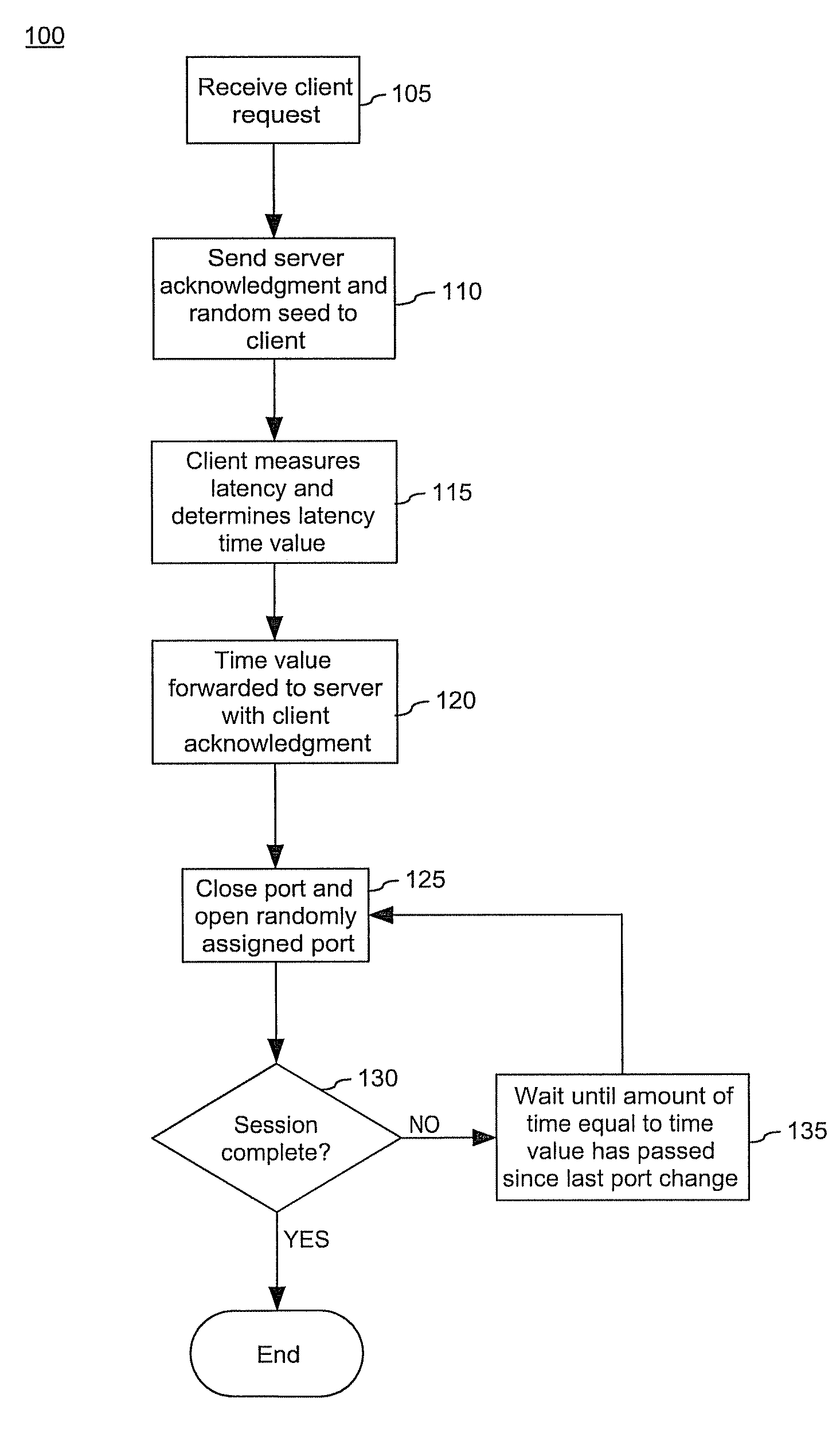
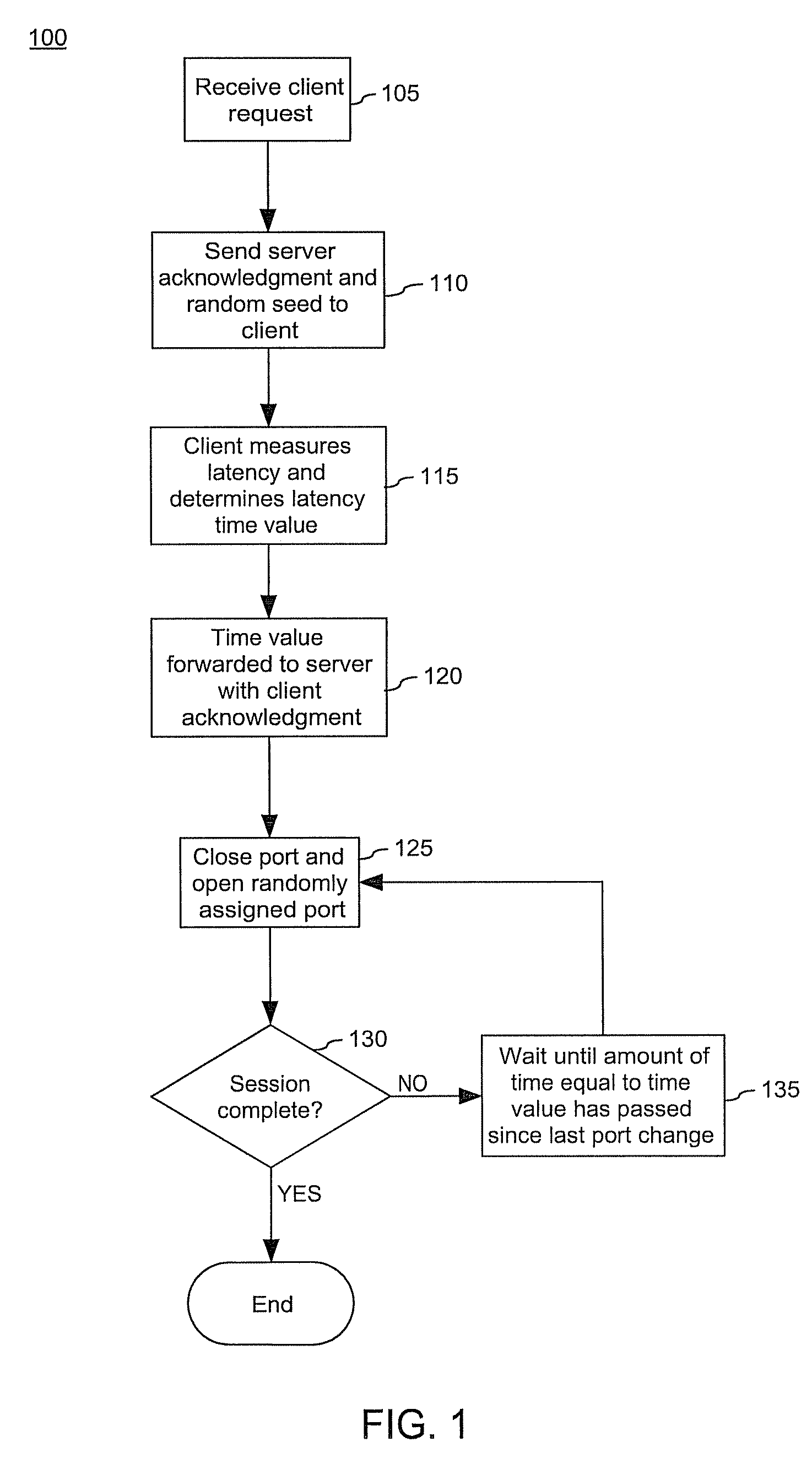
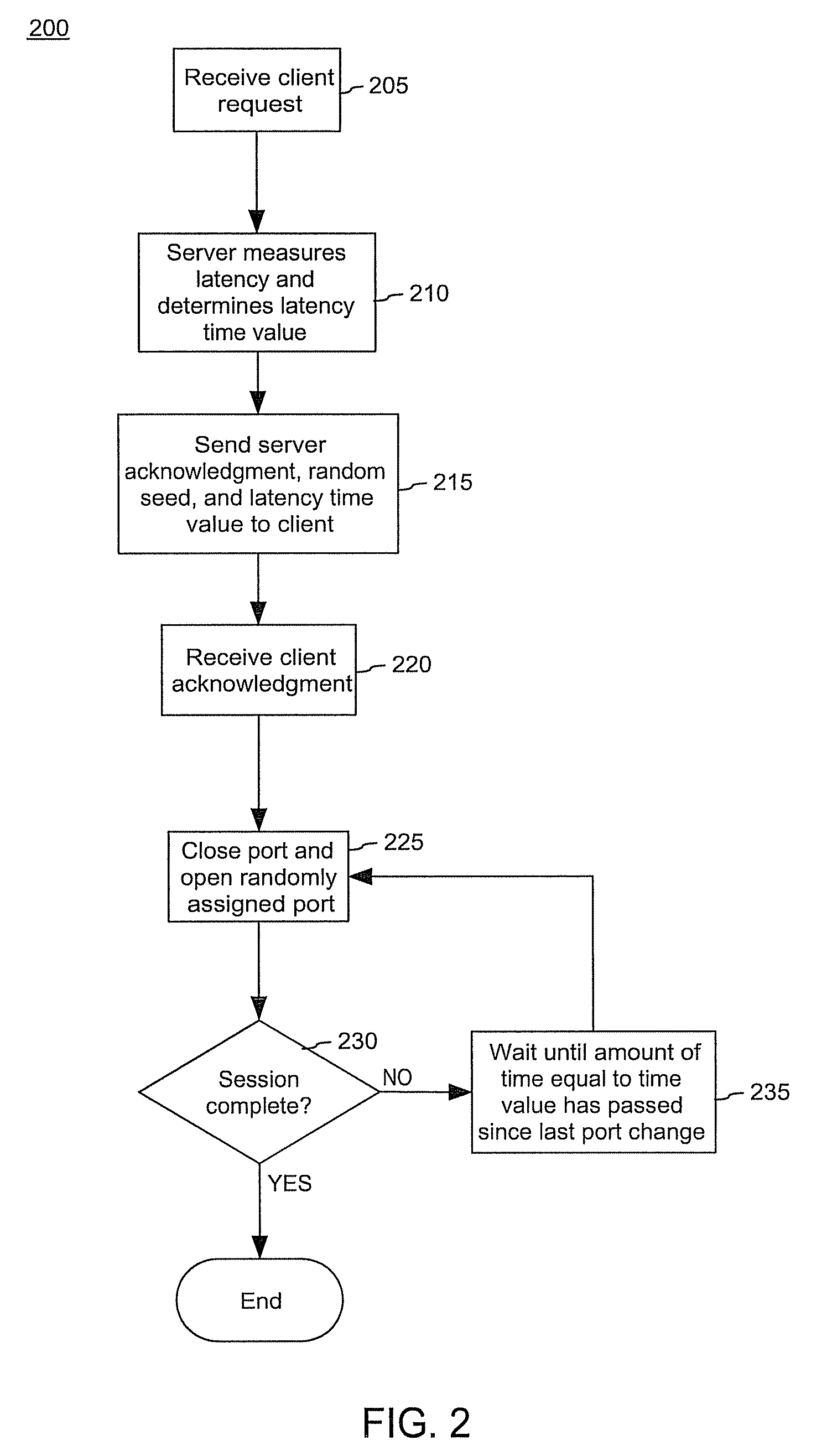
[0022]The invention disclosed herein provides a network security solution which can minimize denial of service (DoS) attacks on network servers and help servers elude potential unauthorized users attempting to infiltrate a system through open ports. In particular, the present invention provides a solution for providing network security while maintaining stable client-server network connections by randomly changing active port addresses and dynamically varying the timing of port openings and closings according to a latency value. The latency value optimizes the time duration that ports are open, accounting for changing conditions of the network environment, such as network congestion, server load, and other network conditions affecting network latency. Accordingly, the server ports are open long enough to receive packets sent to server ports by authorized clients, even when conditions of high network latency exist, yet the ports are not held open for an unnecessarily long period of t...
PUM
 Login to View More
 Abstract
Description
Claims
Application Information
 Login to View More