Emergency watercraft

a technology for emergency watercraft and watercraft, which is applied in the field of emergency watercraft, can solve the problems of damage or destruction of conventional outboard engines, and achieve the effect of convenient shipping

US7832348B2Active Publication Date: 2010-11-16NEWCOMB RICHARD
16 Cites 10 Cited by

Patent Information

Authority / Receiving Office
US · United States
Patent Type
Patents(United States)
Current Assignee / Owner
Publication Date
2010-11-16

Smart Images

  • Figure 1
    Figure 1
  • Figure 2
    Figure 2
  • Figure 3
    Figure 3
Patent Text Reader

Abstract

Disclosed is a watercraft for use in combination with a PWC or suitable shallow draft propulsion system. The watercraft is designed to operate in emergency conditions where flood waters leave an uncharted bottom that may be as little as twelve inches deep or conceal a submerged object. The watercraft includes a ramp allowing for the ease of loading including wheelchair bound and bed-bound patients as well as supplies such as water, food, medical supplies, generators, and water filtration systems. The watercraft is based upon two pontoons having a storable floor and support structure, the support structure overlays a portion of each pontoon.
Need to check novelty before this filing date? Find Prior Art

Description

PRIORITY CLAIM

[0001] This application claims a filing date of Oct. 25, 2007 based upon U.S. Provisional Application No. 60 / 982,586 the contents of which are incorporated herein by reference.FIELD OF THE INVENTION

[0002] This invention relates to the field of emergency rescue devices and more particularly to an emergency watercraft being capable of carrying a large amount of people or supplies in shallow water conditions during evacuation or other emergency situations.BACKGROUND OF THE INVENTION

[0003] Evacuation of citizens from flooding conditions has always been problematic. The problems were well illustrated during the flooding of New Orleans in the aftermath of Hurricane Katrina. In this situation a large portion of the population were stranded in waters that may be shallow in some areas, but otherwise posed a dangerous risk due to contaminated water concealing submerged objects and low power lines. Even if the water was considered deep, the use of conventional watercraft proved to b...

Examples

Embodiment Construction

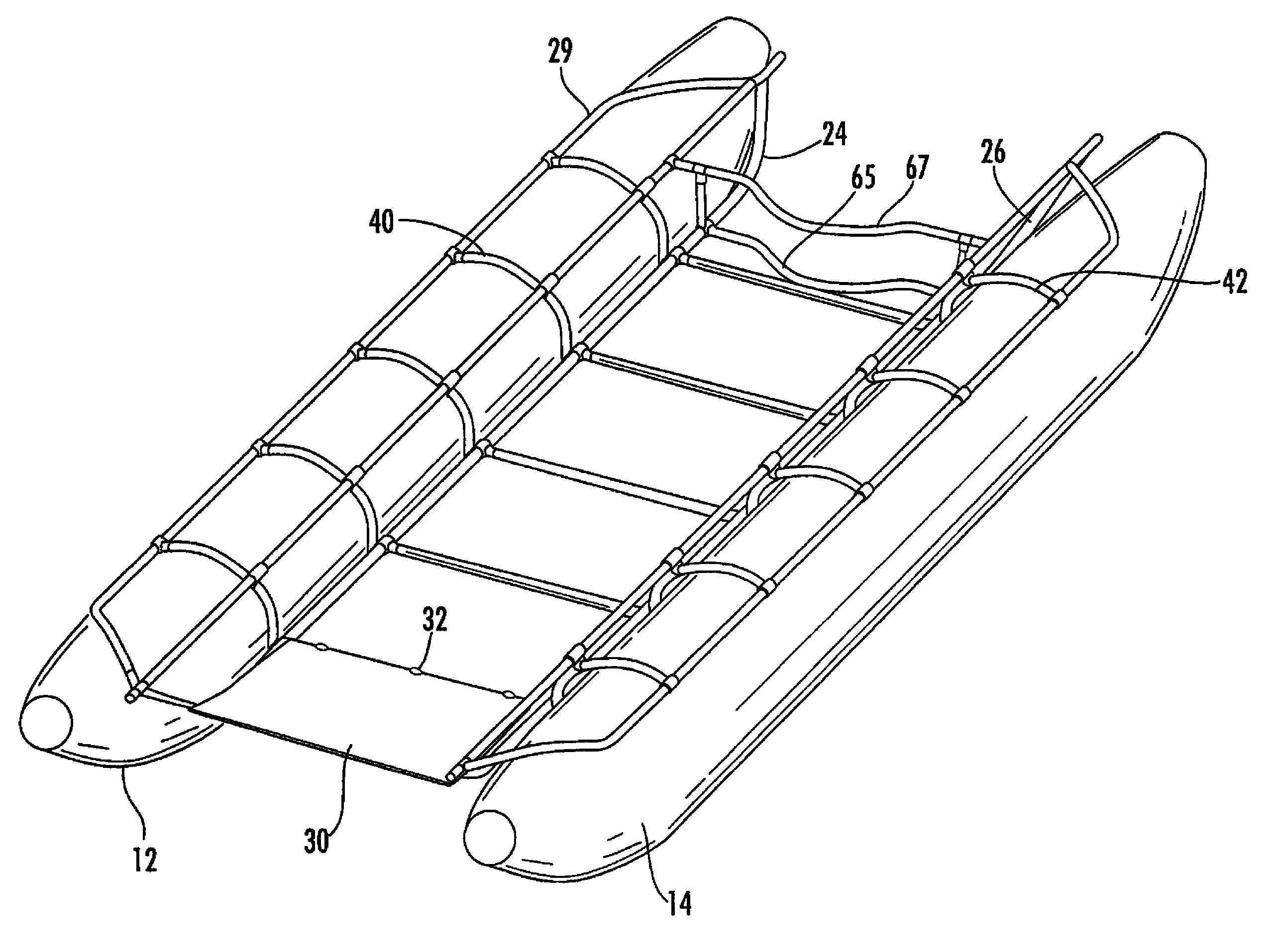
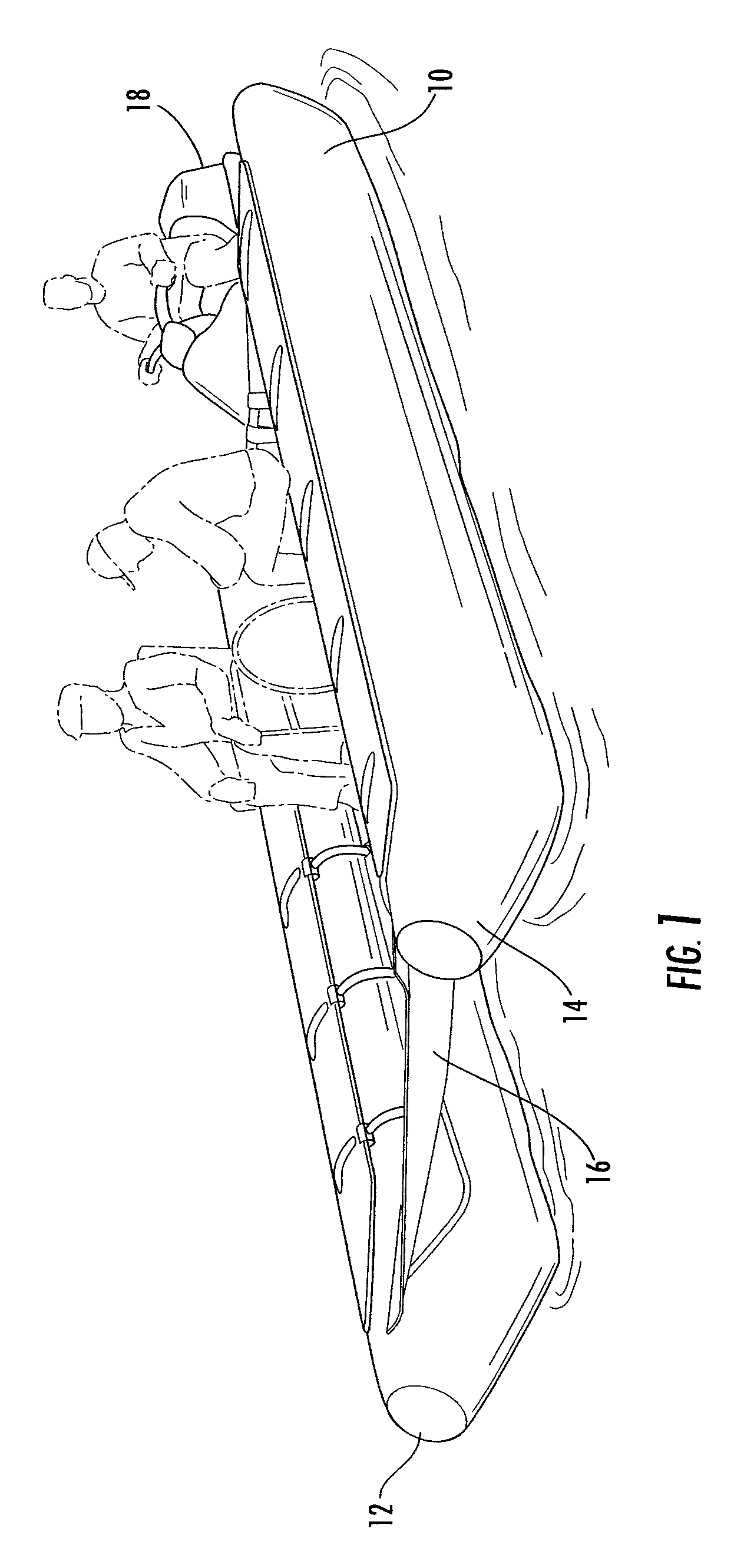
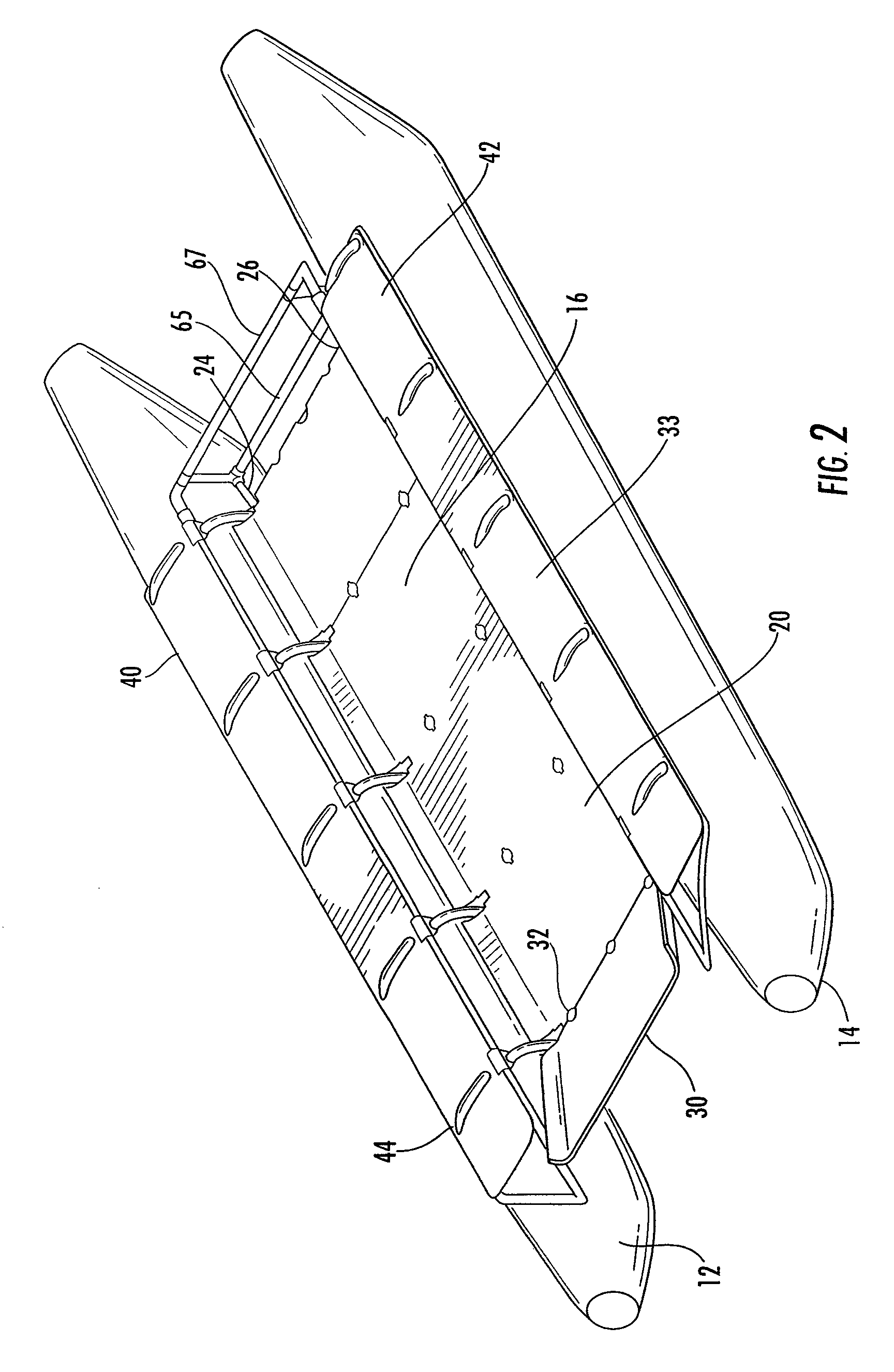
[0032]Now referring to FIGS. 1-3 and 5, set forth is a pictorial view of the watercraft (10) having a first pontoon (12) spaced apart from a second pontoon (14) with a transport support section (16) located therebetween. A PWC (18) is depicted at the rear of the watercraft and allows for propulsion in minimal draft areas. Additional capacity can be obtained by adding one to four pontoons under the deck.

[0033]The transport section includes a floor (20) for primary support of the load to be transferred and is preferably constructed of metal such as aluminum or galvanized sheet steel. Alternative, a flexible material such as canvas by being drawn between the supports providing lightweight base, although not as rigid thereby limiting the watercraft to the movement of ambulatory or stretcher born people.

[0034]The base is provided with rigid support by the use of a tubular frame, preferably constructed of aluminum pipe shown by longitudinal runner (24) positioned along pontoon (12) with a...