
Disc implant
a disc implant and disc technology, applied in the field of disc implants, can solve problems such as failure to achieve operation success, and achieve the effect of increasing the likelihood of recovery
- Summary
- Abstract
- Description
- Claims
- Application Information
AI Technical Summary
Benefits of technology
Problems solved by technology
Method used
Image

Examples
Embodiment Construction
[0039]The present invention relates to a disc implant for total disc replacement capable of stabilizing the spine. The disc implant stimulates fusion with the neighbouring vertebrate bodies and fixation over time of the disc implant in a physiologically acceptable position. The disc implant according to the invention may be used for insertion in the lumbar spine region.
Disc Implant
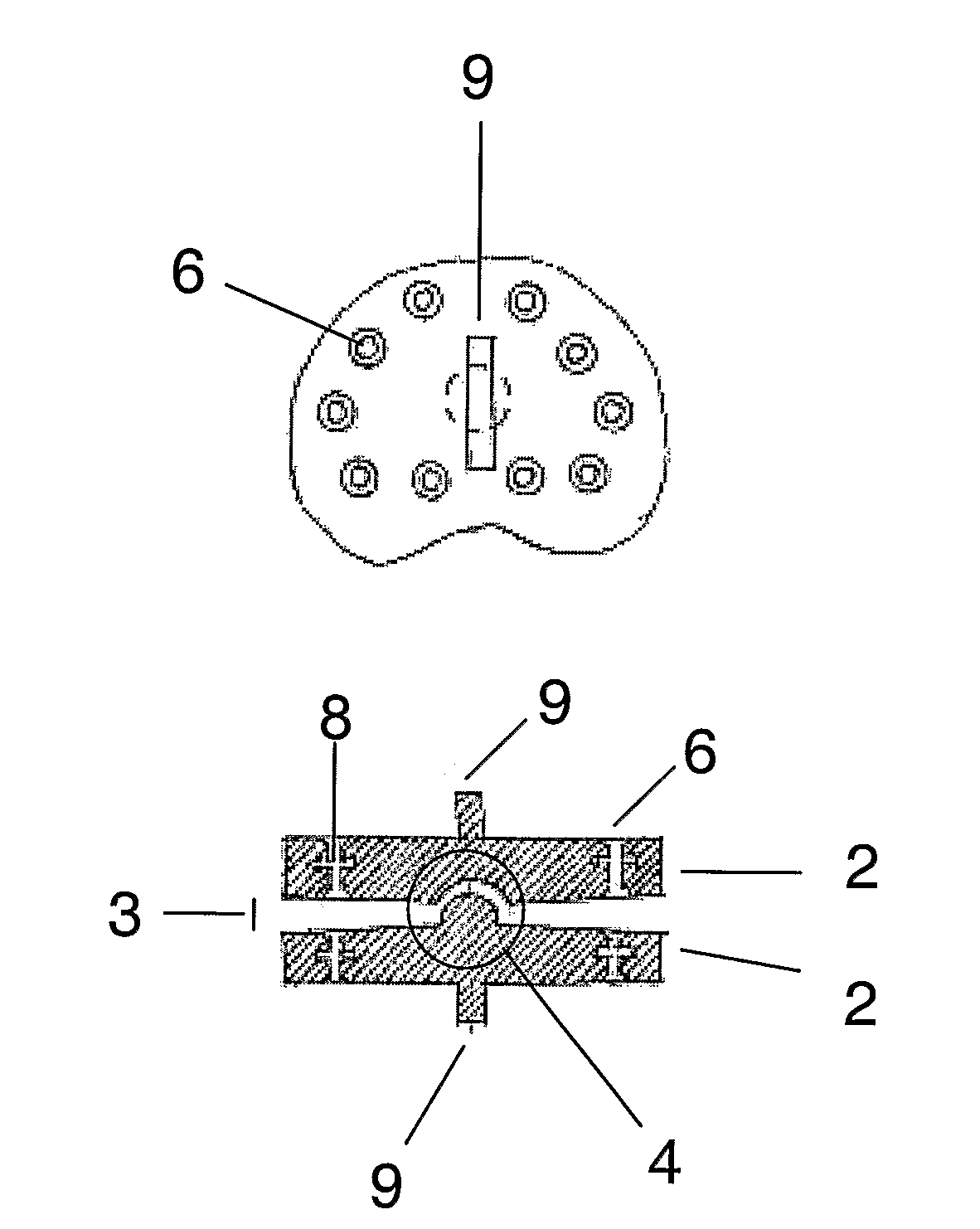
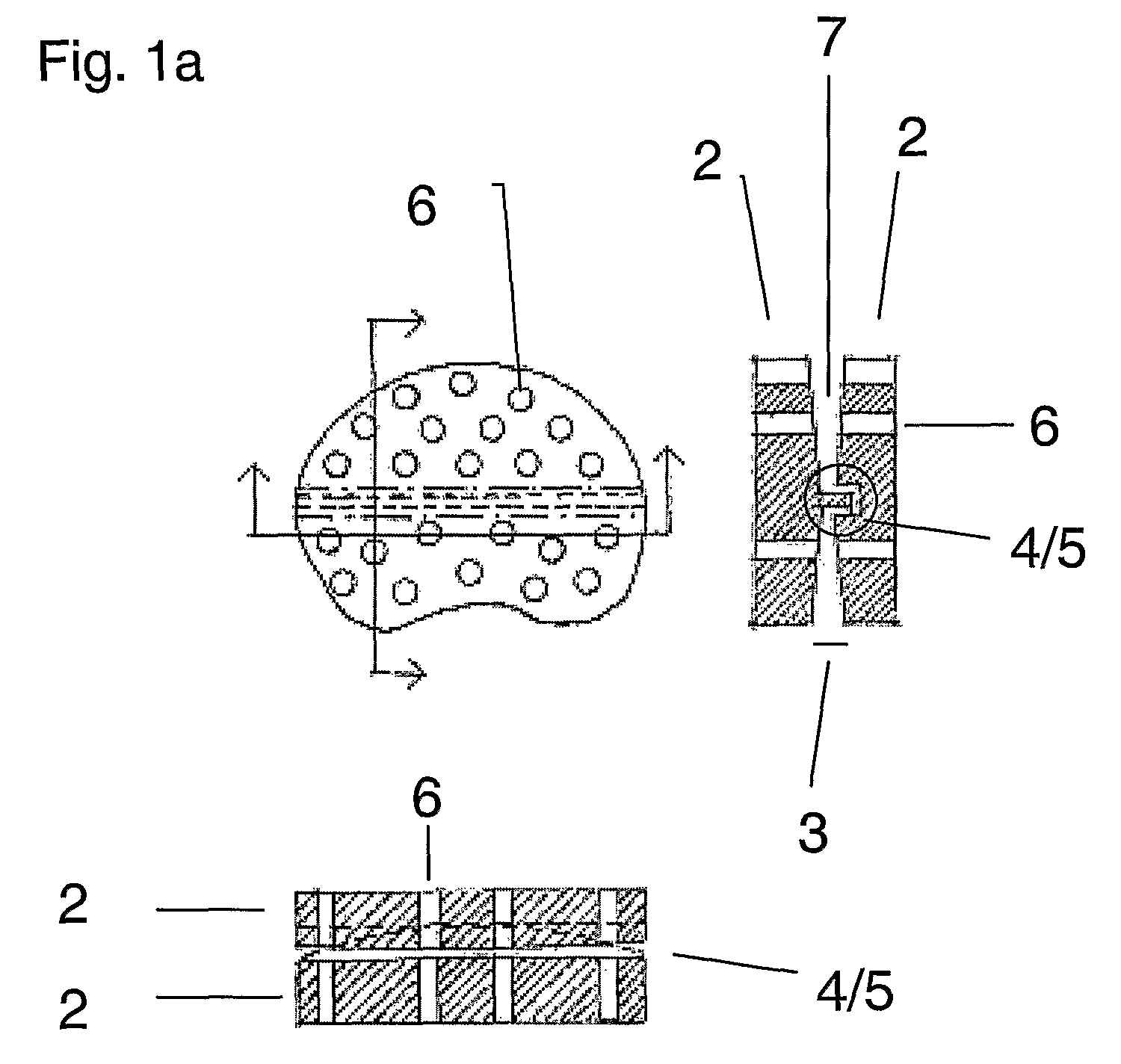
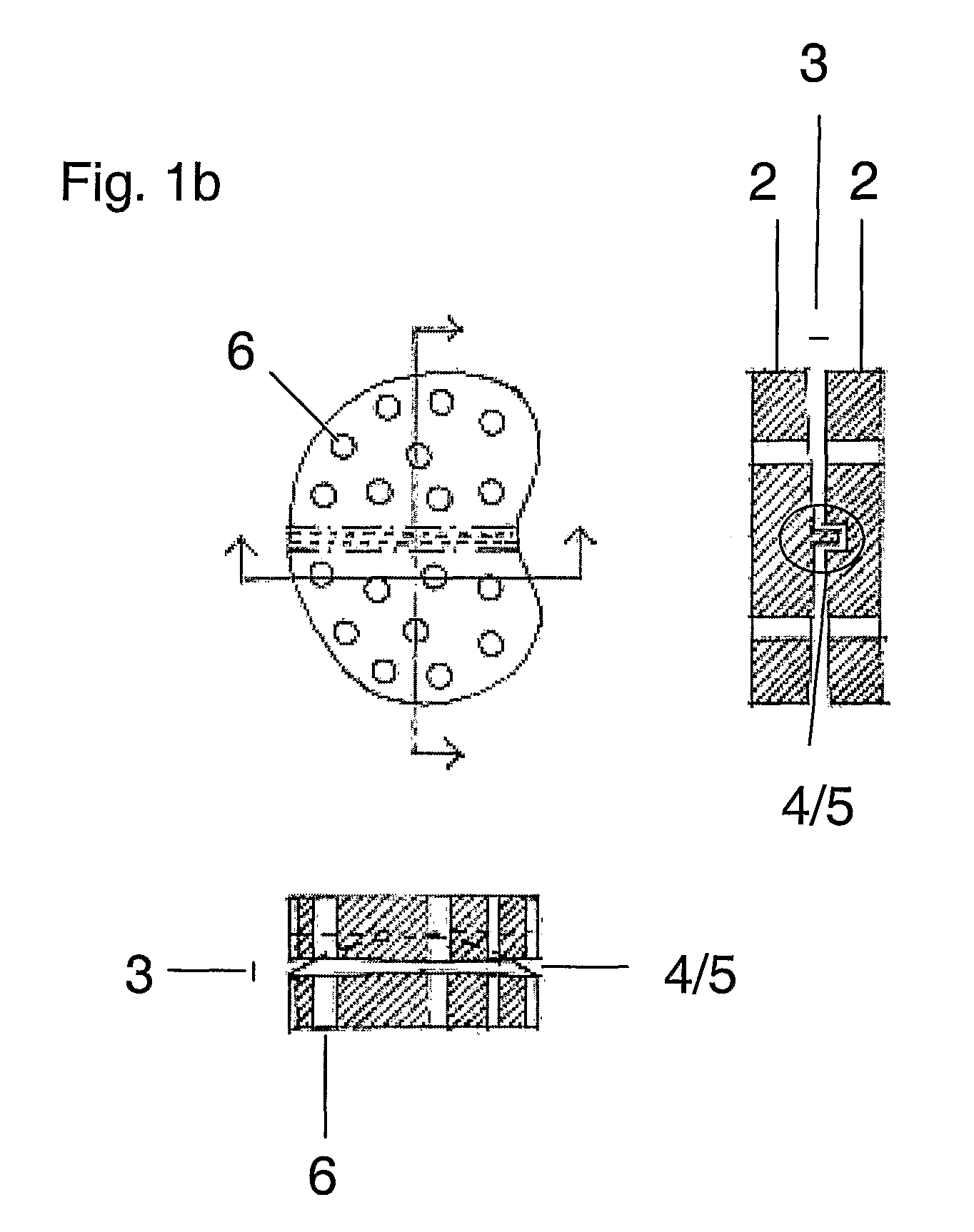
[0040]The disc implant according to the invention relates to a disc implant for total disc replacement. The implant generally comprises two elements, which are coupled together forming the disc implant. The top and bottom surface of the implant, when viewed as positioned in a standing individual, are referred to at as first and second outer fusion surfaces. The opposing surfaces of the two elements are described as internal coupling surfaces as means for coupling of the elements are conveniently located on this surface. The coupling means serve to connect the first and second inter vertebral elements. The ...
PUM
| Property | Measurement | Unit |
|---|---|---|
| distance | aaaaa | aaaaa |
| distance | aaaaa | aaaaa |
| thickness | aaaaa | aaaaa |
Abstract
Description
Claims
Application Information
 Login to View More