
Block-based differencing algorithm
a block-based and differencing technology, applied in the field of data compression and archiving, file differencing, and patching, can solve the problems of small output and less than optimal size reduction achieved this way, and achieve the effect of optimizing performance and avoiding performance penalties
- Summary
- Abstract
- Description
- Claims
- Application Information
AI Technical Summary
Benefits of technology
Problems solved by technology
Method used
Image

Examples
Embodiment Construction
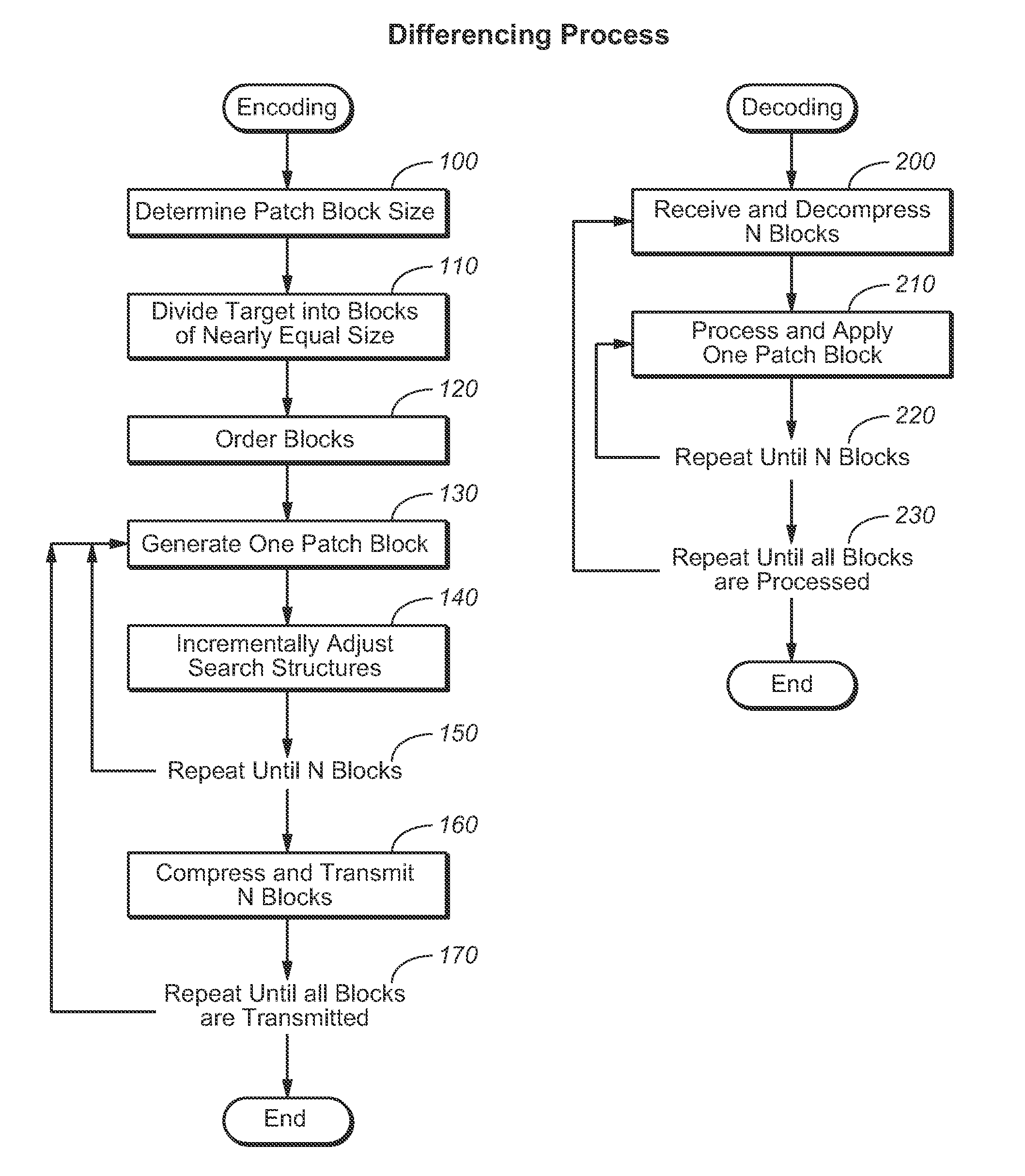
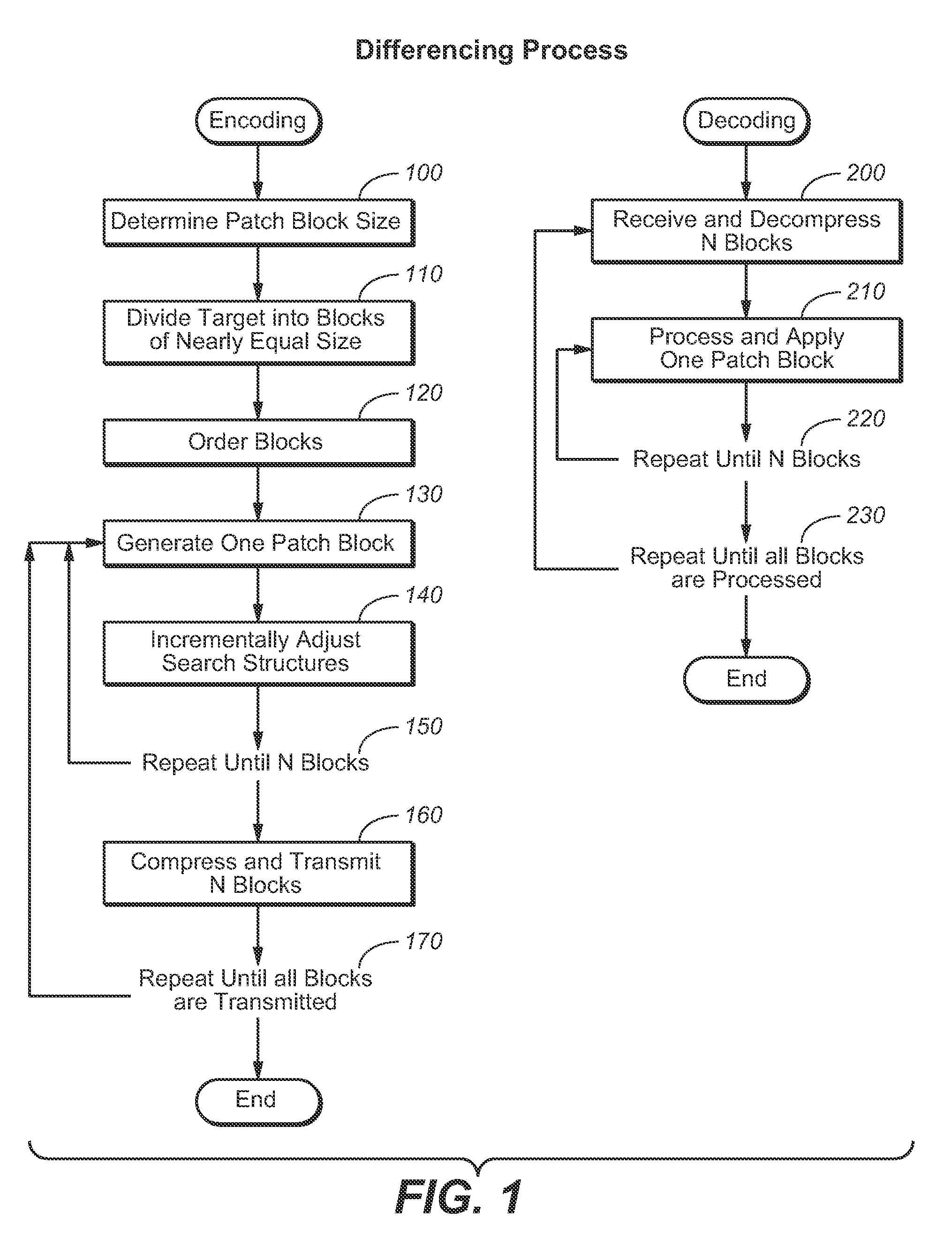
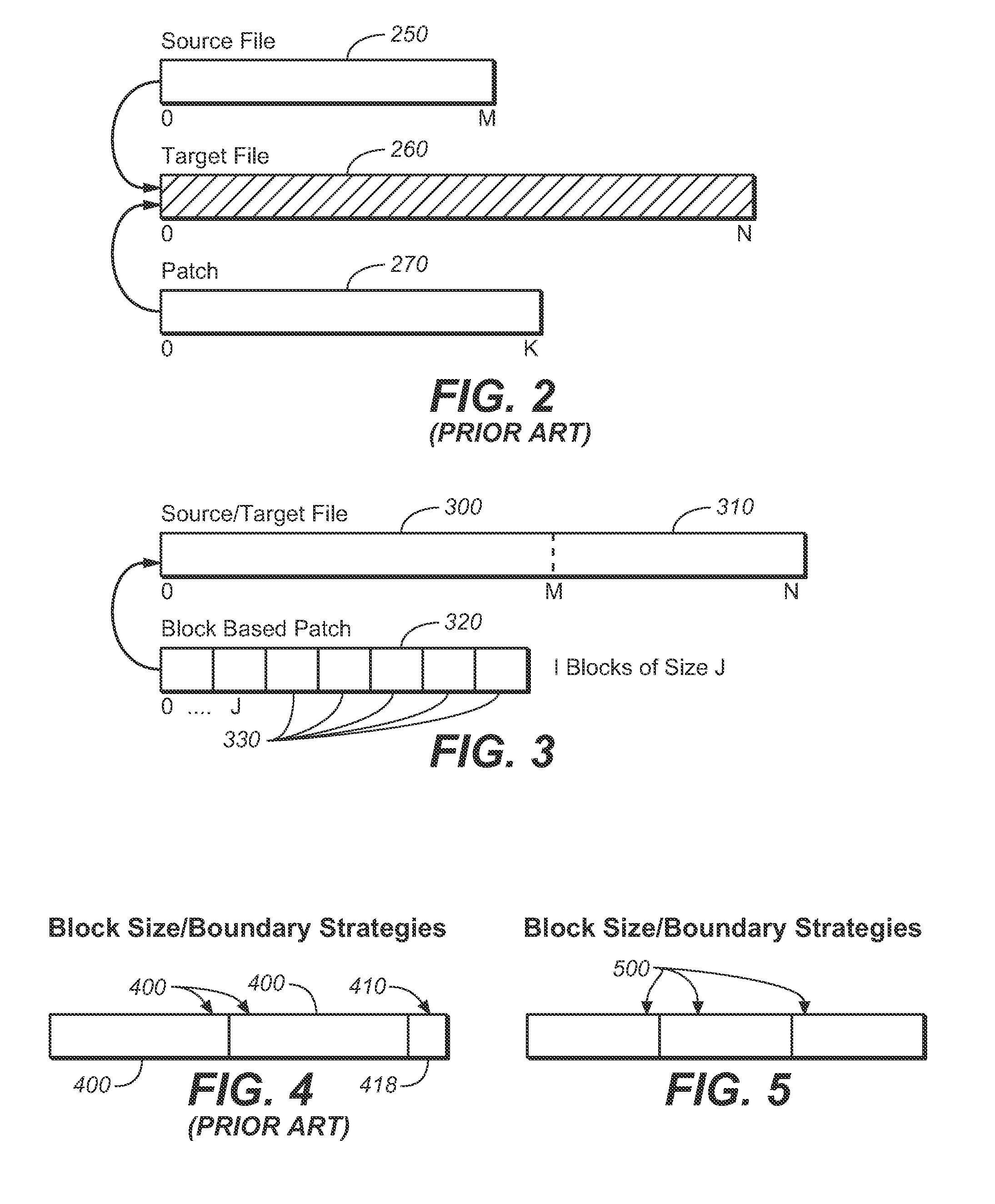
[0043]Referring to FIGS. 1 through 9, there is illustrated therein a new and improved method for perform a differencing algorithm over blocks of a target file.
[0044]Definitions: As used herein, the term “file” means a named set of data elements stored in machine readable form, which may exist in several forms, including in a discrete form, or combined or stored with other files, or embedded in another file as a file or as an object, or as a file containing other files, or as a data stream of a determinate size, including information transmitted over a data channel.
[0045]Referring first to FIG. 1, during the encoding process, the first step 100 is to determine patch block size, followed by block size equalization 110. Blocks are then ordered in step 120 with the goal of minimizing the sum of the sizes of all blocks. The algorithm then enters the iterative stage wherein one patch block in generated at a time 130, in the order determined in step 120. Each block generation is followed b...
PUM
 Login to View More
 Abstract
Description
Claims
Application Information
 Login to View More