Method and system to space-efficiently track memory access of object-oriented language in presence of garbage collection

a technology of object-oriented languages and memory access, applied in the field of data processing in a computing system, can solve problems such as problems in design, problems in reducing memory overhead, and software containing a plurality of threads, and achieve the effect of reducing storage overhead and memory overhead

US8326894B2Inactive Publication Date: 2012-12-04INT BUSINESS MASCH CORP
12 Cites 3 Cited by

Patent Information

Authority / Receiving Office
US · United States
Patent Type
Patents(United States)
Current Assignee / Owner
Publication Date
2012-12-04
Estimated Expiration
Not applicable · inactive patent

Smart Images

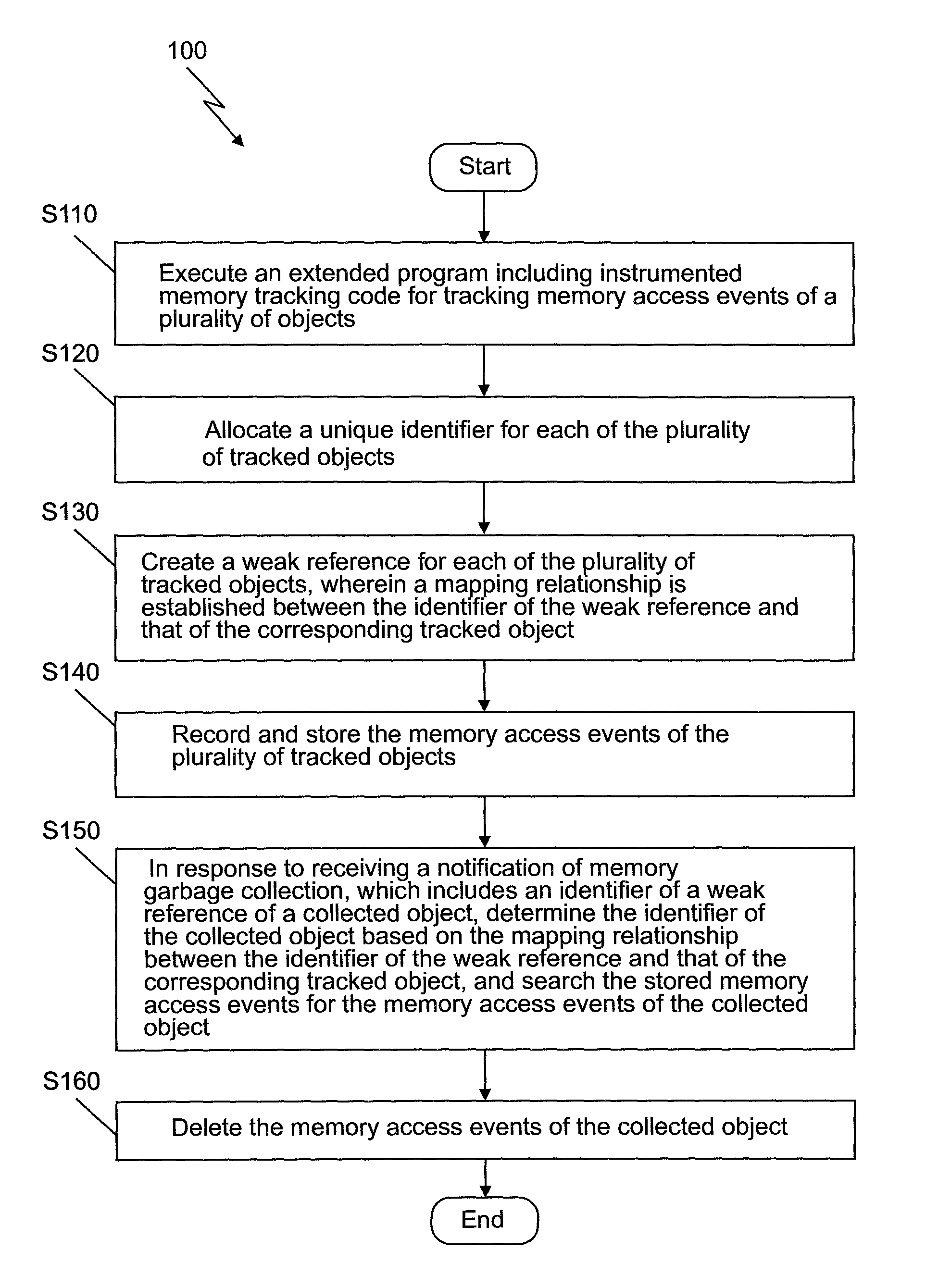
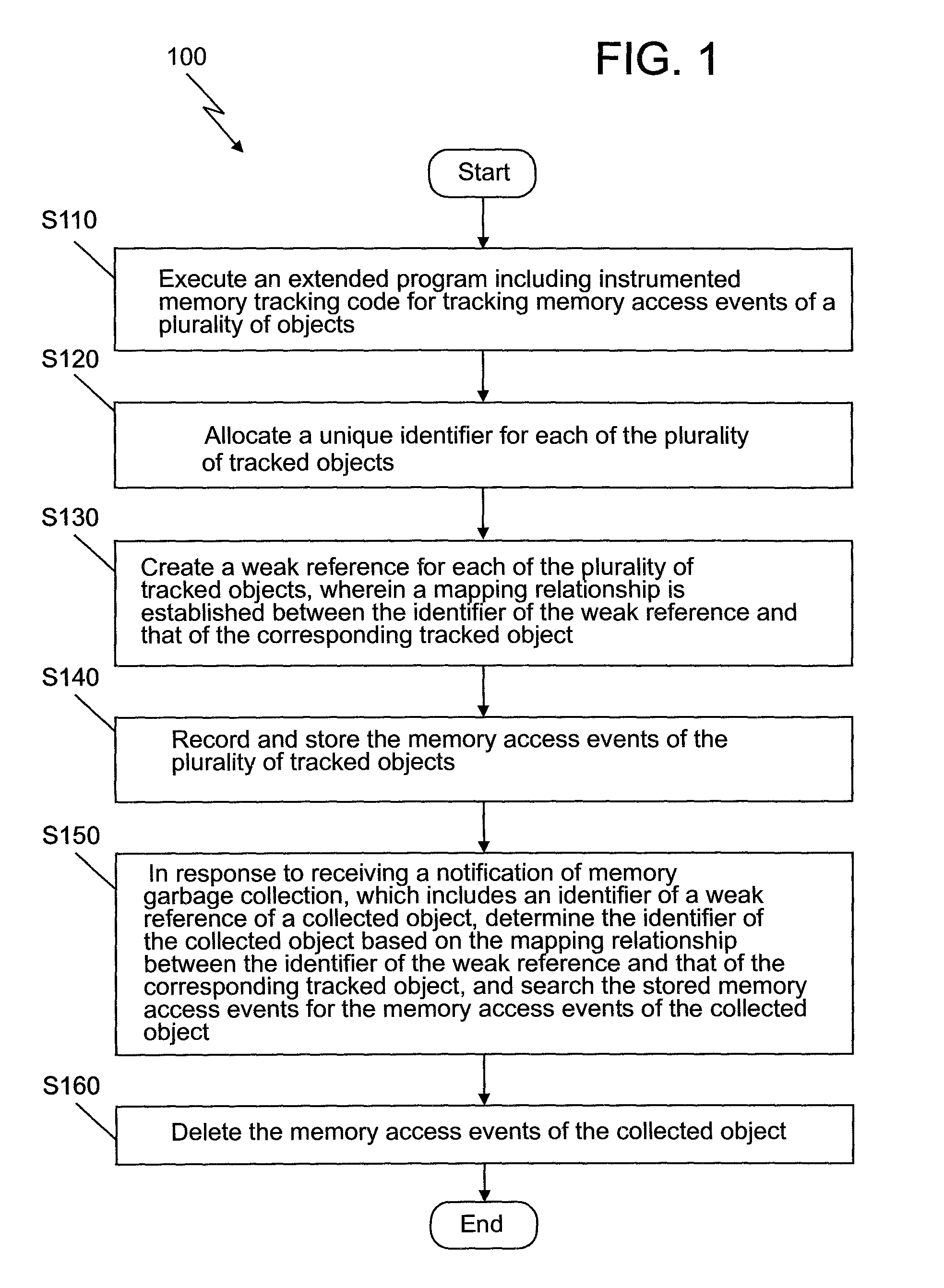
  • Figure 1
    Figure 1
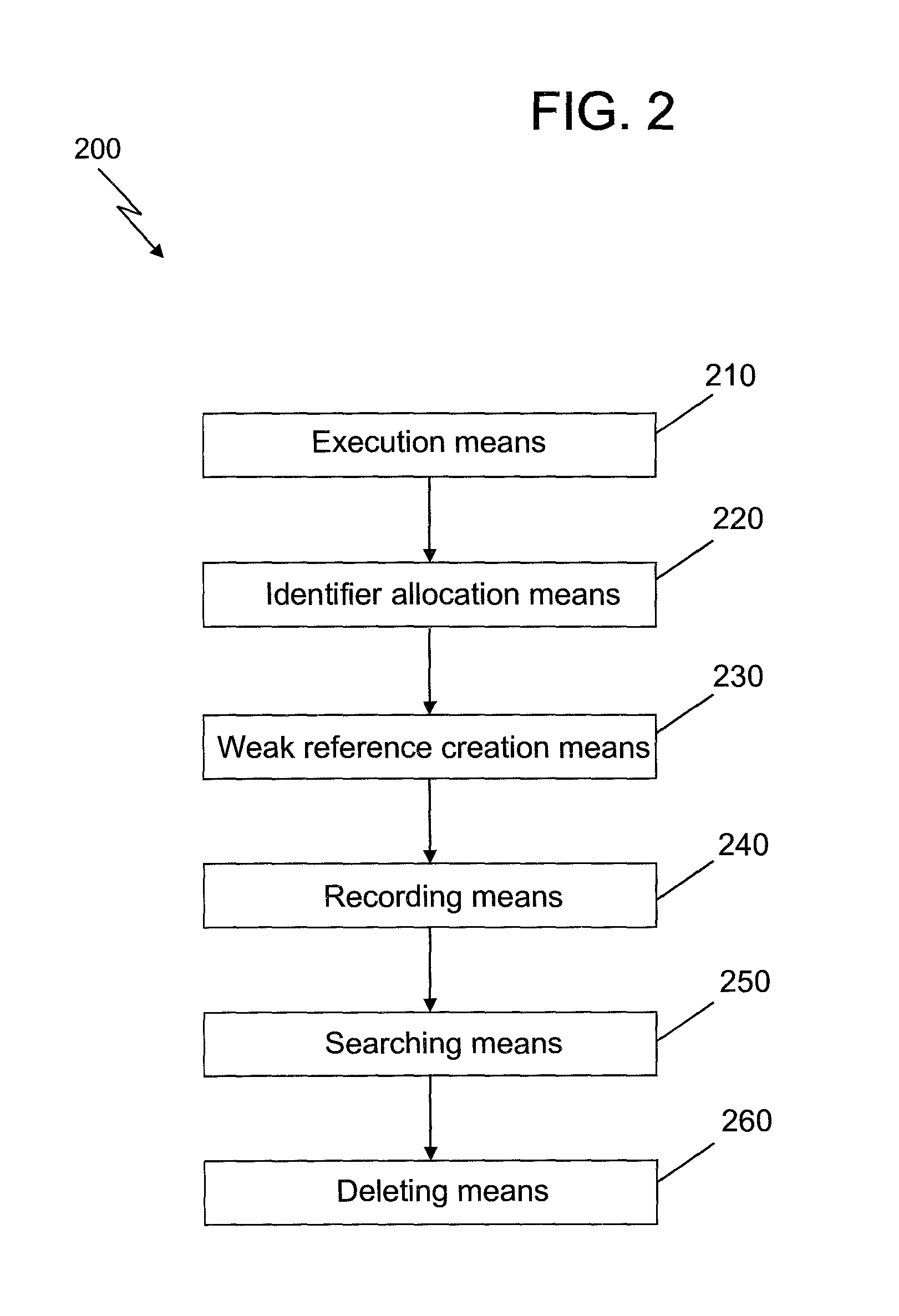
  • Figure 2
    Figure 2
  • Figure 3
    Figure 3
Patent Text Reader

Abstract

The present invention provides a method and system for processing memory access events. The method comprises: executing an extended program including instrumented memory tracking code for tracking memory access events of a plurality of objects; allocating a unique identifier for each of the plurality of tracked objects; creating a weak reference for each of the plurality of tracked objects, wherein a mapping relationship is established between the identifier of the weak reference and that of the corresponding tracked object; recording and storing the memory access events of the plurality of tracked objects; in response to receiving a notification of memory garbage collection which includes an identifier of a weak reference of a collected object, determining the identifier of the collected object based on the mapping relationship between the identifier of the weak reference and that of the corresponding tracked object, and searching the stored memory access events for the memory access events of the collected object; and deleting the memory access events of the collected object. The storage overhead may be reduced according to the above method of the present invention.
Need to check novelty before this filing date? Find Prior Art

Description

TECHNICAL FIELD OF THE INVENTION

[0001] The invention relates to data processing in a computing system, and particularly to a method and system for processing memory access events.BACKGROUND OF THE INVENTION

[0002] For the past two decades and longer, due to the rapid development of microelectronic technology, the performance and capacity of computer systems has increased explosively. More computing resources mean that it is possible to develop more complex software to deal with complex problems. Furthermore, more computing resources also mean that it is possible to perform more operations in parallel. Thus, parallel architectures and parallel software development has begun to play a key role in information processing. However, the software (such as software containing a plurality of threads) for dealing with complex problems has become more complex itself.

[0003] A process is a program or part of a program running on a computer system, or an associated sequence of steps performed by a ce...

Examples

Embodiment Construction

[0021]The present invention is described below with reference to a method and apparatus according to embodiments thereof. Each block in the flow chart and / or block diagram and combinations of blocks in the flow chart and / or block diagram may be implemented by computer program instructions. These computer program instructions may be provided to a processor of a general purpose computer, special purpose computer, or other programmable data processing device to produce a machine, such that these instructions executed via the computer or other programmable data processing device create means for implementing the functions / operations specified in the blocks of the flow chart and / or block diagram.

[0022]These computer program instructions may also be stored in computer readable medium that can direct a computer or other programmable data processing device to function in a particular manner, such that the instructions stored in the computer readable medium produce an article of manufacture ...